Why am I not ranking for therapist near me is the exact question thousands of clinicians ask when their practice fails to appear in Google Maps or local search results. This keyword is highly competitive, and ranking for it requires far more than a basic website or a partially completed Google Business Profile. Google evaluates dozens of factors, including proximity, authority, reviews, content relevance, E-E-A-T signals, mobile performance, and location strength, before deciding which therapists deserve visibility.
Most therapy searches happen through Google Maps, mobile devices, and voice-based queries. This means your practice must demonstrate strong local SEO signals, fast site performance, reputation strength, and consistent content to stand out. Many therapists unknowingly miss critical elements, such as outdated websites, missing schema, slow mobile speeds, a lack of reviews, incomplete GBP listings, or no localized content, which prevents Google from trusting their practice enough to rank it.
This guide breaks down the exact reasons you’re not ranking for “therapist near me” and outlines how Mental Health IT Solutions helps therapists fix local SEO weaknesses, strengthen Maps visibility, and increase high-intent client inquiries.
1. Your Google Business Profile Is Not Optimized

Missing or Incorrect Information
Incomplete NAP (Name, Address, Phone) details, wrong categories, or inconsistent data across directories create trust issues.
No Local Keywords in Services & Description
Your description should include your city + specialization naturally:
- “Anxiety therapist in Austin”
- “Trauma therapy in Brooklyn”
Few or No Reviews
Reviews influence:
- Local Pack ranking
- Click-through rate
- Trust signals
No Weekly Posts or Updates
GBP activity signals that your practice is active, legitimate, and client-focused.
2. Your Website Lacks Local SEO Signals
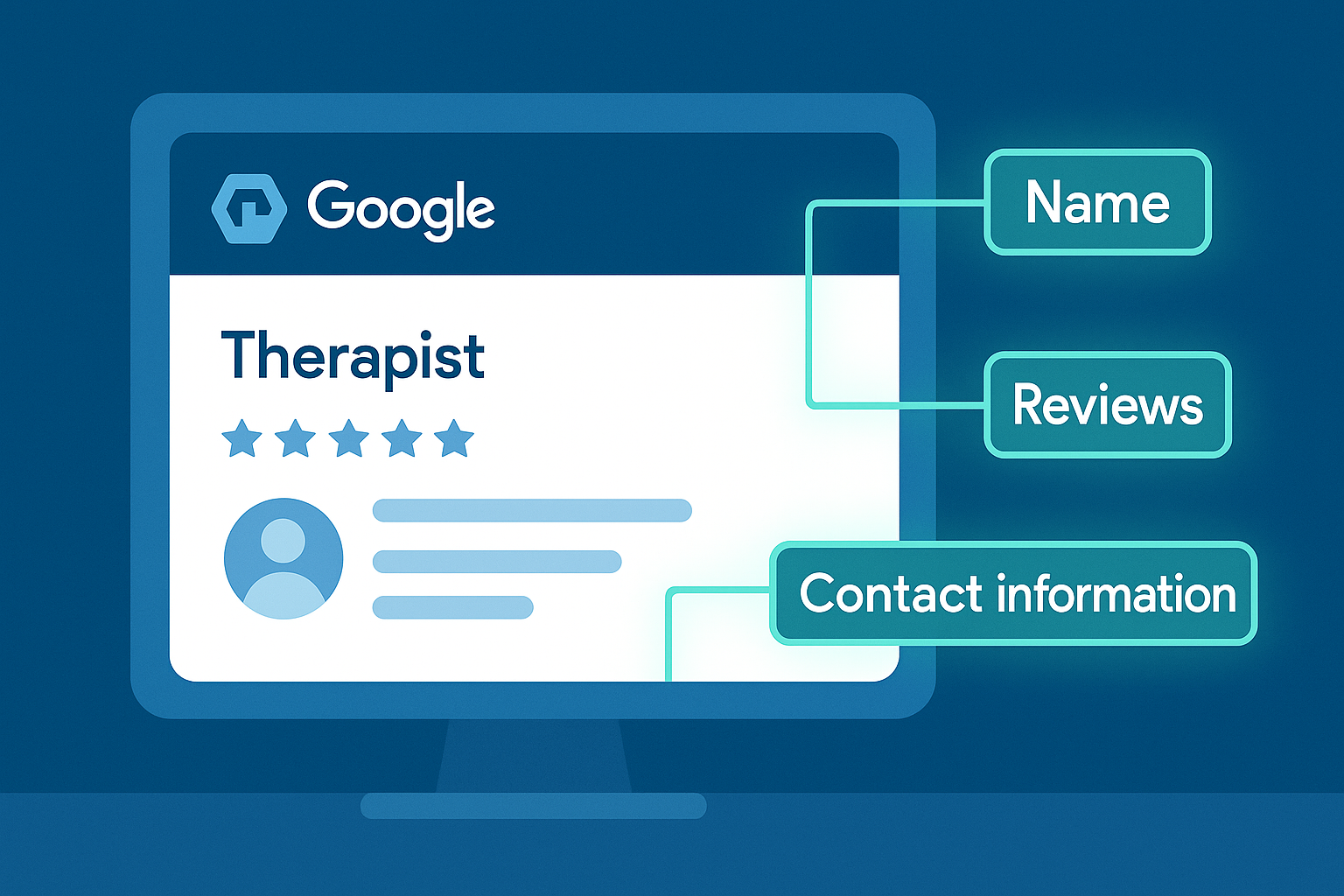
Local organic rankings depend on clear location relevance. Without proper optimization, Google can’t match your website to your city’s search intent.
No City or Neighborhood Keywords
Your homepage and service pages must include:
- City
- Neighborhood
- ZIP code
- Practice areas
Missing Local Landing Pages
Examples:
- “Couples therapy in Denver”
- “EMDR therapist in Miami”
Weak On-Page Optimization
Missing:
- Local title tags
- Local H1s
- Local meta descriptions
See examples of optimized structures here: Therapist Website Development
Minimal Topical Content for Local Queries
Google needs localized content depth blogs, FAQs, guides.
3. Poor Website Speed & Mobile Experience
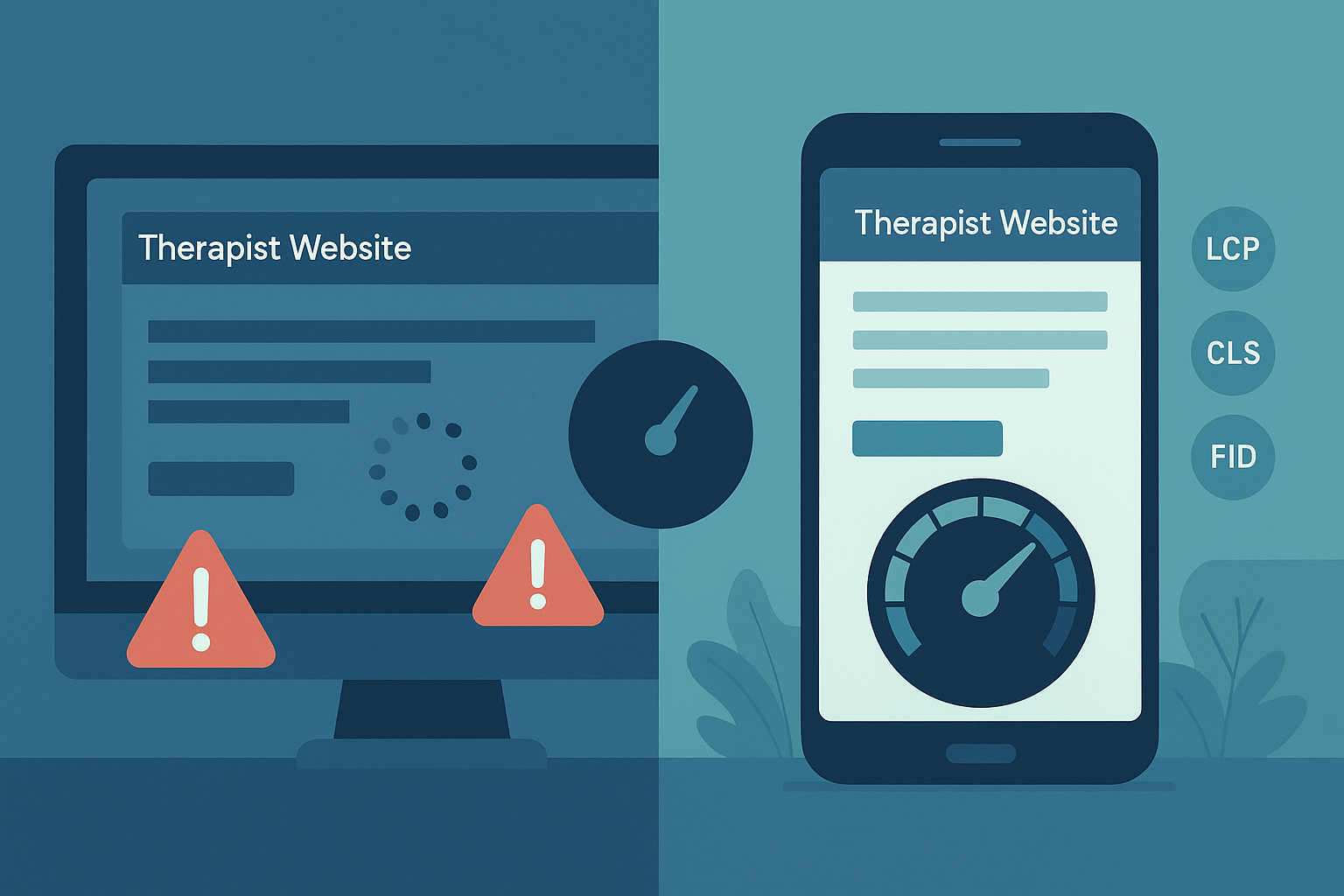
Over 70% of therapy searches happen on mobile. If your website loads slowly or feels outdated, Google deprioritizes it.
Slow Loading Pages
Impact:
- Higher bounce rate
- Lower rankings
- Poor user experience
Weak Mobile UI/UX
Clients won’t stay on cluttered or unresponsive pages.
Missing Core Web Vitals Compliance
LCP, CLS, FID must meet Google’s standards.
4. Your Practice Lacks Local Backlinks & Citations
Local authority requires trust beyond your website.
No Local Directory Listings
Important listings:
- Psychology Today
- TherapyDen
- GoodTherapy
Missing Industry-Relevant Backlinks
Collaborations with:
- Local clinics
- Universities
- Professional associations
Inconsistent NAP Across Listings
Even a single mismatch weakens authority.
5. Not Producing Location-Relevant Content
Google ranks practices with deep content demonstrating local expertise.
No Local Blogs or FAQs
Examples:
- “How to find a therapist in Seattle.”
- “Cost of therapy in Charlotte”
No Service + Location Articles
These help Google understand your relevance in a specific region.
Missing Page-Level E-E-A-T
Include:
- Credentials
- Licensure
- Areas of specialty
- Author bios
For reference on topic depth, review: SEO for Therapist
6. Competitors Have Stronger Local Signals
Competitors may outrank you simply because their ecosystem is stronger.
More Reviews
Volume + recency matter.
Local Partnerships
Community integrations send strong authority signals.
Running Local Ads
Traffic from Google Ads indirectly supports organic credibility.
7. Poor Service Page Structure for Local Conversions
A service page without clarity fails both clients and Google.
No Clear CTAs
Your CTAs must be:
- Above the fold
- Mobile-first
- Action-oriented
Thin Service Pages
Offer detailed content per service:
- Anxiety
- Couples therapy
- Trauma
- EMDR
Missing Location Schema
LocalBusiness, Person, and FAQ schema strengthen the structure.
8. Google Search Console & Analytics Not Set Up Properly

Without proper tracking, you won’t know your gaps.
Not Indexed Properly
Missing pages = missing ranking opportunities.
Wrong Location Targeting
Geo-targeting ensures your content ranks in the correct region.
Missing Performance Tracking
You cannot optimize what you cannot measure.
9. Targeting a Highly Competitive Area Without Niching
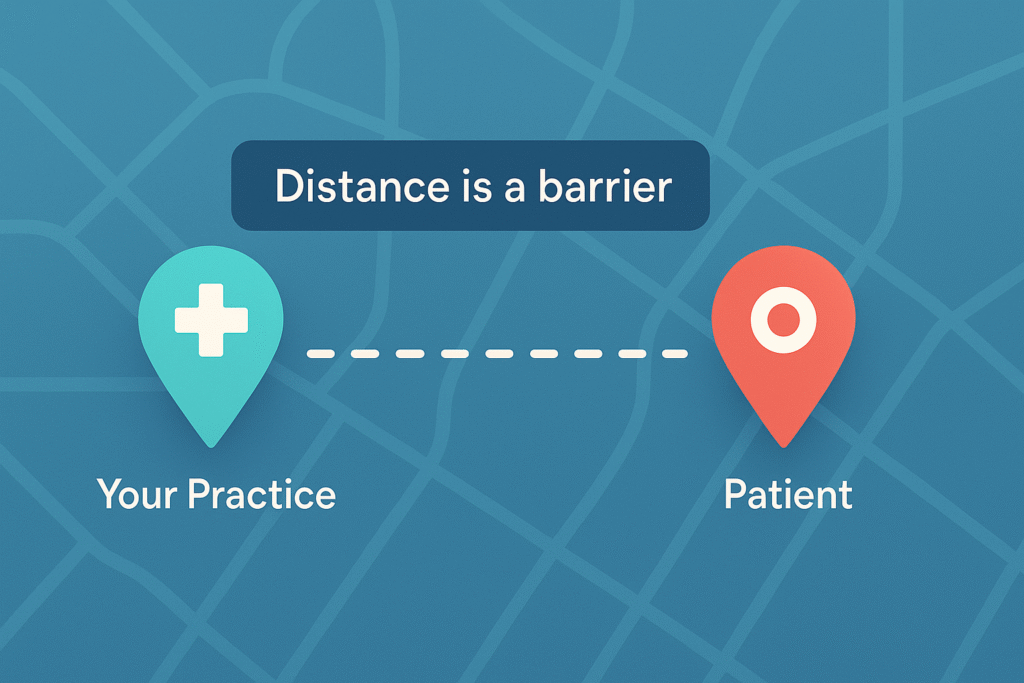
Big cities require specialization.
Large Cities Need Sub-Niche Strategy
Ranking for:
- “Trauma therapist near me”
- “Grief counselor near me”
- “Child therapist near me”
is often easier and faster than “therapist near me.”
Micro-Location Pages
Add neighborhood-level pages:
- “Therapist in Santa Monica”
- “Anxiety counseling in Upper East Side”
Brand Differentiation
Specialization impacts both ranking and conversions.
For a deep dive into how to stand out, review: How Can I Get More Clients for My Therapy Practice?
10. Not Enough Topical Depth for Google to Trust You
Google prioritizes content-rich websites with strong internal structuring.
Thin Blog Library
You need a cluster of topics, not isolated posts.
Missing Supporting Content
Provide expanded content:
- Symptoms
- Treatment types
- Conditions
No Internal Linking Strategy
Poor architecture lowers overall ranking potential.
A supporting guide on building structure: Local SEO for Therapists
11. Not Using Voice Search Optimization

Voice queries dominate local “near me” searches.
Users Search Conversationally
Examples:
- “Who is the best therapist near me?”
- “Where can I book a therapist today?”
Add Q&A Content Across Pages
FAQs improve voice search visibility.
12. Not Leveraging Google Maps Ranking Factors
Maps results depend on specific local signals.
Proximity vs. Authority
Google balances location distance with trust.
Geo Tags & Map Embeds
Consistent geo signals strengthen ranking.
13. Weak Local Brand Reputation
Google favors practices with strong, active reputations.
Limited Social Proof
Include ethical testimonials, credentials, and media mentions.
No Community Engagement
Local authority grows with community integration.
14. Your Website Platform Is Limiting Your SEO
Wix and Squarespace restrict:
- URL structure
- Schema
- Speed
- Total design control
WordPress allows full SEO optimization and scalability this is why MHIS builds therapist websites exclusively on WordPress.
15. Quick Local SEO Diagnosis Checklist
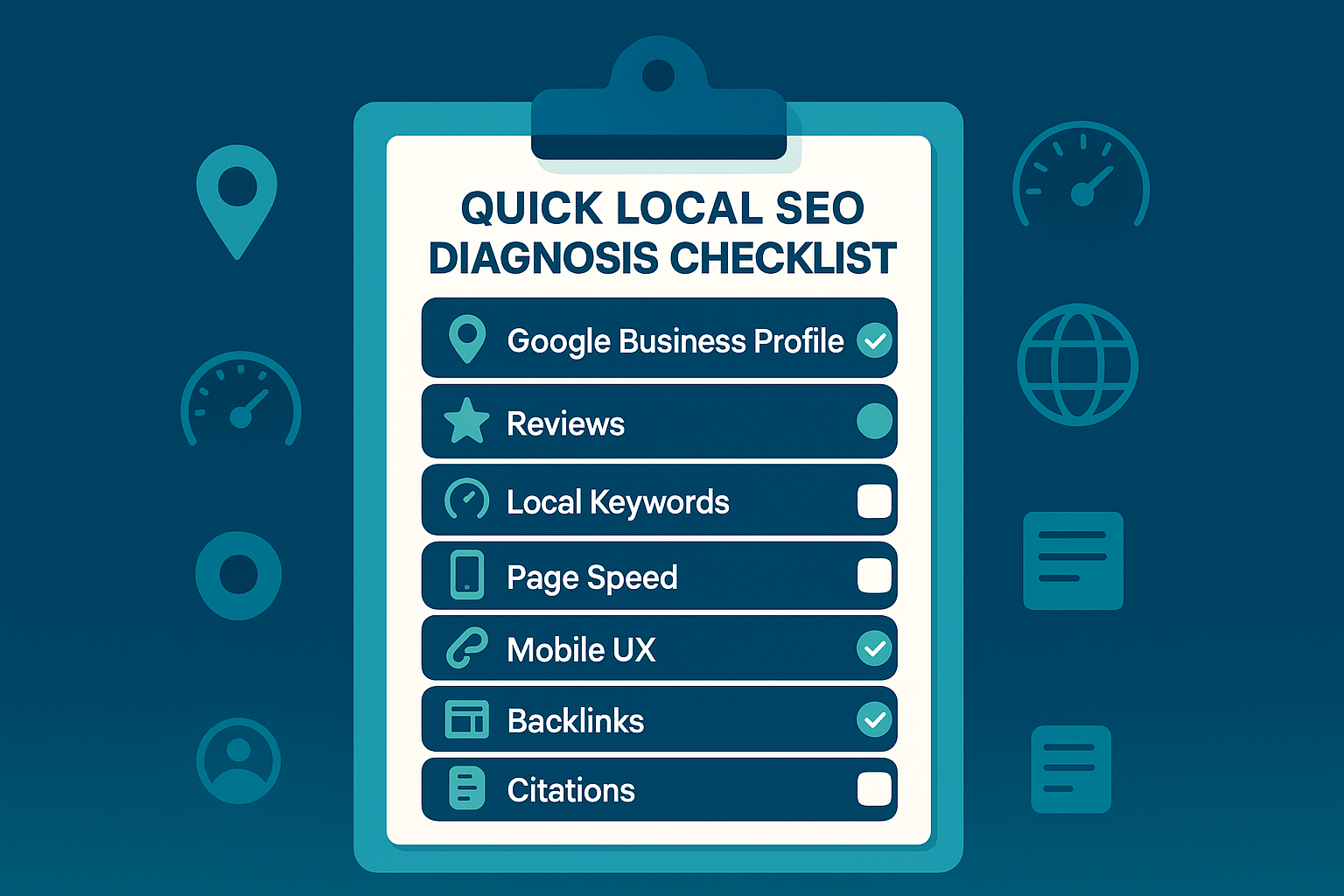
- Google Business Profile completeness
- Review count + recency
- Local keyword optimization
- Page speed
- Mobile responsiveness
- Local backlinks
- Schema
- Internal links
- Content depth
- Citation accuracy
- Neighborhood relevance
How MHIS Helps Therapists Rank for “Therapist Near Me”

Mental Health IT Solutions provides a complete local SEO system designed for mental health professionals:
- Full Local SEO audit
- Google Business Profile optimization
- Review building strategy
- WordPress redesign for speed + conversions
- Local landing page development
- Backlinks & citation building
- Voice search optimization
- Maps ranking improvements
- Monthly local SEO tracking dashboard
FAQs
Your practice may not appear because Google Business Profile information is incomplete, your website lacks local keywords, you have few reviews, or your site is slow on mobile. Google prioritizes practices with strong local SEO signals, accurate citations, and trustworthy content.
Most therapists see movement within 60–120 days, depending on competition, city size, review volume, website quality, and Google Business Profile optimization. Highly competitive cities usually require more consistent SEO work to achieve stable rankings.
Yes. Reviews are one of the strongest Google Maps ranking factors. Practices with more high-quality, recent reviews generally outrank competitors with outdated or fewer reviews, even if their websites are stronger.
Adding city-specific keywords, improving mobile speed, implementing schema, creating local landing pages, and adding internal links can significantly improve your visibility. Google rewards websites with strong E-E-A-T and clear local relevance.
Yes. A specialized mental-health marketing team can optimize your Google Business Profile, build local citations, improve technical SEO, create local landing pages, and implement a review strategy. Agencies like MHIS focus exclusively on therapist SEO and local visibility.
Final Recommendations
If you’re not ranking for “therapist near me,” the issue isn’t one factor; it’s the entire local SEO system around your practice. Google wants to see a high-trust business supported by strong reviews, localized content, fast mobile performance, accurate citations, and consistent engagement.
Ranking depends on coordinated improvements across:
- Google Business Profile
- Website content
- Local authority signals
- Voice search
- Maps optimization
Want to rank higher in Google Maps and attract more ideal clients?
Visit – Mental Health IT Solutions