
How do I grow my therapy practice? Growing a therapy practice today requires a structured, strategic, and consistent system not random marketing actions. The mental health industry has shifted dramatically, client behavior has moved online, and competition across major cities is higher than ever. Whether you’re a solo therapist, an LMFT running a private practice, or a psychologist managing a group practice, sustainable growth depends on strong visibility, trust-building, and a digital infrastructure that attracts high-intent clients where they search most: Google, Maps, directories, social platforms, and local community networks.
Many clinicians wonder why client inquiries slow down despite their experience and clinical expertise. The truth is that growth isn’t accidental it’s engineered. Successful practices have a high-converting website, consistent SEO, strong local rankings, compelling content, automated systems, a smooth intake workflow, and a brand presence that communicates safety, clarity, and clinical credibility. If your inquiries feel inconsistent or unpredictable, this guide breaks down each component where private practices typically experience drop-offs. For deeper insight, you can also explore: Why Am I Not Getting Enough Clients for My Therapy Practice?
At Mental Health IT Solutions, we’ve supported hundreds of therapists in building sustainable, high-performing practices by strengthening their digital foundations, improving their visibility, and optimizing their entire client-acquisition ecosystem. Our solutions are built specifically for mental health professionals combining website development, SEO, local ranking frameworks, automation, and conversion-focused systems to help clinicians attract aligned clients consistently. The strategies shared in this guide are the same proven methods we use for therapy practices nationwide, enabling you to grow with clarity, confidence, and an infrastructure that supports both your clinical work and long-term business goals.
This guide will walk you step-by-step through every essential component required to grow a thriving therapy practice helping you generate consistent weekly inquiries, strengthen your authority in your niche, and scale in a way that protects your energy, boundaries, and professional well-being. Let’s explore each growth pillar with practical, actionable, and therapist-specific strategies.
1. Build a High-Converting Therapy Website

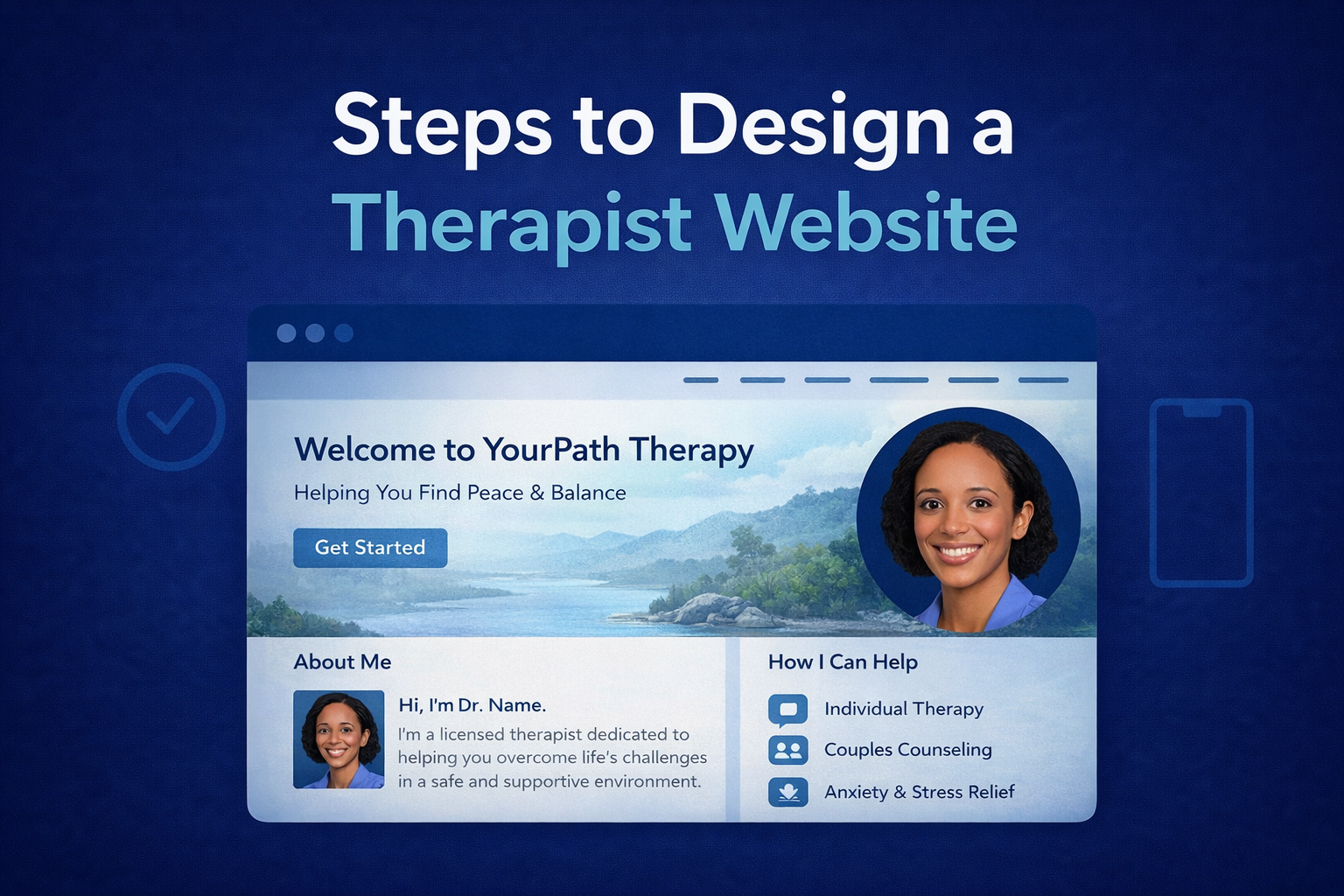
Your therapy website is not just a digital brochure; it is your primary growth engine. It is the place where prospective clients make decisions in the first 3 to 5 seconds: Do I feel safe? Does this therapist understand me? Is this the right place for me?
A high-performing therapy website must be built on three pillars: trust, clarity, and conversion.
Your Website Is Your Primary Growth Engine
A website that looks outdated, lacks clear messaging, or feels generic will immediately lose client trust. In today’s digital environment, clients expect an experience that feels warm, empathetic, and professionally designed. Your visuals, colors, layout, and language must create emotional resonance.
A high-converting therapy website includes:
- A strong, empathetic hero message (“Supporting You Through Trauma, Anxiety, and Emotional Overwhelm—At Your Own Pace”)
- Clear navigation (Home, About, Services, Specialties, Fees, Contact)
- Mobile responsiveness (70% of therapy searches happen on mobile devices)
- HIPAA-aware forms and secure intake pathways
- Visible CTAs (“Book a Session,” “Schedule Consultation”)
- Trust markers (credentials, professional associations, non-identifiable testimonials)
- Service pages optimized for SEO
- Location pages tied to local search keywords
Most therapists underestimate how many clients leave their website due to unclear structure or slow loading speed. If you want a deeper breakdown of what a high-converting therapy site should include, review: Therapist Website Development
Create Pages That Rank & Convert
A therapy website must be structured around pages that both rank on Google and guide clients to take action. The essential pages include:
Homepage
The anchor of your brand presence. It must communicate:
- Who you help
- What you specialize in
- Why your approach works
- What outcomes clients can expect
- How they can schedule
About Page
One of the highest-converting pages on a therapy website. It should include:
- Your story
- Why you became a therapist
- Credentials and training
- Practice philosophy
- Your therapeutic approach explained simply
- Professional associations
- A friendly, warm headshot
Service Pages
Each service or modality requires its own SEO-optimized page:
- CBT
- EMDR
- Trauma therapy
- Couples counseling
- Anxiety therapy
- Depression therapy
- Child/teen therapy
- Teletherapy
These pages help you rank for treatment-specific keywords like: “CBT therapist near me” or “EMDR therapy online.”
Location Pages
These pages rank extremely well:
- “Therapist in Austin, TX”
- “Couples counselor in San Diego”
- “Anxiety therapy in Brooklyn”
Each location page should include local landmarks, neighborhoods, and community references.
Contact & Scheduling Page
Include:
- Online calendar
- Phone number
- Secure form
- Fee structure expectations
- Insurance reimbursement guidance
Your website is the foundation of growth improving this single area often increases inquiries by 30%–70%.
2. Strengthen Local SEO for Better Visibility
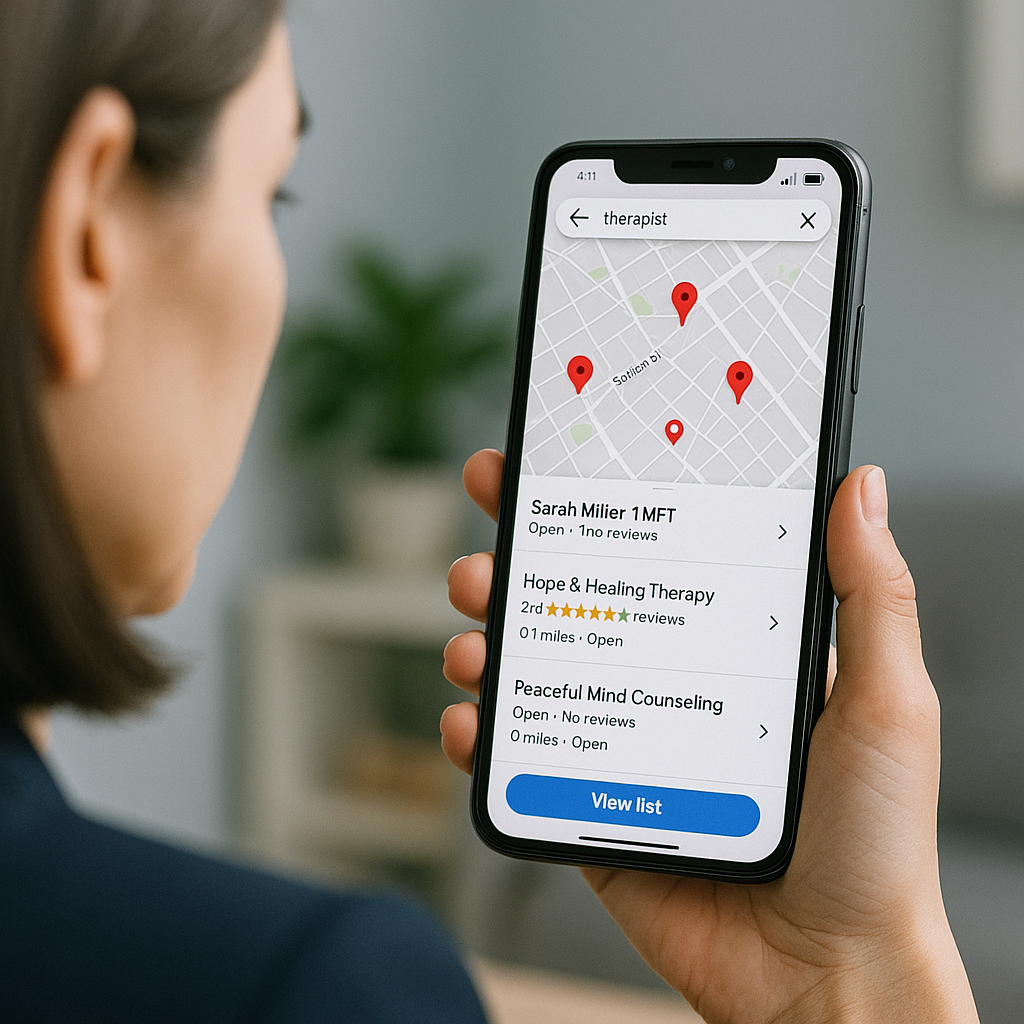
More than 85% of therapy clients choose a therapist found through an online search, with “near me” being one of the most common queries. Local SEO ensures your practice consistently appears in Google Maps, organic listings, and local directories.
To understand the complete structure, you can review: Local SEO for Therapists
Optimize for “Therapist Near Me” Searches
Local SEO is what allows your practice to appear for:
- therapist near me
- anxiety therapist near me
- trauma therapy near me
- LMFT in Dallas
- psychologist near me
To dominate local search:
- Ensure NAP consistency across 50+ directories
- Build high-authority citations
- Add local schema
- Use city-specific keywords
- Embed Google Maps
- Optimize alt text with local signals
- Add localized content around neighborhoods and counties
- Get backlinks from community organizations
Optimize Your Google Business Profile (GBP)
GBP is one of the strongest drivers of weekly therapy inquiries.
Optimize:
- Business description with keywords
- Services and specialties
- High-quality images
- Questions & Answers
- Weekly posts
- Opening hours
- Address and service areas
- Review strategy (HIPAA-compliant!)
Even a simple update like uploading new photos increases visibility by 15%–25%.
Create Local Landing Pages
These pages dramatically increase visibility for both organic search and Google Maps. Each page should target:
- City name
- Neighborhood name
- Specialty (e.g., trauma therapy, EMDR, CBT)
Example:
“Anxiety Therapist in Miami – Online & In-Person Support”
Local landing pages outperform general service pages in almost every niche.
3. Use Content Marketing to Attract High-Intent Clients
Content builds trust, authority, and visibility. Clients search for answers before they search for therapists. Your blog should answer those questions.
A well-structured content system includes:
- Voice-search-optimized blog posts
- Psychoeducational articles
- Downloadable guides
- Worksheets & checklists
- Email sequences
For deeper SEO guidance, explore: SEO for Therapist
Write Blogs That Answer Real Client Questions
Modern client searches often begin with concerns like:
- “Why do I feel anxious at night?”
- “How do I stop intrusive thoughts?”
- “Why am I overwhelmed all the time?”
- “How do I deal with relationship stress?”
- “Is online therapy effective?”
Your content should mirror these questions in a conversational tone.
Voice-Search Format Works Best
Use:
- Long-tail phrases
- Question-based H2s
- Short paragraphs
- Clear answers
- Empathetic tone
Educational Resources Build Trust
Therapy clients want to feel understood before they schedule. Offer resources such as:
- Anxiety coping worksheets
- PTSD grounding exercises
- Couples conflict resolution tools
- Grief journaling prompts
- Burnout recovery guides
Add email automation to nurture high-intent readers.
4. Leverage Social Media for Brand Building

Social media does not need virality it needs consistency. The goal is not fame, but trust-building.
Choose Platforms That Convert
- Instagram → emotional connection & relatability
- LinkedIn → professional positioning & referrals
- YouTube / Shorts → psychoeducation & visibility
Use themes like:
- Mental health tips
- Myths & facts
- EMDR or CBT explained simply
- Signs you may need therapy
- Therapist behind-the-scenes (non-PHI)
- Coping strategies
Consistency > Virality
Post 2–3 times per week.
Use the same colors, tone, and clear messaging.
Show your approach, not your personal life.
5. Build Referral Systems & Partnerships
Offline trust amplifies online presence.
Collaborate With Other Clinicians
Partner with:
- Psychiatrists
- Primary care physicians
- Dietitians
- Social workers
- School counselors
Community Partnerships
Speak at:
- Corporates
- Churches
- Colleges
- Community centers
- Wellness studios
A single partnership can bring dozens of long-term clients.
6. Improve Client Intake & Conversion Workflow

You may be losing inquiries not because clients aren’t contacting you, but because your system isn’t optimized for conversion.
Streamline Scheduling & Communication
Use:
- Online scheduling
- Email automation
- SMS reminders
- Secure forms
- CRM
- Intake scripts
Respond Faster to Reduce Drop-Off
Your response time should be within 6–12 hours, ideally less.
Use:
- Auto-responders
- Clear CTAs
- Calendar integration
- Dedicated inquiry phone line
7. Offer Teletherapy to Expand Reach

Teletherapy increases your reach by 30%–60%.
It enables:
- Evening sessions
- Multi-city clients
- Flexible scheduling
- Lower no-shows
- Serving clients who travel
Your website should include teletherapy-specific pages optimized for keywords such as:
- online EMDR therapy
- teletherapy for anxiety
- virtual couples therapy
8. Use Paid Ads to Generate Immediate Inquiries
SEO builds long-term visibility. Paid ads generate immediate traffic.
Google Ads for High-Intent Clients
Target keywords:
- “trauma therapist near me”
- “CBT therapist”
- “anxiety therapy online”
- “couples counseling near me”
Use highly relevant landing pages to improve conversions.
Meta Ads for Awareness + Retargeting
Run:
- Short educational videos
- Retargeting ads
- Local interest-based targeting
- Warm audience campaigns
Meta ads build brand recognition, which increases conversion rates over time.
9. Track, Measure & Improve Your Marketing
You cannot grow what you do not measure.
Metrics to Track
- Website conversion rate
- Form submission rate
- Google rankings
- Call-to-booking rate
- Blog performance
- Click-through rates
- Cost per lead
- Cost per booked session
Tools You Should Use
- Google Analytics
- Heatmaps
- Rank tracking tools
- Keyword analysis
- Call-tracking
- CRM
- Google Search Console
Tracking transforms your marketing from guesswork to strategy.
10. Work With a Specialized Mental Health Marketing Partner
Therapists need specialized support not generic agencies.
Why General Agencies Don’t Work for Therapists
They lack:
- HIPAA awareness
- Clinical sensitivity
- Ethical constraints
- Understanding of therapy-specific search intent
- Experience with mental health content guidelines
This leads to poor visibility and compliance risks.
Why MHIS Is the Best Choice
Mental Health IT Solutions specializes only in mental health.
MHIS provides:
- Custom therapist websites
- High-performance SEO
- Local landing page systems
- Teletherapy website development
- HIPAA-compliant setups
- Automations & intake workflow
- Monthly content
- GBP optimization
- Growth strategy & reporting
To understand how marketing directly influences client flow, read: How Can I Get More Clients for My Therapy Practice
Voice Search: How Therapists Can Capture “Near Me” Queries

Voice search has expanded massively in 2024–2025 with the rise of AI assistants.
Why Voice Search Matters
Clients now ask:
- “How do I find a therapist near me?”
- “Why am I feeling anxious every night?”
- “How do I stop overthinking?”
These queries require conversational, natural-language content.
How to Optimize for Voice Search
- Use FAQ-based content
- Include long-tail keywords
- Write conversationally
- Add schema markup
- Use “question → answer” format
- Place keywords in H2s
- Add local phrases naturally
Voice search aligns perfectly with therapeutic communication styles.
FAQs
1. How long does it take to grow a therapy practice?
Most therapy practices begin seeing consistent improvement within 60–90 days when they optimize their website, SEO, local listings, and intake workflows. However, sustainable growth typically happens over 6–12 months with ongoing content, local SEO, reviews, and marketing systems. Practices that implement a structured growth model see faster, more predictable results.
2. What is the most effective way to get more therapy clients?
The most effective long-term strategy is improving your online visibility starting with a high-converting website, strong local SEO, optimized Google Business Profile, and service-specific content. These channels consistently attract high-intent clients searching for therapy services near them.
3. Do therapists need a niche to grow their practice?
While not mandatory, having a niche significantly improves visibility and conversion. Clients often search for specific specialties such as trauma therapy, EMDR, couples counseling, anxiety therapy, or child counseling. A clear niche helps your website rank faster, strengthens your authority, and increases your client alignment.
4. Is investing in paid ads worth it for therapists?
Yes, when done correctly. Google Ads attract high-intent clients actively looking for support, while Meta ads help build awareness and retarget website visitors. Paid ads work best when paired with a strong website and clear landing pages designed to convert.
5. Can a marketing agency really help grow my therapy practice?
Absolutely. A specialized mental health marketing agency understands HIPAA considerations, clinical language, ethical boundaries, and therapy-specific search intent. Agencies like Mental Health IT Solutions provide websites, SEO, automation, and growth systems tailored specifically for therapists helping you achieve consistent, predictable client flow.
Conclusion
Growing a therapy practice requires a balanced combination of visibility, authority, and conversion-driven systems. Your website must communicate empathy and clarity. Your SEO must strengthen local dominance. Your content must answer the real questions clients are searching for. Your social media must build trust and connection. And your intake workflow must convert inquiries into scheduled sessions smoothly and consistently.
The most successful therapists follow a structured growth model built on:
- A high-converting website
- Strong local SEO
- Consistent, value-driven content
- Clear and trustworthy brand identity
- Automated intake and scheduling systems
- Meaningful social media presence
- Strategic community and referral partnerships
- Paid ads to accelerate short-term growth
- Monthly analytics, tracking, and improvements
- Guidance from a specialized mental health marketing partner
When these components work together as a unified system, your practice becomes more discoverable, more credible, and far more scalable, giving you freedom from the stress of inconsistent inquiries and the confidence to grow intentionally.
If you’re ready to strengthen your digital foundation and build a predictable, high-performing practice, you can explore how Mental Health IT Solutions supports therapists nationwide.