Addiction counselors, SUD specialists, recovery coaches, and rehab centers operate in one of the most sensitive areas of mental health care. When someone visits your website, they may be in crisis, searching for help quietly, or evaluating whether your practice feels safe enough to trust.
Your website is not just a marketing asset, it is often the first point of contact in someone’s recovery journey. A high-performing addiction counseling website must balance trust, privacy, clarity, and accessibility while guiding visitors toward immediate, ethical support.
This guide explains how to design, structure, and build an addiction counselor website that supports recovery outcomes while driving consistent inquiries.
Ready to build a professional, recovery-focused website designed for trust and results?
Talk to Addiction Counselors Website Development Today.
Why Addiction Counselors Need a High-Performing Website Today
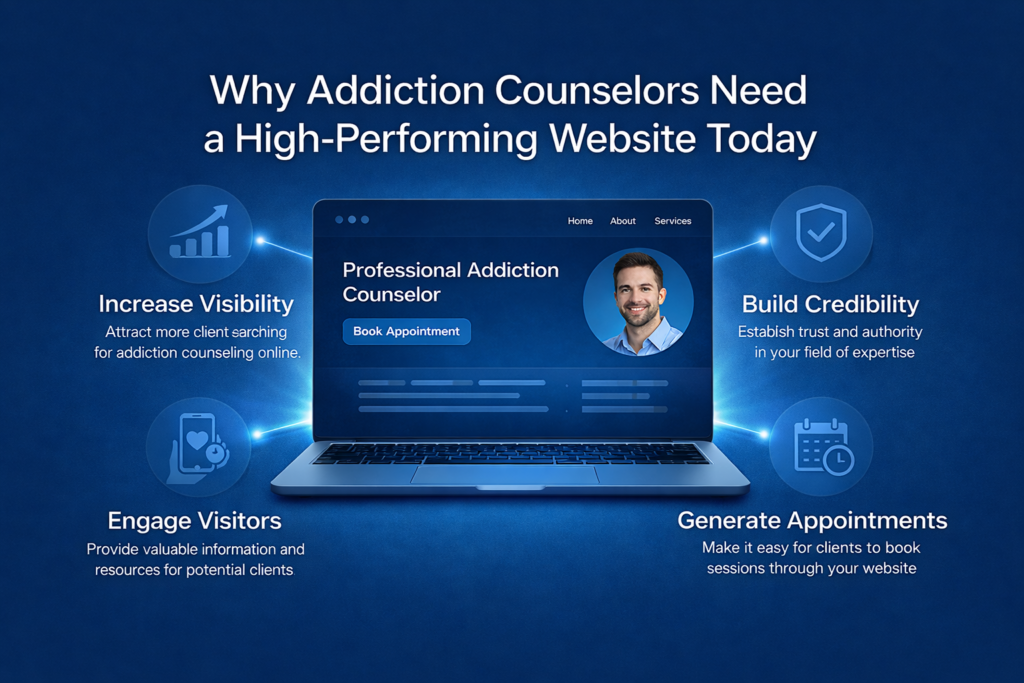
The demand for addiction and substance use disorder services continues to grow, and so does the competition for online visibility and trust.
Today’s clients expect:
- Immediate access to help
- Clear reassurance around privacy and confidentiality
- A calm, non-judgmental digital experience
- The ability to book or inquire without friction
At the same time, addiction counselors face increasing competition from large behavioral health groups, rehab centers, and telehealth platforms with strong digital infrastructure.
A well-built website becomes your:
- Primary credibility signal
- Top referral and intake channel
- Most reliable source of qualified inquiries
When designed correctly, improved visibility leads to more inquiries, better engagement, and ultimately stronger recovery outcomes.
Core Principles of Effective Addiction Counseling Websites
Addiction counseling websites must be designed differently from general business or even general therapy websites.
Key principles include:
- Trauma-informed design that avoids triggering visuals or language
- Clear navigation for visitors who may be anxious or overwhelmed
- Minimal friction to help users reach out quickly
- HIPAA-secure forms that respect confidentiality
- Messaging focused on hope, safety, and discretion, not fear or pressure
Every design and content decision should reduce emotional load and support calm decision-making.
Must-Have Features for an Addiction Counselor Website
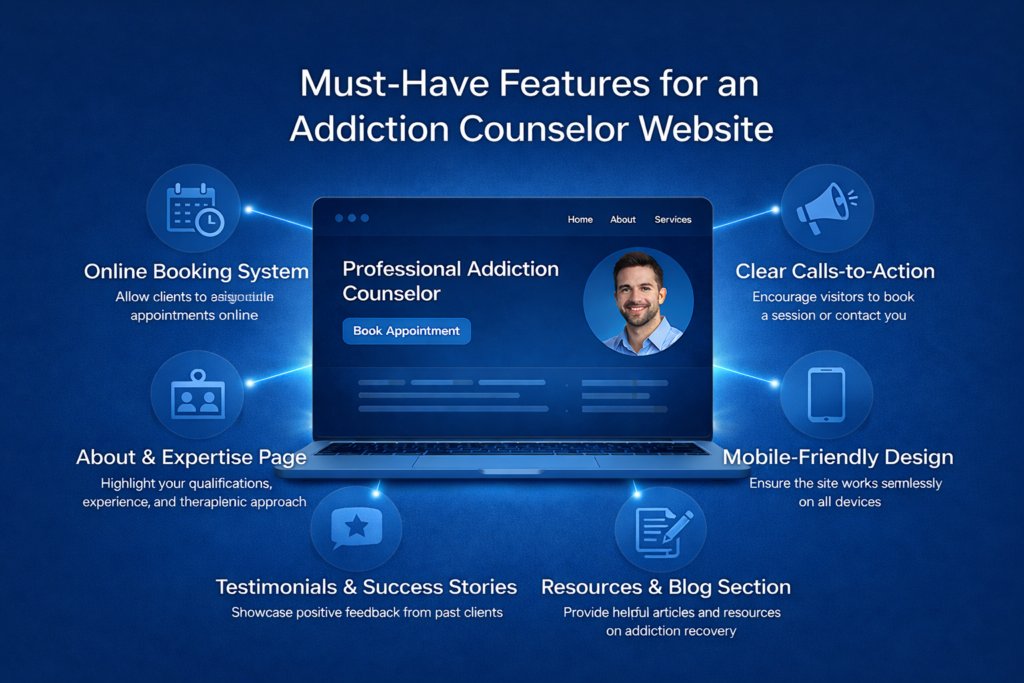
1. Clear, Reassuring Homepage Structure
Your homepage should immediately answer three questions:
- Is this a safe place?
- Do they understand my situation?
- How do I get help now?
Essential elements include:
- A clear value statement centered on recovery and support
- Safety-first, non-stigmatizing language
- Prominent calls-to-action such as “Schedule a Session” or “Get Help Now”
- Trust signals including credentials, affiliations, and testimonials
2. Secure & Confidential Intake Forms
Addiction counseling requires a higher level of privacy protection.
Your forms should include:
- HIPAA-compliant form handling
- Secure data transmission and storage
- Optional crisis hotline or emergency resources
- Automated notifications that do not expose sensitive details
3. Dedicated Service Pages
Each service deserves its own focused page to support clarity, trust, and visibility.
Examples include:
- Substance Use Counseling
- Alcohol Recovery Support
- Relapse Prevention
- Family and Couples Support
- Adolescent Addiction Counseling
Clear service differentiation helps clients understand fit and reduces hesitation.
4. Trauma-Informed Layout & UI
Design choices matter deeply in addiction recovery contexts.
Best practices include:
- Soothing, neutral color palettes
- Calm typography and spacing
- No stock imagery that depicts substance use or distress
- Recovery-focused visuals emphasizing stability and hope
5. Mobile-First Design
Most addiction-related searches happen on mobile devices, often during moments of urgency.
Your website must:
- Load quickly on mobile
- Display CTAs clearly above the fold
- Allow easy navigation and form submission with one hand
6. SEO-Structured Pages
A recovery-focused website must still be technically strong.
SEO-ready structure includes:
- Location-based service pages
- Clear page hierarchy
- Fast site performance
- Structured content that search engines can understand
For practices planning a redesign, this is often addressed during a full rebuild process similar to the approach outlined in How Should I Redesign My Therapy Website?
Designing for Trust, Safety & Recovery Outcomes
Trust is the foundation of addiction counseling.
Your website should:
- Reduce stigma through careful language
- Highlight credentials, licensing, and experience
- Emphasize privacy at every touchpoint
- Avoid exaggerated outcomes or guarantees
- Build emotional connection through empathy, not urgency
Visitors should feel supported, not sold to.
Telehealth & Virtual Recovery Support: Essential Features
Virtual recovery support is now a standard expectation.
Key features include:
- Secure teletherapy scheduling
- HIPAA-compliant video integration
- Dedicated crisis and support resource pages
- Online support group information
- Automated appointment reminders
For group practices offering both in-person and virtual care, structure becomes even more critical, similar to approaches used in modern multi-provider builds like: Therapy Group Practice Website Development Guide
Content That Converts: What Every Addiction Counselor Must Include
Essential Content Elements
High-performing addiction counseling websites include:
- Recovery-focused homepage messaging
- A clear FAQ page addressing fear, privacy, and confidentiality
- Insurance and payment information
- A “What to Expect” onboarding page
- Educational blog content around recovery and coping strategies
- Anonymized success stories and testimonials
Content should educate and reassure, not overwhelm.
Local SEO for Addiction Counselors
Most people seek addiction support close to home.
Effective local visibility includes:
- City-based, service-specific keywords
- Optimized Google Business Profile for addiction services
- Geo-targeted service pages
- Ethical review-building strategies
- Consistent citations and NPI data
Local SEO works best when paired with a solid technical foundation like a properly built addiction counseling website rather than a generic template.
Compliance Considerations for Addiction Counseling Websites
HIPAA Requirements
- Secure intake forms
- Encrypted hosting environments
- Proper data storage and access controls
42 CFR Part 2 Considerations
- Enhanced confidentiality protections for SUD treatment
- Careful handling of analytics and tracking language
- Consent-based communication systems
Ethical Advertising Standards
- No fear-based or misleading claims
- Transparent service descriptions
- Respectful, non-triggering messaging
Website Mistakes Addiction Counselors Should Avoid
Common issues that reduce trust and conversions include:
- Cluttered layouts and excessive content
- Triggering or inappropriate imagery
- Vague or generalized counseling messaging
- No local service structure
- Slow load times
- Poor mobile usability
- Non-secure intake forms
How MHIS Builds High-Performing Websites for Addiction Counselors
Mental Health IT Solutions specializes in digital infrastructure for mental health and recovery professionals.
Our approach includes:
- Trauma-informed UX and content strategy
- HIPAA and 42 CFR Part 2 alignment
- Conversion-focused service page architecture
- SEO-ready structure from day one
- Secure hosting, backups, and maintenance
- Custom WordPress builds for long-term control
- Optional teletherapy and EHR integrations
You can view examples of our work here: Our PortFolio
Our Website Development Process for Addiction Counselors
- Discovery and clinical positioning
- Wireframing and page structure
- Design with recovery-focused color psychology
- Trauma-informed content development
- SEO-structured build
- HIPAA-secure form implementation
- Mobile and accessibility testing
- Launch
- Ongoing support and updates
This process builds on best practices used across addiction counseling and therapist website development projects. For deep insight, visit the Therapist’s website development guide.
Pricing Overview for Addiction Counselor Website Development
Website development options typically include:
- Standard and advanced packages
- Add-ons such as teletherapy integration, content creation, and SEO
- Secure hosting and maintenance plans
- Optional 12-month support coverage
Exact pricing depends on scope, integrations, and content requirements.
FAQs
Do I need HIPAA compliance for addiction counseling websites?
Yes. Secure handling of client data is mandatory.
How long does it take to build a website?
Timelines vary by scope, but most projects are completed within weeks, not months.
Can I offer both in-person and telehealth services?
Yes, and your website should clearly support both options.
What content performs best for addiction recovery clients?
Clear, reassuring, educational content that reduces fear and stigma.
Can MHIS migrate my existing site without losing SEO?
Yes. Migrations are handled carefully to preserve structure and visibility.
Conclusion
Addiction counseling websites carry a responsibility that goes beyond design and functionality. For many visitors, your website is the first step toward recovery, often accessed during moments of uncertainty, vulnerability, or crisis. A poorly structured or generic site can create hesitation, while a thoughtfully built, trauma-informed website can offer reassurance, clarity, and a safe path forward.
A high-performing addiction counselor website combines trust-centered messaging, secure technology, ethical compliance, and clear conversion pathways. When privacy is protected, services are clearly explained, and support is easy to access, your website becomes an extension of your clinical care—not just a marketing tool.
By investing in a purpose-built website designed specifically for addiction recovery professionals, you strengthen credibility, improve client engagement, and create a digital environment that supports meaningful recovery outcomes.