
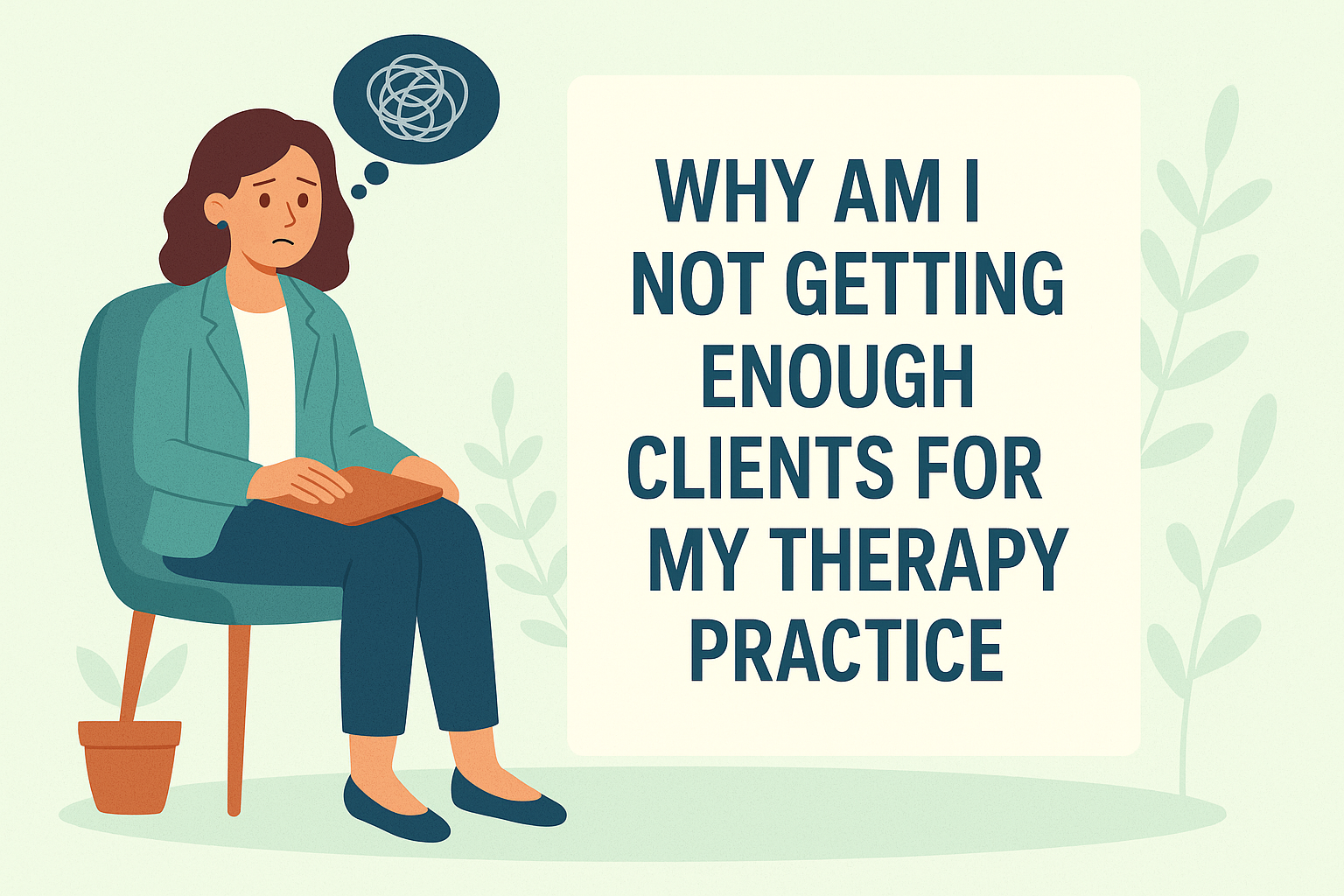
Many therapists reach a point where inquiries slow down, appointments become inconsistent, and referrals don’t convert the way they used to. It’s frustrating, especially when your clinical work is strong, and your clients value you. Yet the reality is that the mental-health landscape has transformed. Clients now behave like digital consumers: they research extensively, compare therapists online, evaluate websites, check Google reviews, and prefer practices that demonstrate clarity, credibility, and convenience.
At the same time, competition has increased across cities and states, with thousands of clinicians launching private practices, transitioning to hybrid care, or expanding into niches. This shift means therapists must look beyond clinical expertise and evaluate visibility, website performance, branding, and marketing structures with the same seriousness they bring to their therapeutic work.
Most inquiry problems are not about competence they are signs of gaps in your digital ecosystem: a website that doesn’t convert, weak SEO, an unoptimized Google Business Profile, unclear messaging, or reliance on a single marketing channel like Psychology Today.
Mental Health IT Solutions specializes in diagnosing these gaps and rebuilding a strong digital presence for therapists, psychologists, LMFTs, and group practices. If inquiries have slowed or feel unpredictable, this guide will help you understand exactly where the breakdown is happening and how to fix it strategically.
1. Your Website Is Not Optimized for Conversions

Poor First Impressions & Outdated Design
An outdated layout, cluttered structure, or slow mobile experience reduces trust instantly. Clients judge your professionalism within seconds, and an unattractive or confusing site leads them to exit quickly.
No Clear Calls-to-Action
Buttons like “Book Now,” “Schedule Consultation,” or “Request Appointment” must be visible and repeated across pages. If clients need to “hunt” for a way to contact you, inquiries drop.
Lack of Specialty-Focused Service Pages
General content fails to connect with niche needs such as trauma, CBT, EMDR, anxiety, couples, or teen therapy.
SEO also suffers when you don’t have structured service pages.
Interlinking options:
- Therapist Website Development
- Teletherapy Website Development
2. You Are Not Ranking on Google (Weak SEO)

Wrong Keywords or No Keyword Strategy
You might be ranking for low-intent terms but not for decision-ready keywords like:
“CBT therapist in Austin,” “EMDR therapist near me,” “couples counseling in Seattle.”
Limited or Thin Content
Short service pages and lack of supporting blogs hurt ranking and credibility.
Lack of Local SEO
No city-based keywords, no location landing pages, and no local signals lead to invisibility in your area.
For better insights on SEO, visit SEO Guide for Therapists.
3. Your Google Business Profile Is Not Optimized
Incomplete or Incorrect Information
Missing service categories, phone numbers, appointment links, or descriptions prevent Google from showing your profile.
Low Review Volume
Clients gravitate toward therapists with consistent, high-quality reviews.
No Regular Activity
Google rewards profiles that post weekly updates, FAQs, and service highlights.
4. Your Brand Positioning Is Not Clear

Your Messaging Is Too Generic
Clinicians often write vague lines like “I help people feel better,” which fail to differentiate.
Specific outcomes attract clients.
No Defined Target Audience
Being unclear about who you help—children, teens, couples, BIPOC clients, high achievers—reduces connection.
Website Copy Lacks Empathy & Clinical Clarity
Copy that’s too clinical or too generic does not resonate with real client concerns.
5. Your Pricing or Practice Model Is Confusing
No Transparent Pricing
Unclear fees or lack of financial guidance (packages, sliding scale) lower trust.
Only Offering In-Person in a Post-Telehealth World
Without teletherapy options, your reach shrinks significantly.
No Packages, Bundles, or Programs
Single-session structures no longer stand out in competitive markets.
6. You Are Relying Only on Psychology Today
Listing Is Not Enough to Drive Consistent Growth
Psychology Today helps with visibility but doesn’t guarantee steady inquiries, especially in competitive cities.
Your Profile Isn’t Optimized
Weak headline, no specialties, and poor keyword alignment reduce conversions.
7. You Don’t Have a Consistent Marketing System
Irregular or No Content Marketing
Inconsistent blogs, reels, or social posts lead to lower awareness.
No Email Marketing
Without nurture sequences, potential clients lose connection.
No Referral Network
No collaborations with doctors, schools, or local groups restrict your reach.
8. No Investment in Paid Advertising

You Rely Only on Organic Reach
Competitors using Google Ads appear first for all high-intent searches.
Poor or No Landing Pages
Ads without optimized landing pages lead to wasted budgets.
9. Weak Professional Identity Online
No Personal Brand
Lack of expert presence on LinkedIn or local platforms weakens trust.
Limited Social Proof
Few testimonials or reviews (HIPAA-safe) make it harder for clients to choose you.
10. Administrative and Experience Issues Are Affecting Referrals
Slow or No Response to Inquiries
The first 60 minutes is the most important response window.
Complicated Intake Processes
Multiple steps, outdated forms, or slow systems reduce conversion.
Poor Follow-Up System
No automated reminders or workflows = lost clients.
11. Competition Has Increased in Your Area
Rising Number of Therapists
More clinicians are opening practices, making niche positioning essential.
Need for Niche Differentiation
Examples:
- Trauma-informed parenting
- BIPOC mental health
- High-performance professionals
- Couples therapy
- Faith-based or culturally aligned care
12. You Need Professional Help Fixing Visibility & Branding
When to Consider a Mental-Health Marketing Agency
- Inquiries have dropped for 3+ months
- Your website hasn’t been updated in years
- Competitors consistently outrank you
- You’re unsure where the bottleneck is
How MHIS Helps Therapists Increase Inquiries
- HIPAA-aware, high-converting therapist websites
- Local SEO & Google Maps rankings
- Google Ads setup and management
- Content marketing & blog strategy
- Branding, messaging, and positioning
Best Companies That Help Therapists Get More Clients
Choosing the right partner to improve your visibility can make a dramatic difference in your client flow. Several marketing and website development companies specialize in supporting mental-health professionals, but only a few understand clinical requirements, HIPAA considerations, and the nuances of therapy-specific SEO. Below are some of the best companies therapists trust for website development, SEO, branding, and practice growth.
1. Mental Health IT Solutions (MHIS) — Best Overall for Therapist Growth & SEO
MHIS offers fully HIPAA-aware websites, niche-specific SEO, Google Ads, personal branding support, and complete marketing systems tailored exclusively for therapists, psychologists, and group practices.
Their focus on clinical clarity, local SEO, high-converting design, and therapist-specific messaging makes them the strongest all-round partner.
Visit: https://old.mentalhealthitsolutions.com/
2. Brighter Vision — Best for Basic Templates
Good for therapists seeking low-cost, template-based websites, though limited in customization, SEO depth, and scaling.
3. TherapySites — Best for Directory + Website Bundles
Suitable for clinicians who want a simple website with integrated directory exposure, but less effective for long-term SEO strategy.
4. Empathy Sites — Best for Minimalistic Designs
Strong design aesthetics; specializes in clean therapist websites, though SEO and performance optimizations vary.
5. CounselingWise — Best for Content Roadmapping
Known for blog strategy and content planning. Good for therapists who want deeper long-form content support.
Comparison Table: Best Companies That Help Therapists Increase Clients
| Company Name | Best For | Key Services | Strengths | Limitations |
|---|---|---|---|---|
| Mental Health IT Solutions | Overall best for therapist growth | HIPAA-aware websites, Local SEO, Google Ads, branding, content, personal branding | Deep industry specialization, high-converting UX, strong SEO results, clinical messaging expertise | Premium custom approach may not suit low-budget practices |
| Brighter Vision | Affordable template websites | Template sites, basic SEO, hosting | Low cost, easy to set up, beginner-friendly | Limited customization, weaker SEO performance, template restrictions |
| TherapySites | Website + directory bundle | Website templates, directory listing | Good visibility boost via directory bundle | Not ideal for high-ranking SEO; design flexibility limited |
| Empathy Sites | Aesthetic minimalist designs | Custom design, branding | Clean, modern designs; therapist-focused | SEO depth and technical performance vary across builds |
| CounselingWise | Content and SEO roadmap | Content planning, SEO guidance, blog writing | Strong content strategy, helpful for long-term blogging | Higher costs for full service; limited focus on design |
FAQs
-
Why Did My Therapy Inquiries Suddenly Drop?
Usually due to shifts in Google rankings, reduced GBP visibility, or seasonal fluctuations. Website speed or technical issues can also cause drops.
-
How long does SEO take to bring new clients?
Typically 6–12 weeks for early improvements and 3–6 months for dominant ranking.
-
Why do other therapists get more inquiries even with similar experience?
They likely have stronger SEO, clearer messaging, more reviews, or a more modern website.
-
Should I focus on social media or Google first?
Google brings high-intent clients ready to book. Start there and use social media to strengthen brand trust.
-
Do blogs actually help therapists get clients?
Yes. They improve SEO, showcase expertise, and help clients understand your approach.
-
What is the fastest way to get more therapy clients?
Google Ads + an optimized landing page + an updated Google Business Profile.
-
How do I know if I need to upgrade my website?
If your site loads slowly, looks outdated, or lacks niche service pages, it’s limiting your growth.
Conclusion
If inquiries are low or inconsistent, it’s rarely about your clinical ability. The deeper issue lies in how clients find you, how your digital presence communicates trust, and whether your marketing systems support consistent visibility. Today’s therapy seekers expect clear messaging, fast-loading websites, transparent pricing, and strong social proof before they book.
By auditing your website, SEO, Google Business Profile, brand messaging, and marketing structure, you can identify exactly where the breakdown is occurring. When addressed correctly, most practices see meaningful improvements in inquiries within weeks.
Mental Health IT Solutions specializes in helping solo clinicians and group practices strengthen visibility with high-performing websites, SEO, Google Ads, and brand systems built specifically for mental-health professionals. If you’re ready for a complete practice growth diagnosis, the MHIS team can guide you step by step toward predictable and sustainable client acquisition.