
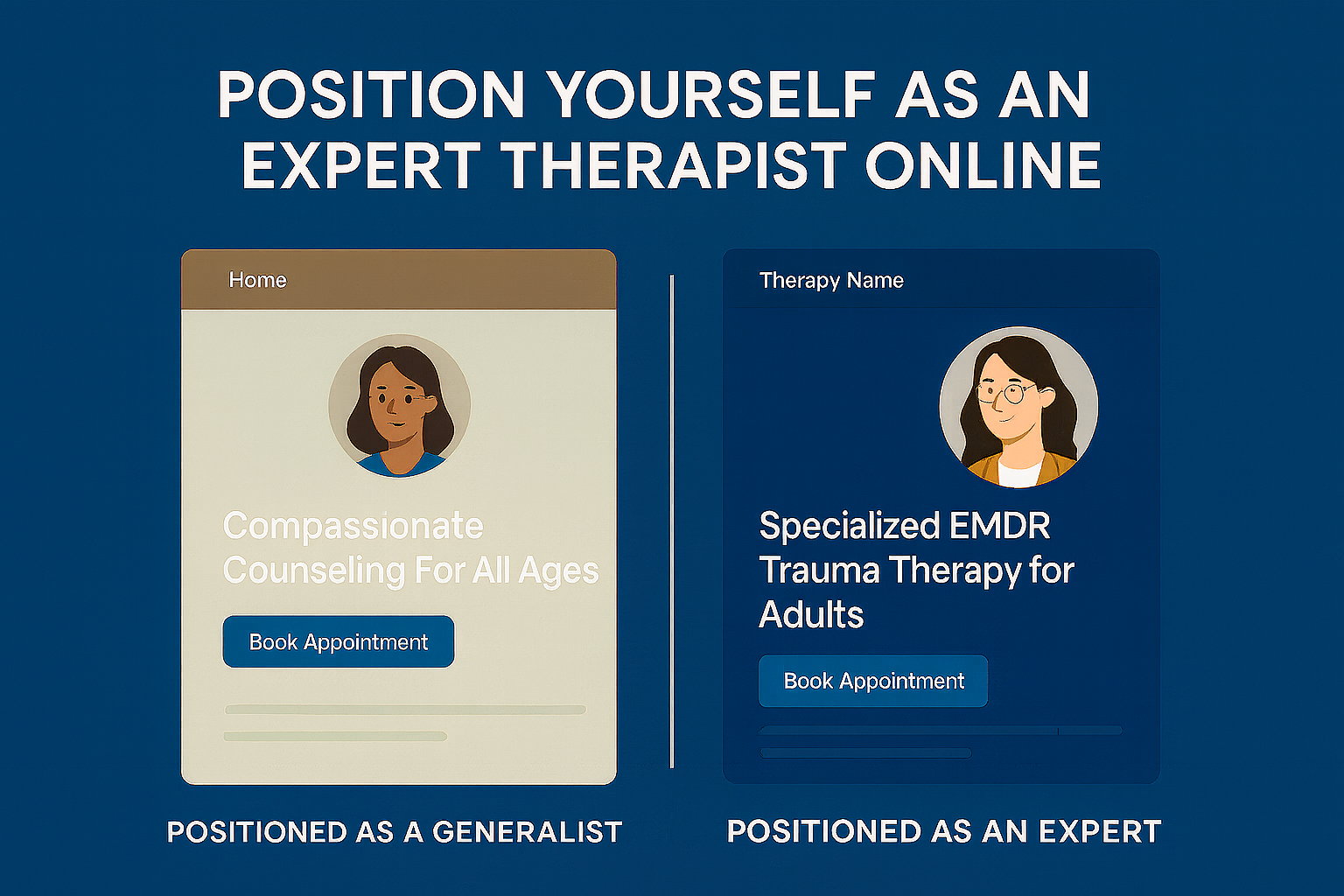
How to position as an expert therapist online is now one of the most important questions for mental health professionals who want to attract high-value clients and build long-term credibility. Clients no longer judge expertise only by credentials or years of experience they evaluate digital authority. Before booking a session, most visitors assess your website, read reviews, compare profiles, scan your social media, and evaluate how clearly you communicate your niche and approach.
A strong online presence now functions as clinical credibility. A high-authority website, optimized service pages, a defined brand identity, educational content, and visible social proof all shape how clients perceive your professionalism within seconds. Those who don’t establish this digital authority often face inconsistent inquiries a challenge covered in our guide on why therapists struggle to get enough clients.
To position yourself as a trusted expert, every part of your online ecosystem must reflect clarity, specialization, and depth. Mental Health IT Solutions helps therapists build authority-driven websites, SEO foundations, and branding systems that strengthen perceived expertise online.
1. Build a Professional, High-Authority Website
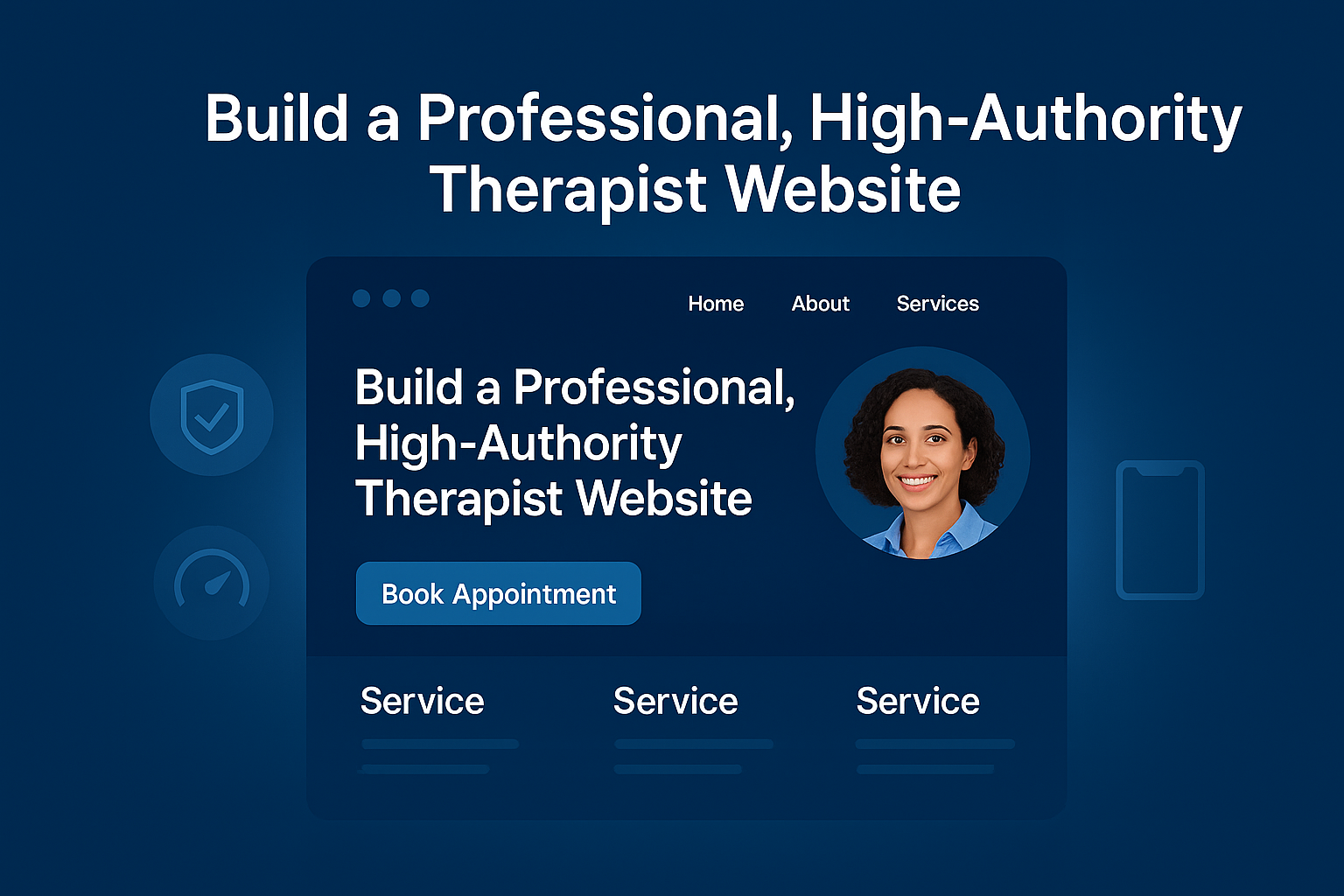
Your Website Is Your Primary First Impression
Clients decide within seconds if you feel trustworthy. A high-authority therapy website includes:
- Clean, modern, compassionate design
- Warm, high-quality photos and human-centric visuals
- Mobile-first layout with fast loading
- Trust markers: degrees, modalities, specialties, experience
If your current website is outdated, slow, or unclear, fixing this becomes the strongest first step to building expert authority. Our full guide on therapist website development explains what a modern, high-trust website must include.
Showcase Niche Expertise on Service Pages
Generalist service pages weaken authority. Each specialty must have a dedicated, detailed page that reflects depth of knowledge:
- EMDR therapy
- Trauma therapy
- Couples counseling
- CBT / DBT
- Anxiety or ADHD treatment
- Teen mental health
Add Authority Signals
Strong authority elements include:
- Advanced certifications (EMDRIA, EFT, Gottman, etc.)
- Continuing education
- Supervision experience
- Workshops or training you’ve conducted
- Media or podcast mentions
If you don’t have media features yet, list professional affiliations or niche-specific contributions.
2. Strengthen Your Therapist Brand Identity
Clear Positioning Statement
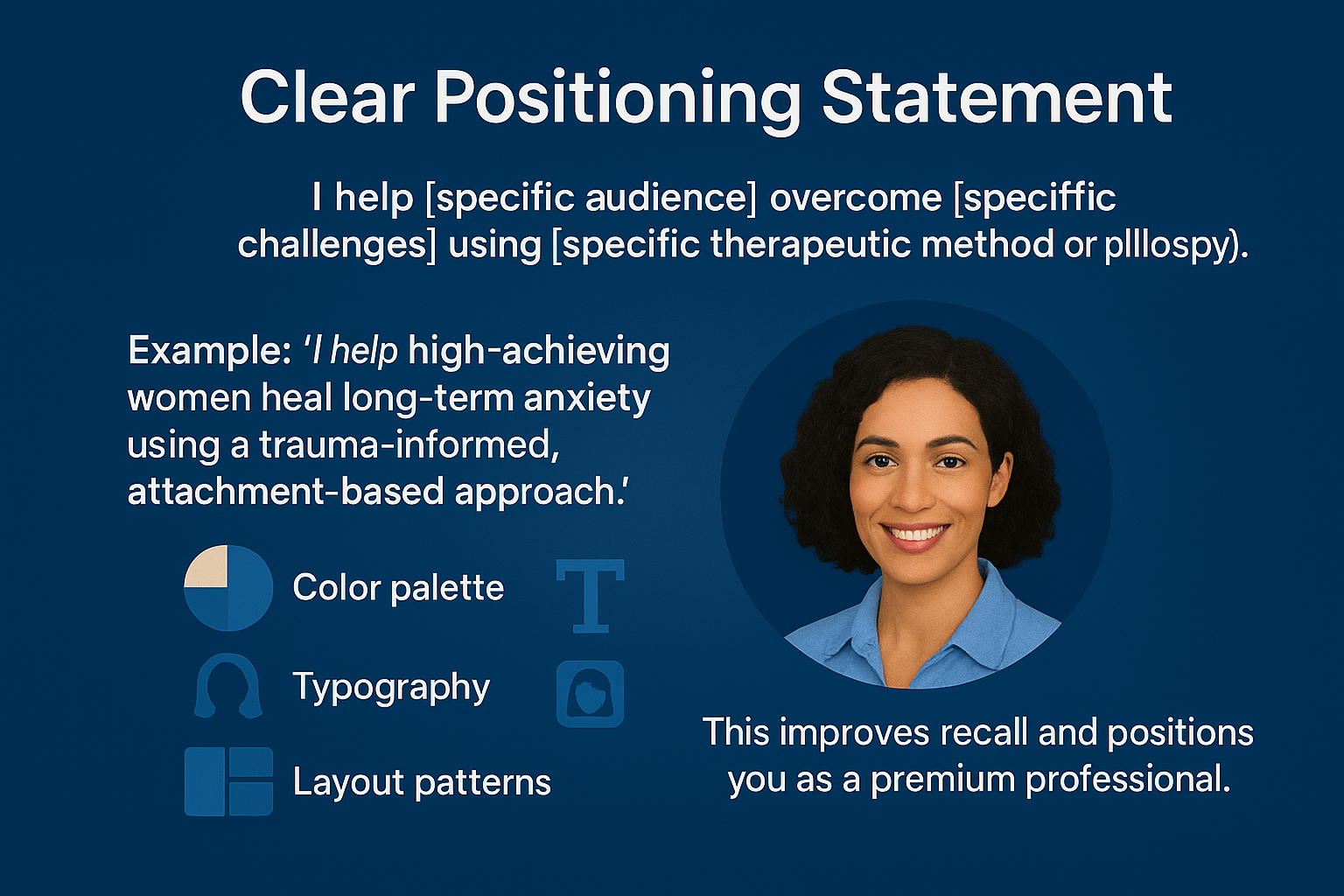
The core formula:
I help [specific audience] overcome [specific challenges] using [specific therapeutic method or philosophy].
Example:
“I help high-achieving women heal long-term anxiety using a trauma-informed, attachment-based approach.”
Consistent Visual Identity
Experts have consistent visual elements across platforms:
- Color palette
- Typography
- Headshot style
- Iconography
- Layout patterns
This improves recall and positions you as a premium professional.
Voice, Tone & Clinical Philosophy
Your brand voice should reflect your therapeutic identity:
- Evidence-based
- Trauma-informed
- Warm and supportive
- Direct and skills-based
- Culturally sensitive
Consistency across your website, Psychology Today, and social channels strengthens authority.
3. Publish Thought-Leadership Content Regularly
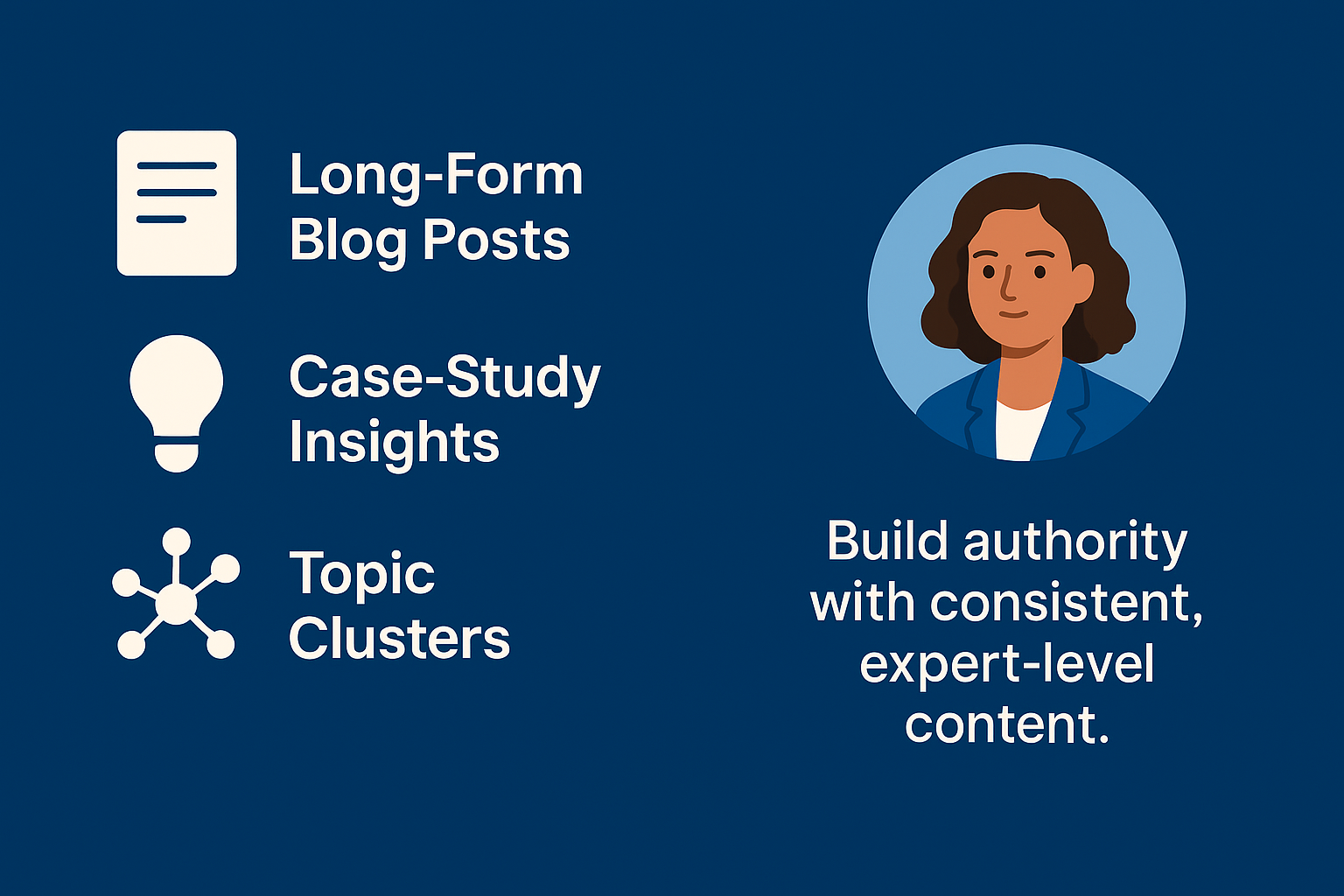
Long-Form Blog Posts
Writing detailed educational content builds expertise and supports SEO. Focus on:
- Core psychological concepts
- Symptom patterns
- Treatment frameworks
- Clinical insights clients rarely see elsewhere
See: How can I get more clients for my therapy practice? to understand how content supports conversion.
Case-Study Style Insights (Ethical & Non-Identifying)
Share patterns from your clinical experience without mentioning identifiable details.
Clients value clarity about:
- How therapy works
- What progress looks like
- What you observe across clients
Topic Clusters for Expertise
Create blog clusters around niche areas:
- Anxiety & panic
- Attachment theory
- EMDR trauma processing
- Couples communication systems
- Teens & ADHD
Interlinking clusters to build semantic authority is a core part of high-quality therapist SEO (explained in SEO for therapists).
4. Optimize Your Therapist Profiles (Psychology Today + Google Business Profile)
Rewrite Your Psychology Today Bio for Authority
Strong profiles include:
- Niche specialties
- Treatment philosophy
- Methodologies (EMDR, IFS, Somatic, EFT)
- Years of clinical experience
- The specific outcomes you help clients achieve
Optimize Google Business Profile
Your GBP must include:
- Niche keywords: “trauma therapist,” “couples therapist,” “anxiety therapy.”
- Photos (office, therapy room, headshot)
- FAQs
- Service categories
- Updated hours and service areas
GBP optimization significantly improves the local authority. See Local SEO for Therapists for a full strategy.
5. Build Social Proof & Reputation Signals
Ethical Review Generation
Build a HIPAA-safe review process using:
- “Did you feel supported today?” surveys
- Optional anonymous website testimonials
- De-identified quotes
- Third-party feedback forms
Media Mentions & Features
Feature:
- Podcast interviews
- Guest blog contributions
- CE workshops
- Local press articles
Showcase Professional Achievements
Highlight:
- CE hours
- Master trainings
- Certifications
- Keynotes or workshops delivered
These are powerful authority cues.
6. Leverage Social Media as a Professional Educator

Short, Helpful Educational Content
Post topic-driven, insight-based content:
- Self-regulation techniques
- Communication frameworks
- Understanding attachment
- Trauma triggers & grounding
- Relational patterns
Use LinkedIn for Professional Thought Leadership
- Share clinical perspectives
- Discuss trends
- Break down therapeutic concepts
- Post case insights (non-identifiable)
Use Instagram for Client-Facing Authority
- Carousels
- Reels
- Psychoeducation graphics
- Short reflections
7. Strengthen SEO To Be Discovered as an Expert
Rank for Niche Keywords
Examples:
- “EMDR therapist in Sacramento”
- “Couples therapy for infidelity recovery”
- “Teen anxiety therapist near me”
Build Internal Link Clusters
Your website should have a Topic Cluster Structure:
- Primary service page
- Supporting blogs
- FAQs
- Resource pages
This improves topical authority essential for ranking as an expert.
Add Schema Markup
Include:
- Person Schema
- Medical WebPage Schema
- FAQ Schema
These improve search visibility for expertise-based queries.
8. Offer High-Value Free Resources (Lead Magnets)
Create Downloadable Guides
Examples:
- Anxiety regulation toolkit
- Couples conflict repair guide
- First therapy session roadmap
Position Yourself as an Educator
Use automated email sequences to nurture long-term trust and stay top-of-mind for inquiries.
9. Demonstrate Community Presence & Advocacy
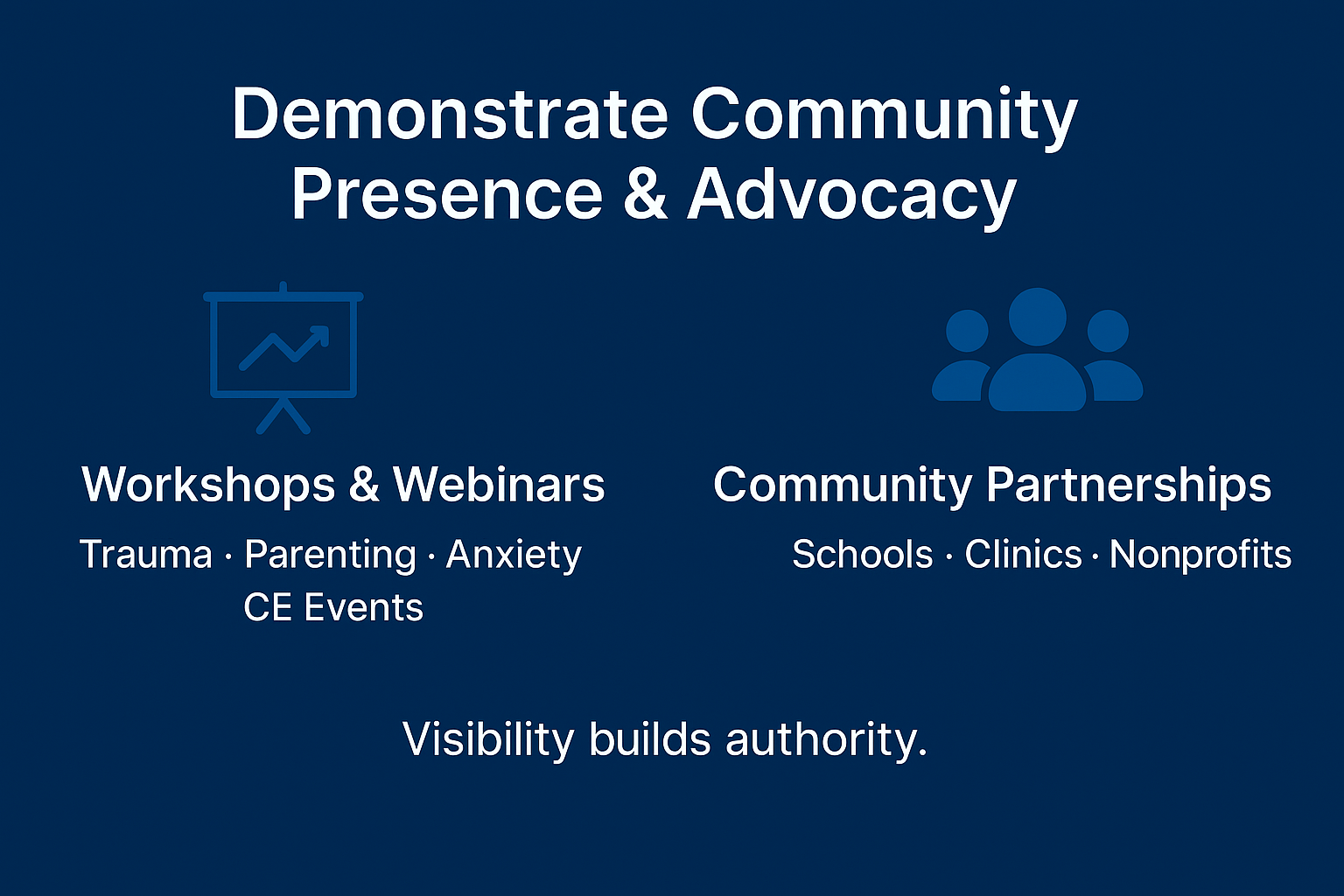
Workshops & Webinars
Examples:
- Trauma workshops
- Parenting & teen behavior programs
- Anxiety skills groups
- CE collaborations
Community Partnerships
Partner with:
- Schools
- Churches
- Local clinics
- Nonprofits
- Hospitals
Visibility builds authority.
10. Work With a Specialized Mental Health Marketing Agency
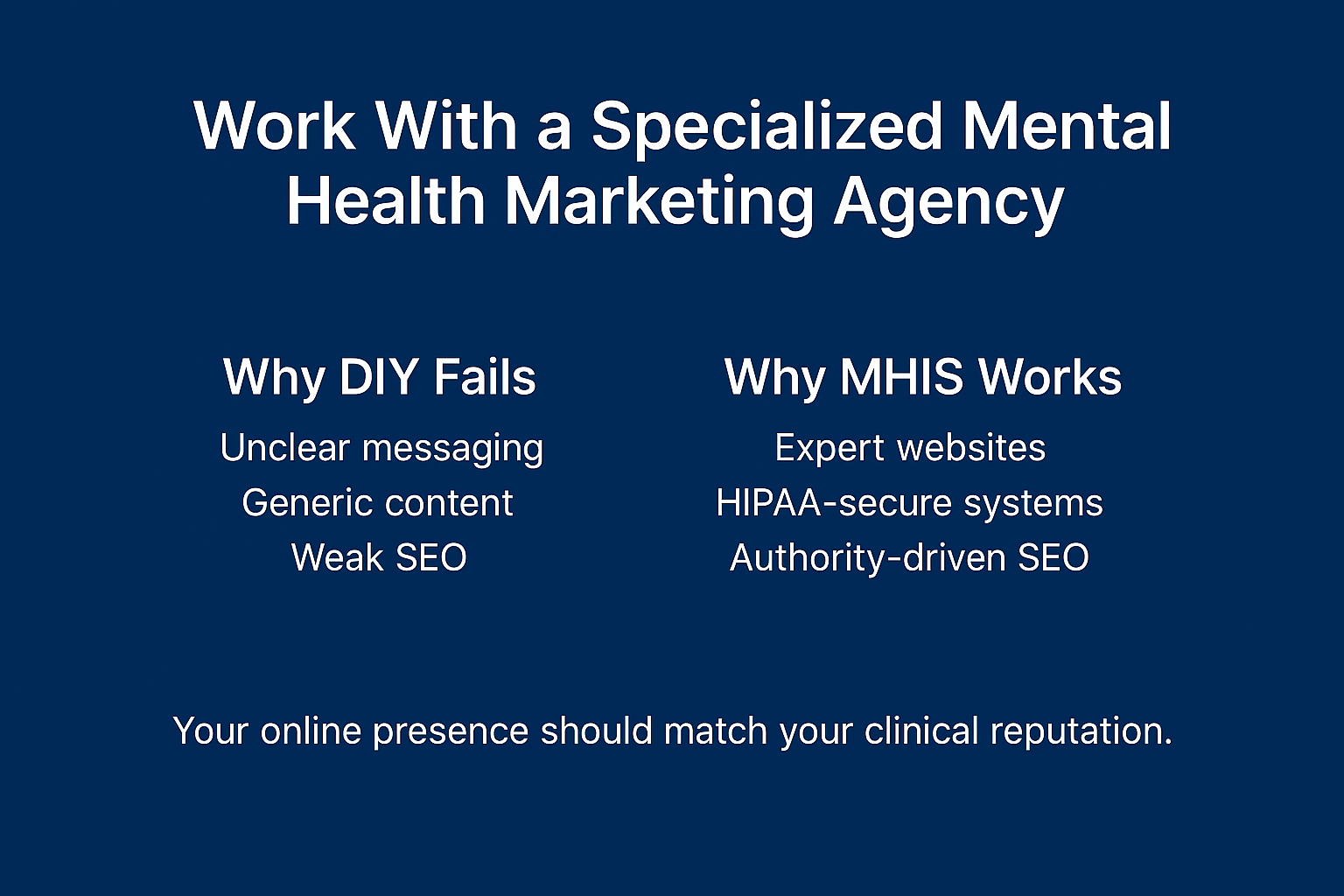
Why DIY Branding Often Fails
- Unclear messaging
- Visual inconsistency
- Generic content
- Poor SEO structure
- Weak service pages
How MHIS Helps Therapists Build Expert Authority
MHIS provides:
- High-authority therapist websites
- HIPAA-secure platforms
- SEO systems that rank
- Brand identity frameworks
- Authority-driven content
- Professional analytics
Our expertise ensures your online presence reflects your clinical reputation.
FAQs
Positioning yourself as an expert typically takes 60–120 days when supported by a strong website, SEO strategy, consistent content publishing, and social proof. With professional help, therapists can accelerate authority-building significantly.
Yes. Specializing in a clear niche such as trauma, EMDR, couples therapy, anxiety, or teen mental health dramatically improves trust, visibility, and SEO performance. Generalist positioning makes it harder for clients to understand your expertise.
Long-form blog posts, case-study-style insights, niche topic clusters, and educational social media content are the strongest authority signals. Ethical, non-identifying clinical observations help clients understand your depth and approach.
Absolutely. A fully optimized profile reinforces your niche, builds credibility, and drives local SEO visibility. High-quality photos, strong bios, accurate categories, and well-chosen keywords help signal authority to clients and search engines.
MHIS specializes in therapist websites, SEO, branding, content strategy, and digital authority frameworks. From building a high-authority website to creating niche content systems, MHIS helps therapists elevate trust, visibility, and professional credibility.
Conclusion: Your Expertise Must Be Visible, Not Hidden
Expert positioning is built through clarity, consistent branding, strong content, and strategic visibility. When your online presence reflects your clinical knowledge, clients see you as a trusted, high-authority therapist leading to more aligned clients, stronger referrals, and long-term stability in your practice.