
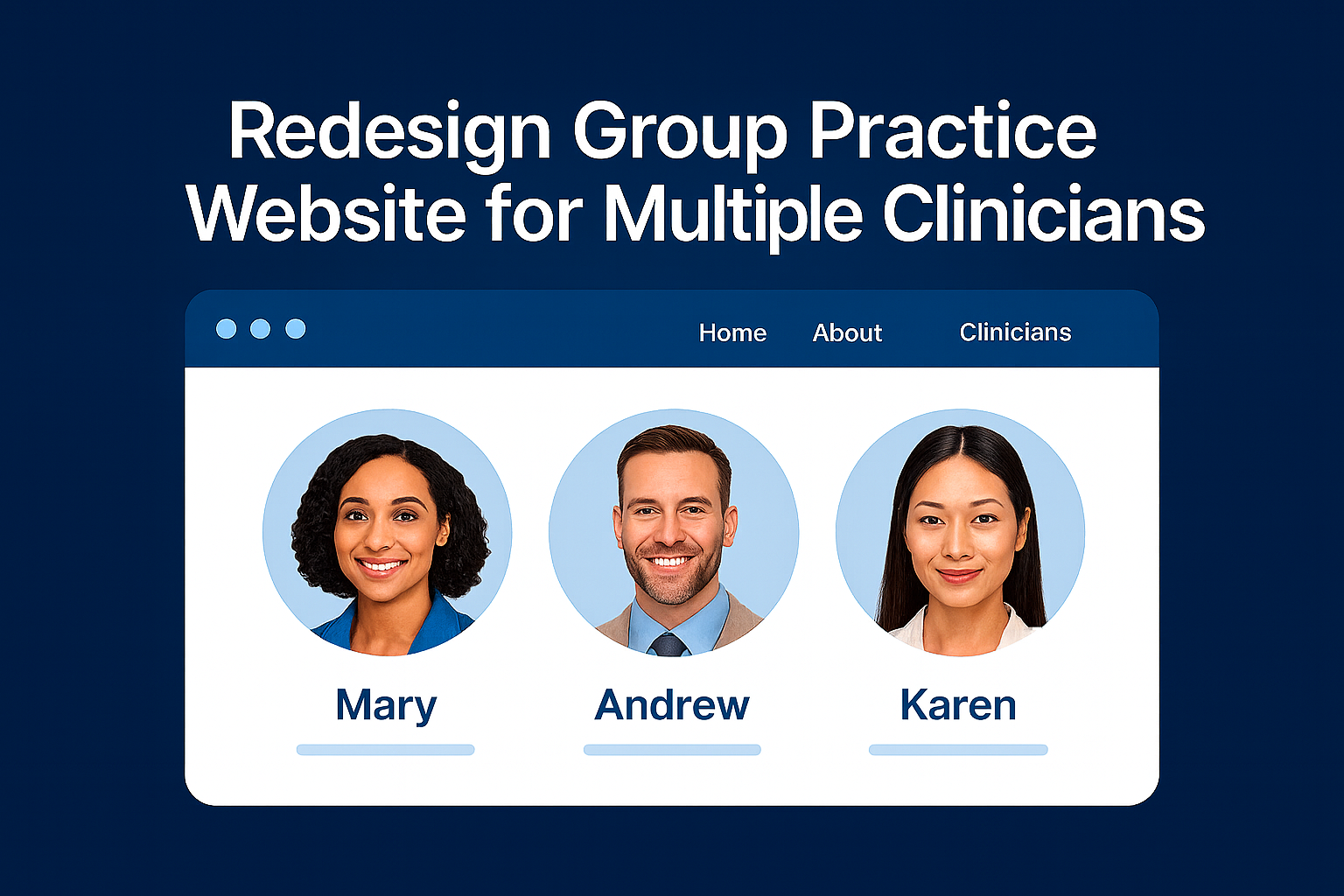
Redesigning a group practice website is significantly more complex than updating a solo therapist’s site. When a practice grows to five, ten, or even twenty clinicians, its digital presence must evolve to represent a diverse range of specialties, locations, modalities, fees, and availability. Clients don’t just need “therapy” they need help finding the right clinician who fits their situation, insurance, and preferences. A poorly structured group practice website creates friction, confuses visitors, harms SEO, and leads to missed inquiries.
Common issues include cluttered navigation, inconsistent branding, clinician pages that don’t follow a standard structure, unclear service hierarchy, and weak local SEO across multiple locations. These problems prevent clients from understanding the practice’s scope, reduce conversion rates, and limit the visibility of individual clinicians who should be discoverable through search engines. Many group practices also see uneven clinician caseloads because some profiles rank well while others don’t.
A strategic website redesign ensures your practice appears cohesive, clinically credible, and easy to navigate. It should simplify booking, strengthen SEO, and scale as you add new clinicians or locations. If your group practice is experiencing inconsistent inquiries, your current website may be part of the problem.
A well-designed group practice website is not just a digital brochure; it is the operational center of your business. At Mental Health IT Solutions, we specialize in designing scalable, SEO-focused websites for large mental health practices that require complex structures, multiple locations, clinician directories, and HIPAA-secure systems.
Talk to a Group Practice Website Specialist
1. Build a Clear Website Structure for Multiple Clinicians
A strong website structure is the foundation of a high-performing group practice site. Redesigning begins with ensuring that every visitor can find what they need immediately—whether they are looking for a specific clinician, a specific specialty, or the nearest location.
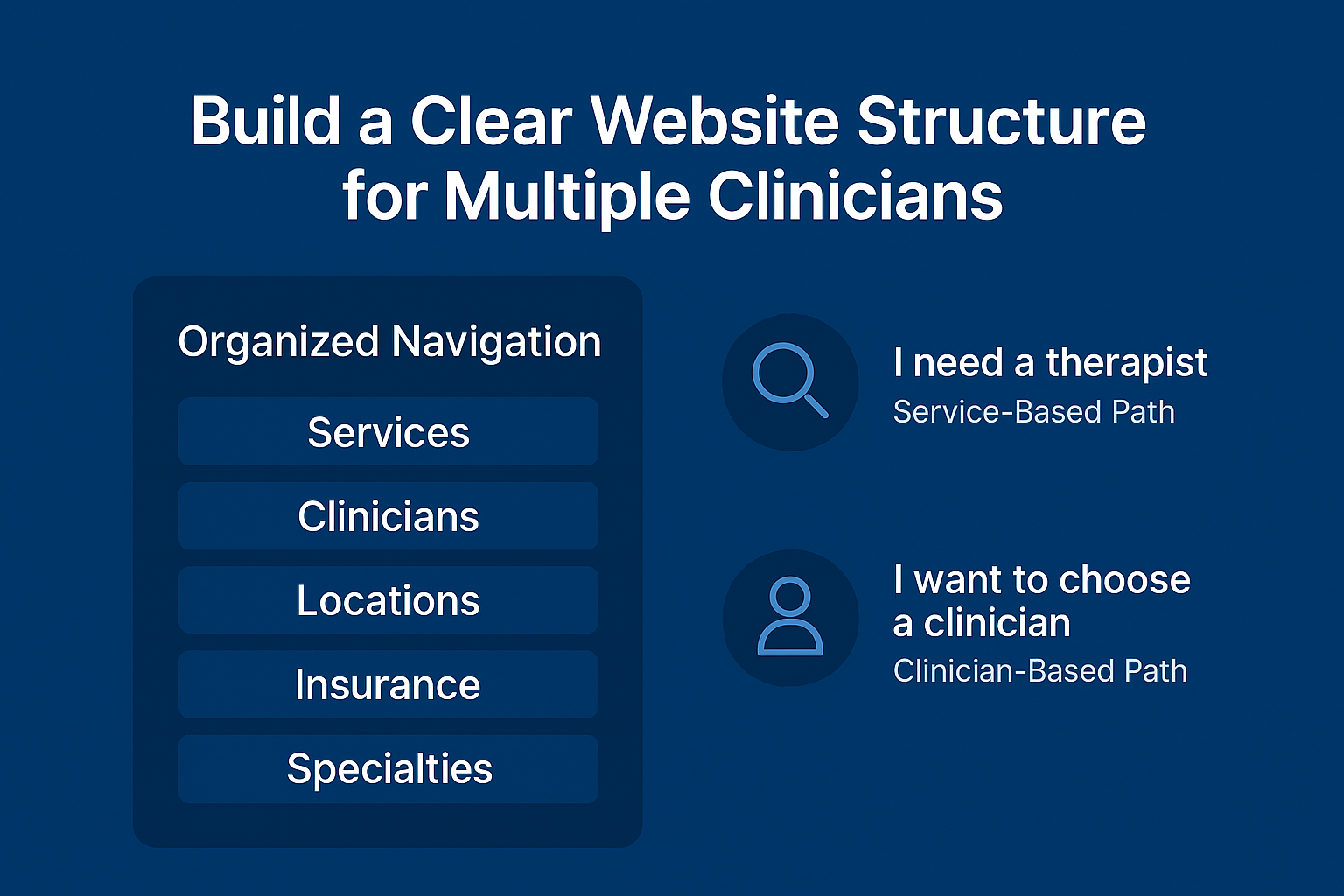
Organized Navigation
Your navigation should have predictable, scalable categories:
- Services
- Clinicians
- Locations
- Insurance
- Specialties
This structure prevents overcrowded menus and ensures the site can expand as your practice grows. A mega-menu can help present numerous specialties and clinician categories without overwhelming users.
For foundational design and structure guidance, this resource provides best practices: Therapy Group Practice Website Development
A clear navigation experience reduces bounce rates and increases appointment bookings.
Role-Based Content Paths
Group practices serve two primary user journeys:
“I need a therapist” — Service-Based Path
Visitors search for a solution: anxiety therapy, EMDR, couples counseling, trauma therapy, etc.
Your redesign must highlight services clearly.
“I want to choose a clinician” — Clinician-Based Path
Others want a therapist who matches their preferences (specialty, gender, insurance, cultural background).
Your website should support both pathways equally and without friction.
2. Create High-Quality Individual Clinician Profiles
SEO, conversions, and clinician caseloads are all directly linked to profile quality. A strong redesign requires standardizing clinician pages across the entire team.
Consistent Format
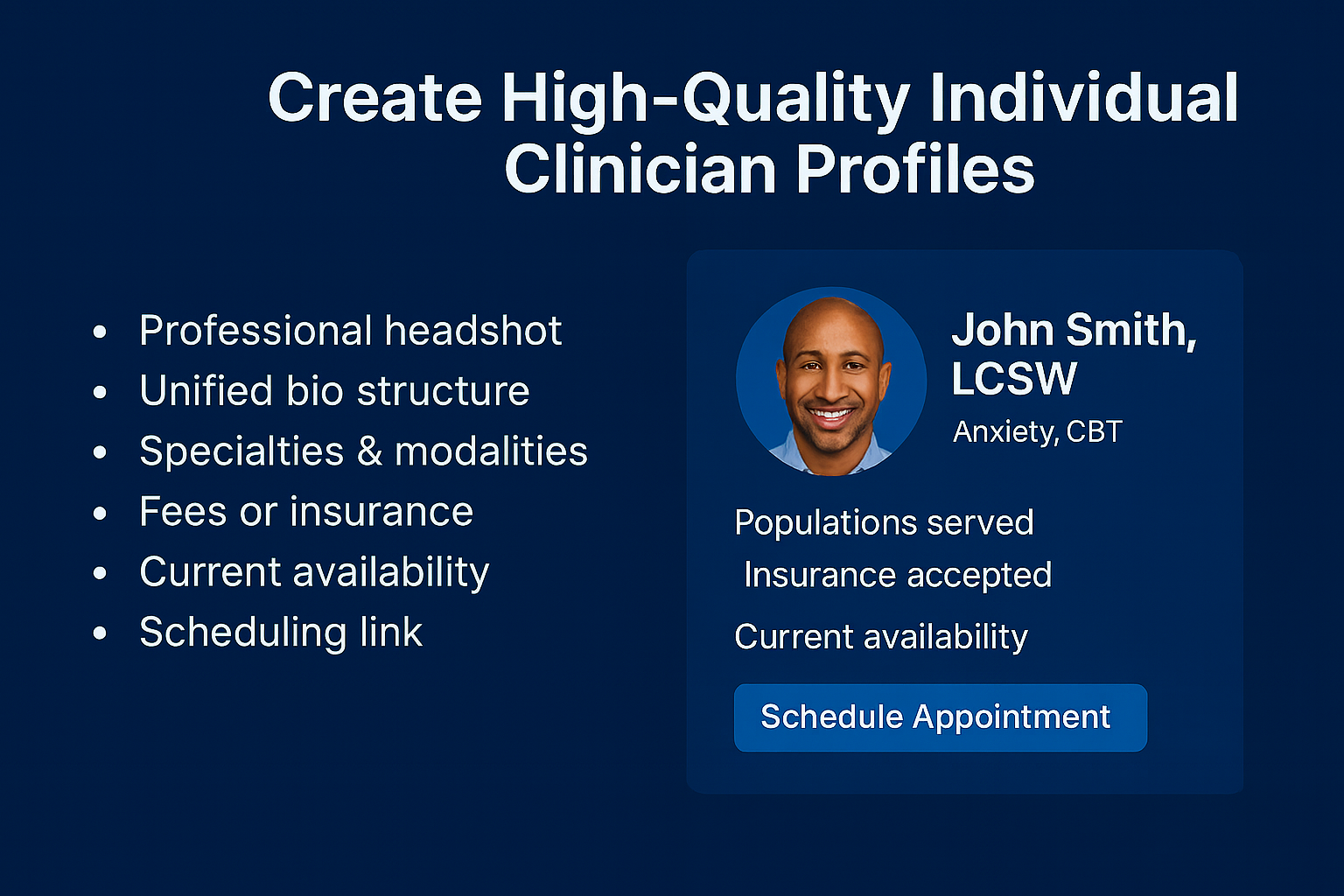
Each profile must include:
- Professional headshot
- Unified bio structure
- Specialties & modalities
- Populations served
- Fees or insurance
- Current availability
- Scheduling link
Consistency improves brand credibility and readability.
SEO-Optimized Clinician Pages
Each clinician must have:
- A unique URL
- Metadata based on specialty + location
- Schema markup to improve local SEO visibility
To understand SEO fundamentals for clinician pages, refer here: SEO For Therapists.
With optimized profiles, every clinician in your group has the potential to rank individually for services you offer.
3. Redesign Your Services Section for Clarity & SEO
Group practices often provide 10–30 different services. Poor structuring results in keyword cannibalization and low visibility.
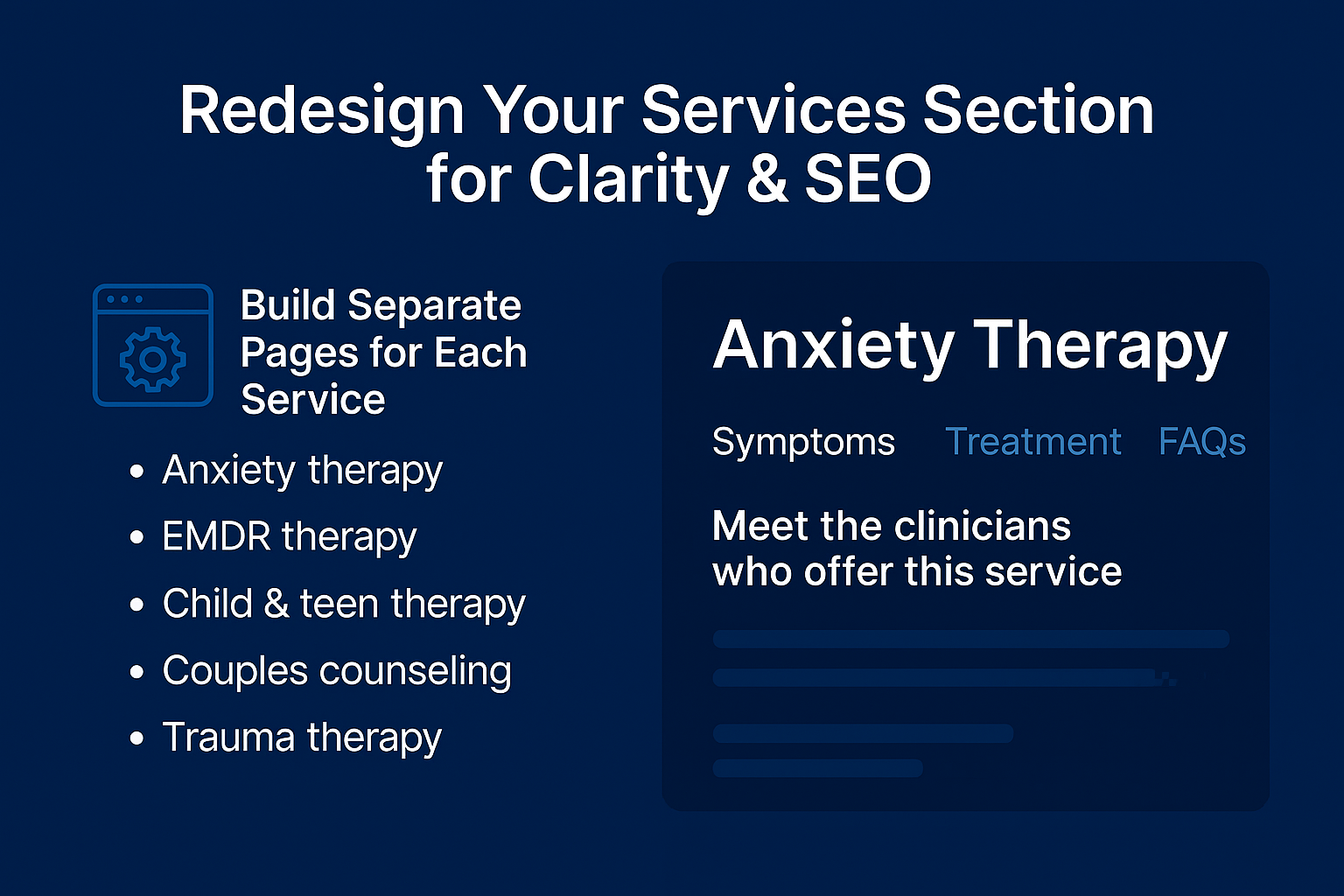
Build Separate Pages for Each Service
Examples:
- Anxiety therapy
- EMDR therapy
- Child & teen therapy
- Couples counseling
- Trauma therapy
Each service page should:
- Explain symptoms and treatment
- List modalities
- Provide FAQs
- Highlight clinicians who offer the service
Match Services to Clinicians
Use dynamic blocks like:
“Meet the clinicians who offer this service”
This strengthens internal linking and increases conversions by directing clients to the right provider instantly.
4. Create a Scalable Location Structure

Multiple locations require SEO-friendly architecture.
One Page per Location
Include:
- Address & embedded map
- Hours
- Parking details
- Insurance accepted
- Clinicians at that location
- Service availability
This makes the content locally relevant for Google.
Service + Location Pair Pages (Advanced SEO)
Examples:
- “Anxiety Therapy in Dallas”
- “Couples Counseling in Seattle”
- “Trauma Therapy in San Diego”
For deeper optimization of your local SEO architecture, see: Local SEO for Therapists
These pages dramatically improve ranking potential in competitive metropolitan areas.
5. Build a Strong Homepage That Represents the Entire Practice
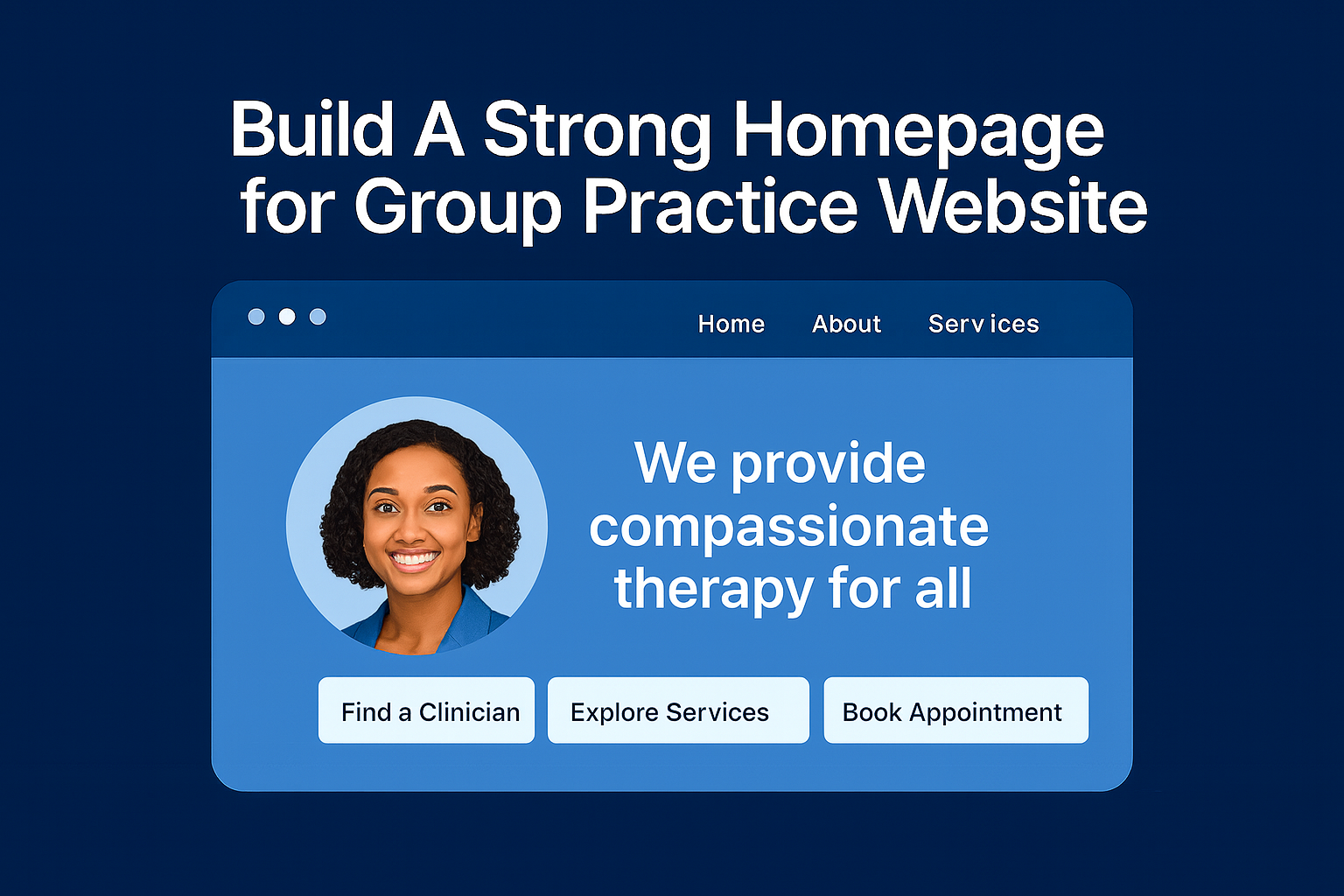
Your homepage must communicate your group identity clearly and attractively.
Clear Value Proposition
Include:
- What you offer
- Who you help
- Your unique differentiators
- Your geographic coverage
Key Quick-Access Sections
- Find a clinician
- Explore services
- View locations
- Book an appointment
The homepage must guide visitors efficiently to the right place.
6. Make Booking & Intake Simple for Multi-Clinician Workflows
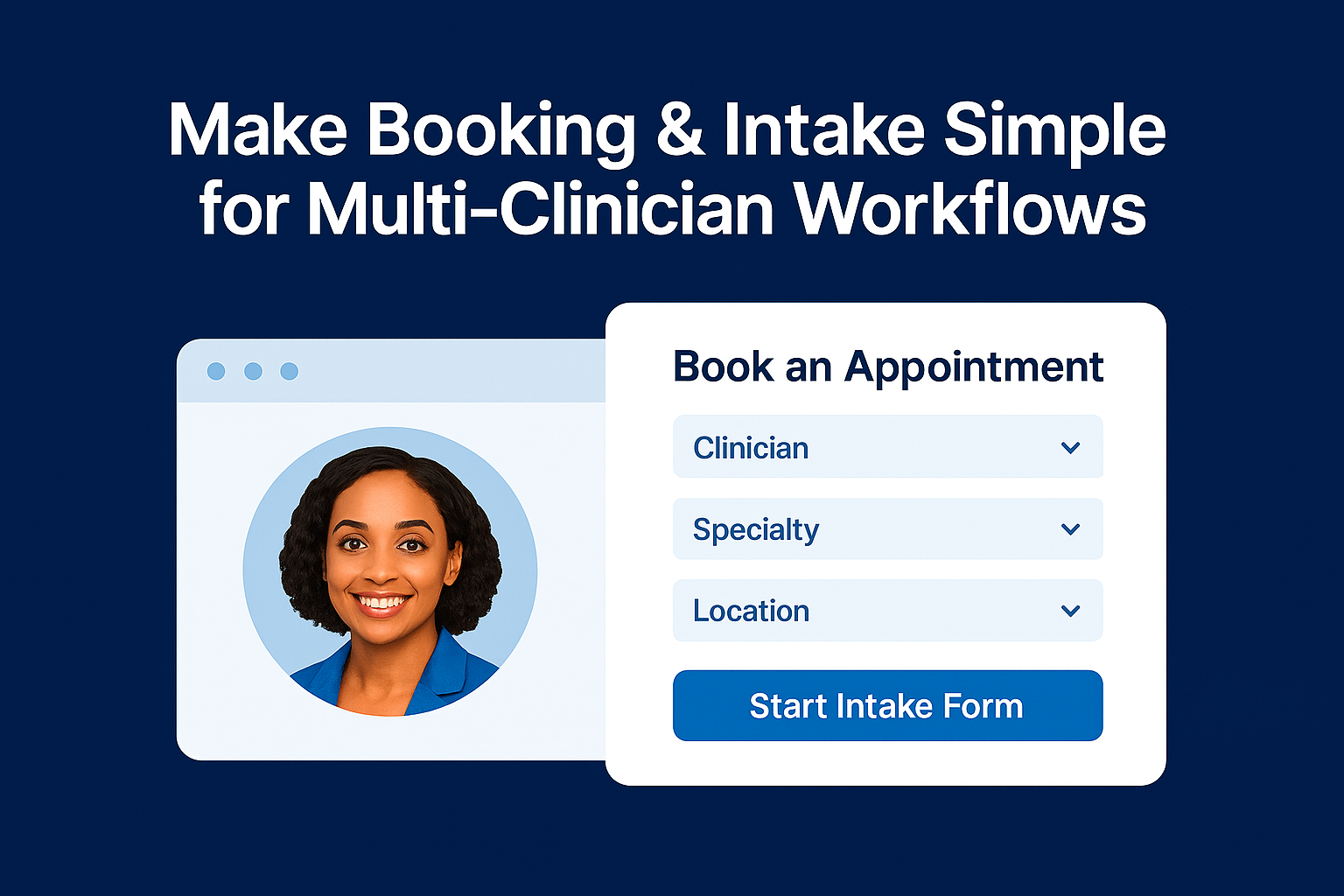
Streamlined booking is essential to reducing administrative workload and improving conversion rates.
Smart Routing Options
Allow visitors to book by:
- Clinician
- Specialty
- Location
Integrated Intake Forms
To avoid delays or misrouting:
- Use HIPAA-secure forms
- Set up automated clinician assignment
- Integrate forms with your EHR or CRM
These systems reduce manual admin work and ensure clients reach the right clinician faster.
7. Build a Unified Brand Across All Clinician Pages
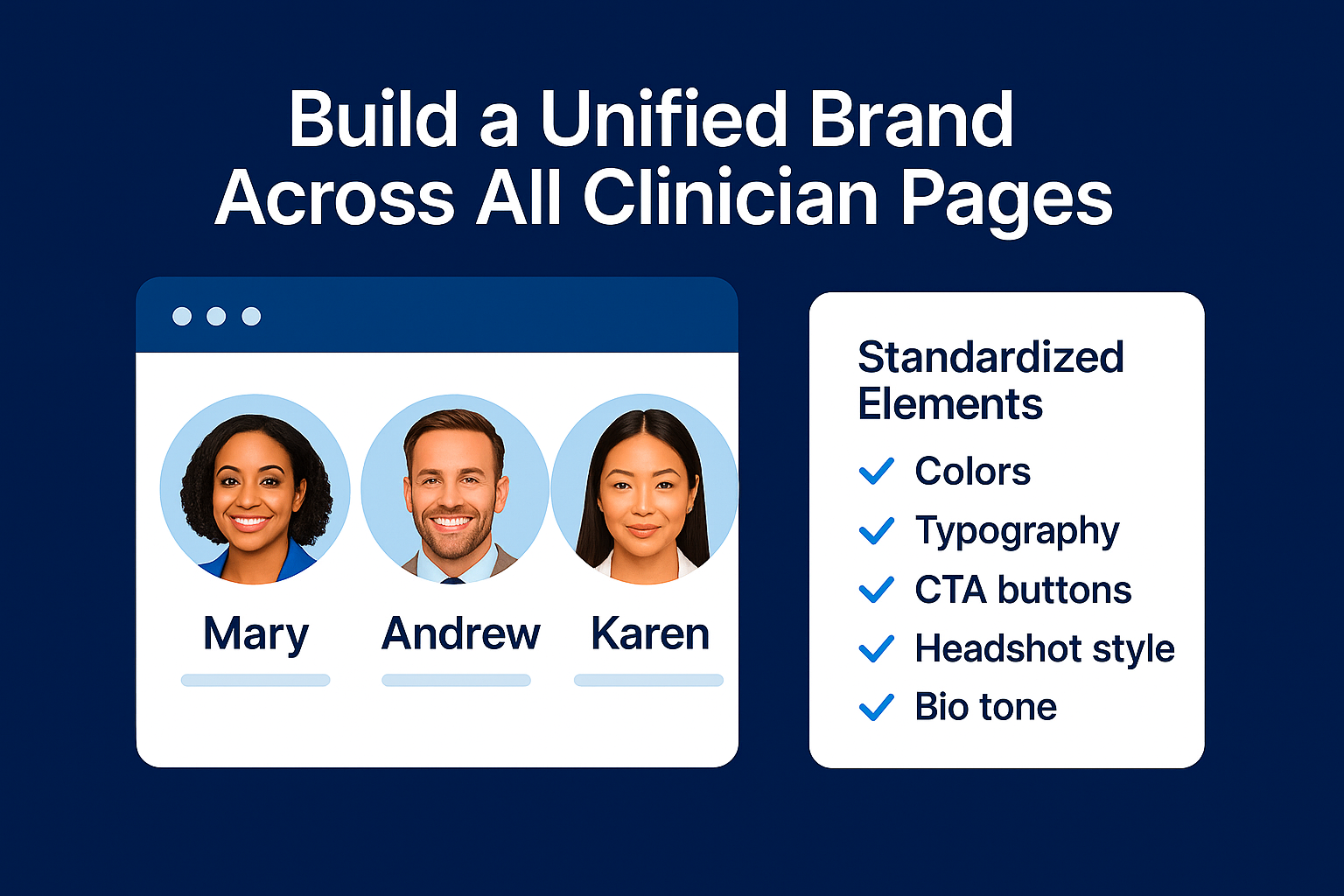
Inconsistent visuals and tone weaken your professional credibility.
Standardized Elements
- Colors
- Typography
- CTA buttons
- Headshot style
- Bio tone
Avoid Brand Dilution
Clinicians should not upload unedited selfies, off-brand colors, or inconsistent content. Your CMS should control formatting automatically.
8. Improve SEO Through URL Architecture & Interlinking
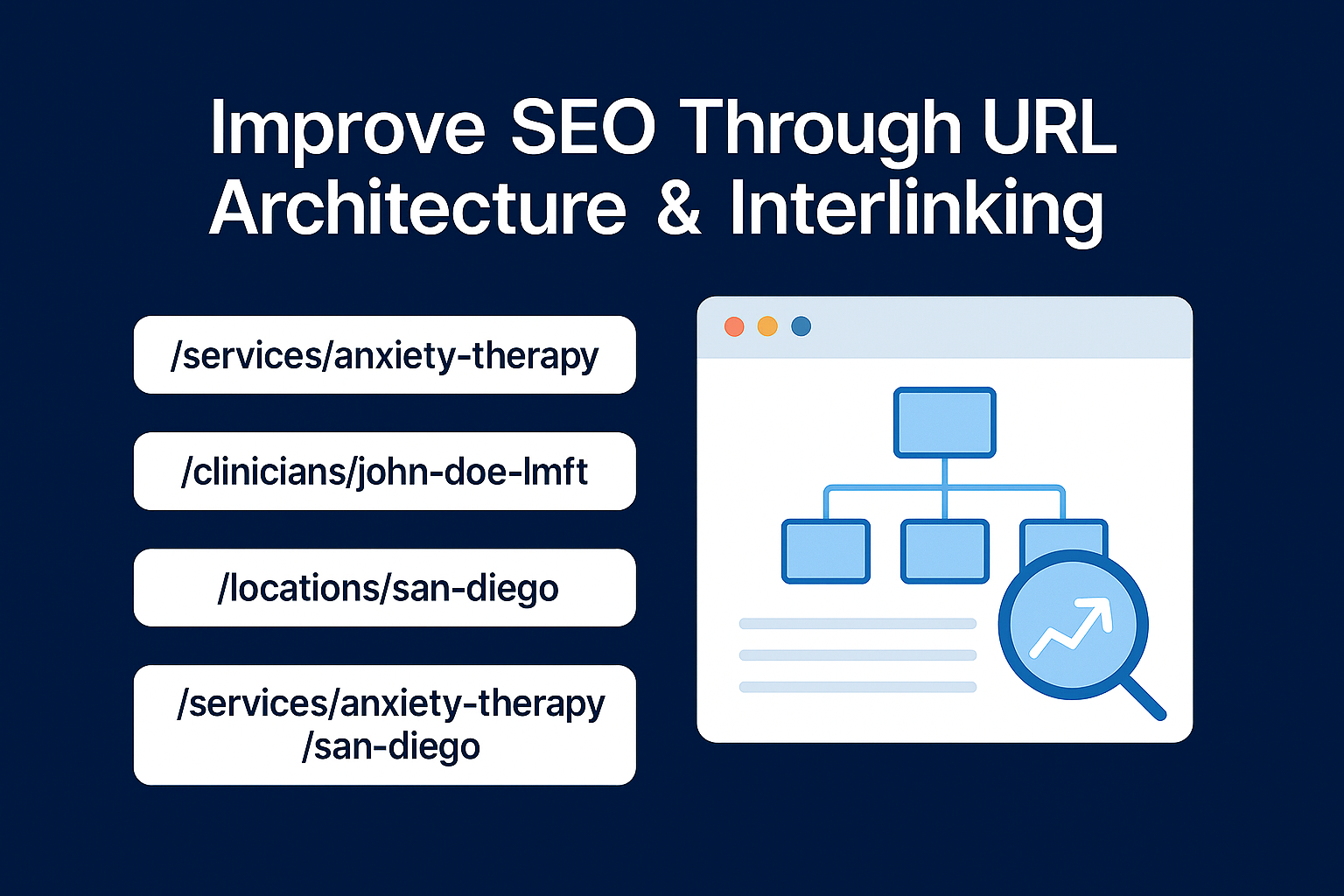
A redesign is the perfect time to organize and optimize your site.
Recommended URL Structure
- /services/anxiety-therapy
- /clinicians/john-doe-lmft
- /locations/san-diego
- /services/anxiety-therapy/san-diego
Internal Linking Strategy
- Service → Clinician pages
- Clinician → Service pages
- Location → Clinicians
- Blog → Specialty pages
Strong interlinking increases ranking potential across all pages.
9. Add Group Practice-Specific Conversion Elements
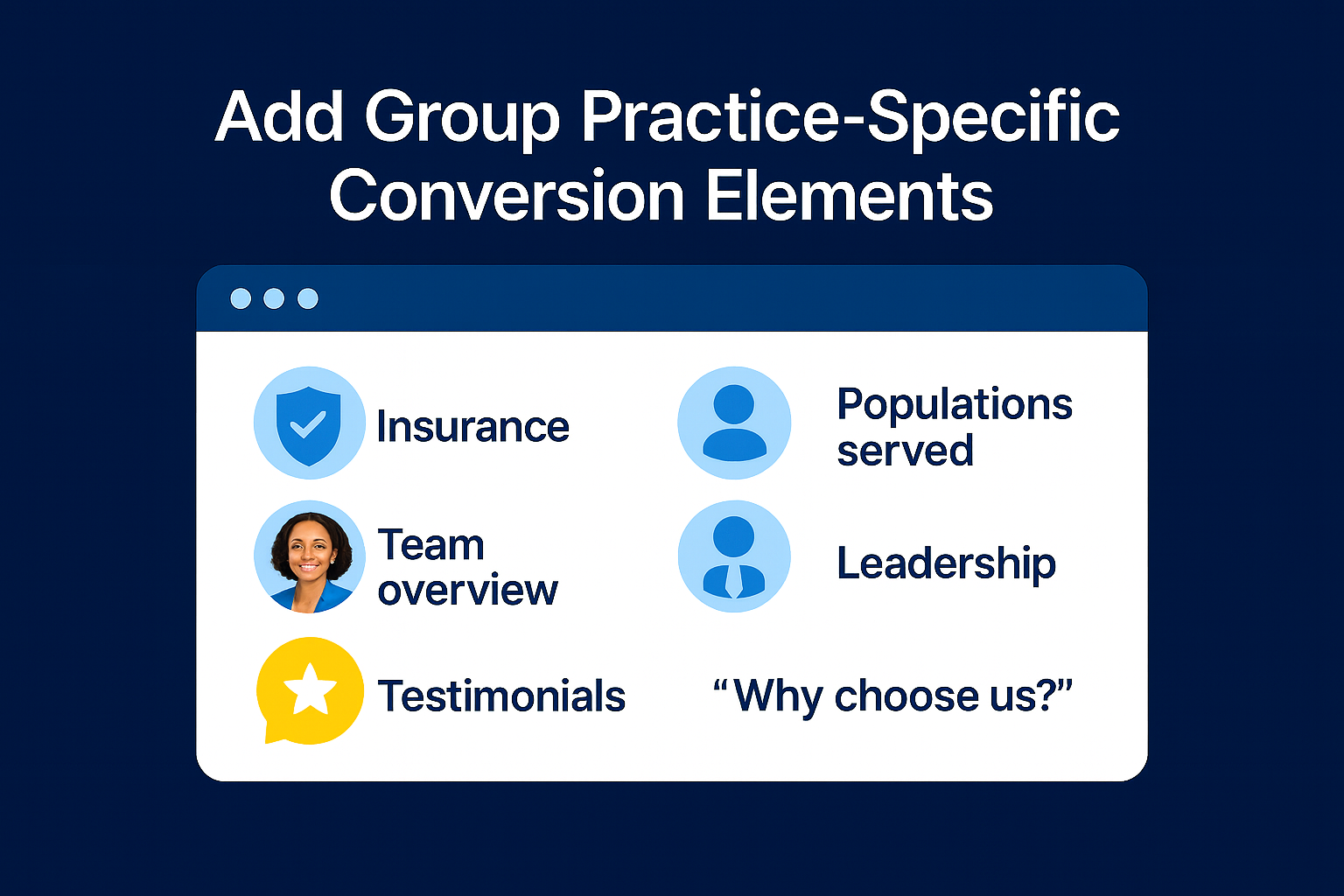
Your redesign must address the unique needs of a multi-clinician organization.
Key Components
- Insurance list
- Populations served
- Team overview section
- Leadership introduction
- Testimonials
- “Why choose us?” trust-building messaging
Conversions increase when visitors understand your values, scope, and credibility.
10. Ensure the Site Scales as You Add More Clinicians
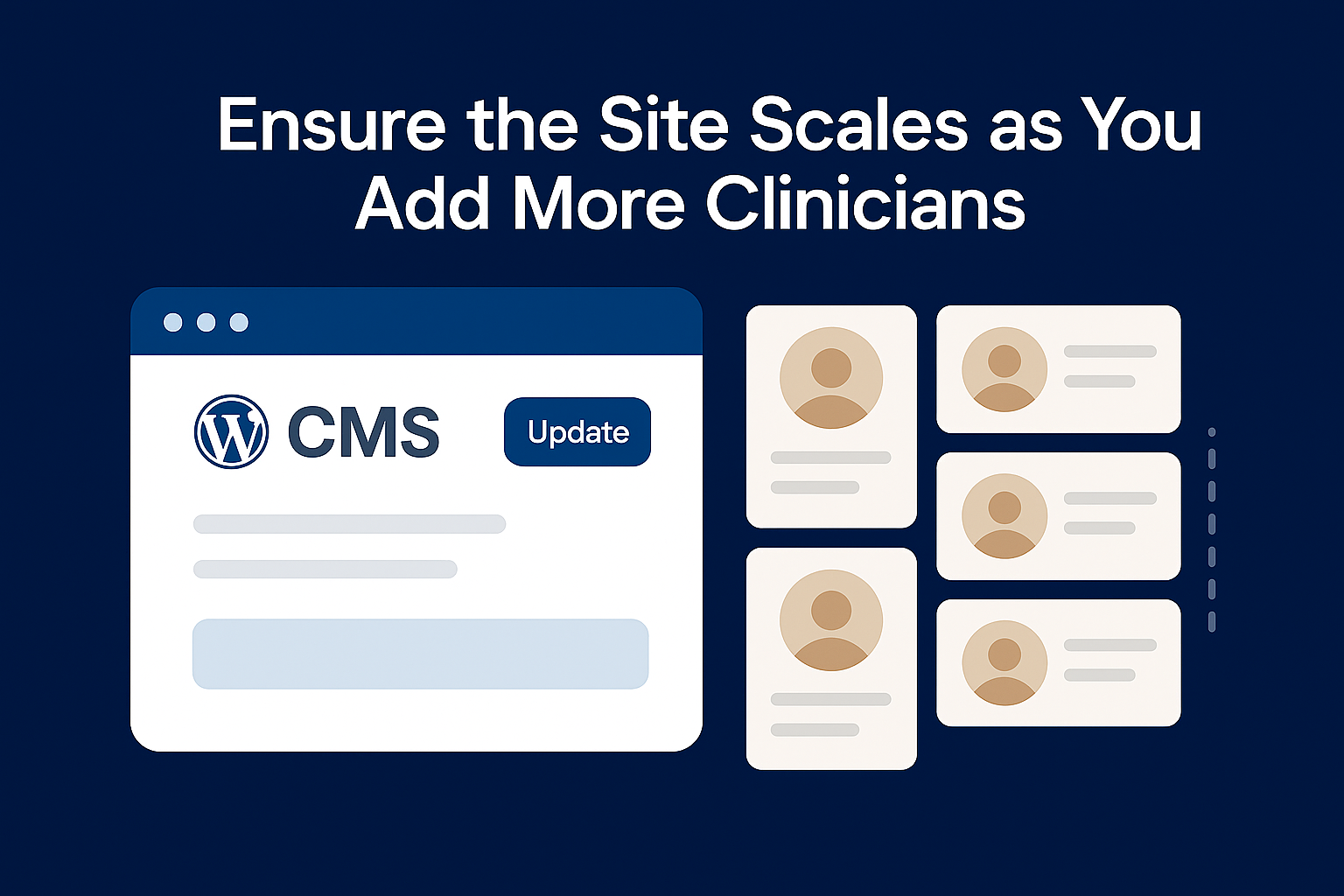
A group practice website must be built for long-term growth.
Future-Ready CMS
Use:
- WordPress
- Elementor
- Dynamic content integrations
This allows easy onboarding of new clinicians.
Modular Design Blocks
- Bio modules
- Service cards
- Location grids
These blocks allow fast expansion without rebuilding pages.
11. Build a ‘Find a Clinician’ Directory
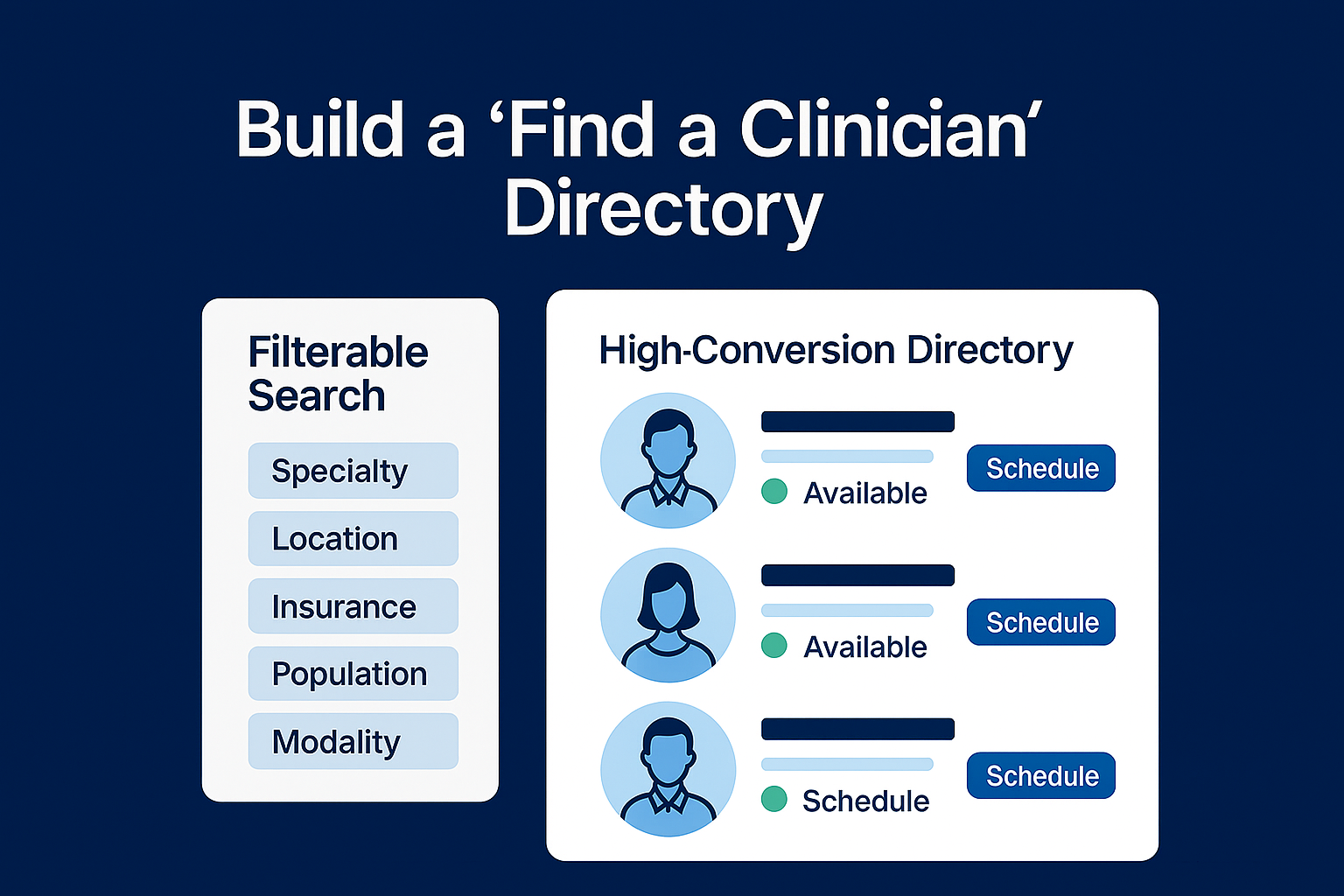
Directories are essential for large practices.
Filterable Search
Allow filtering by:
- Specialty
- Location
- Insurance
- Population
- Modality
High-Conversion Directory Layout
Include:
- Quick-view clinician cards
- Availability status
- Direct scheduling buttons
A directory significantly improves the user experience for complex practices.
12. Redesign the Website for Trust & Clinical Authority
Potential clients want confidence before booking a session.
Must-Have Trust Signals
- Professional headshots
- Valid clinical credentials
- Certifications and associations
- Fee transparency
- Community involvement
These elements improve credibility and conversions.
13. Optimize Load Speed, Mobile UX & Accessibility

Most users will visit your site from a phone.
Slow or inaccessible sites lose inquiries instantly.
Group Practices Need Faster Experiences
- Instant-loading booking pages
- Mobile-first layouts
- ADA and WCAG compliance
Speed and accessibility are ranking signals and conversion factors.
14. Add Advanced Content Marketing for Growth

Blog content strengthens your SEO ecosystem.
Blog Strategy
- Articles tailored to specialties
- Geo-specific content
- Interlinking to service pages
Resource Library
- Worksheets
- Guides
- FAQs
- Lead magnets
To understand how content drives inquiries, refer here: How can I get more clients for my therapy practice?
15. Add Analytics to Track Team & Service Performance
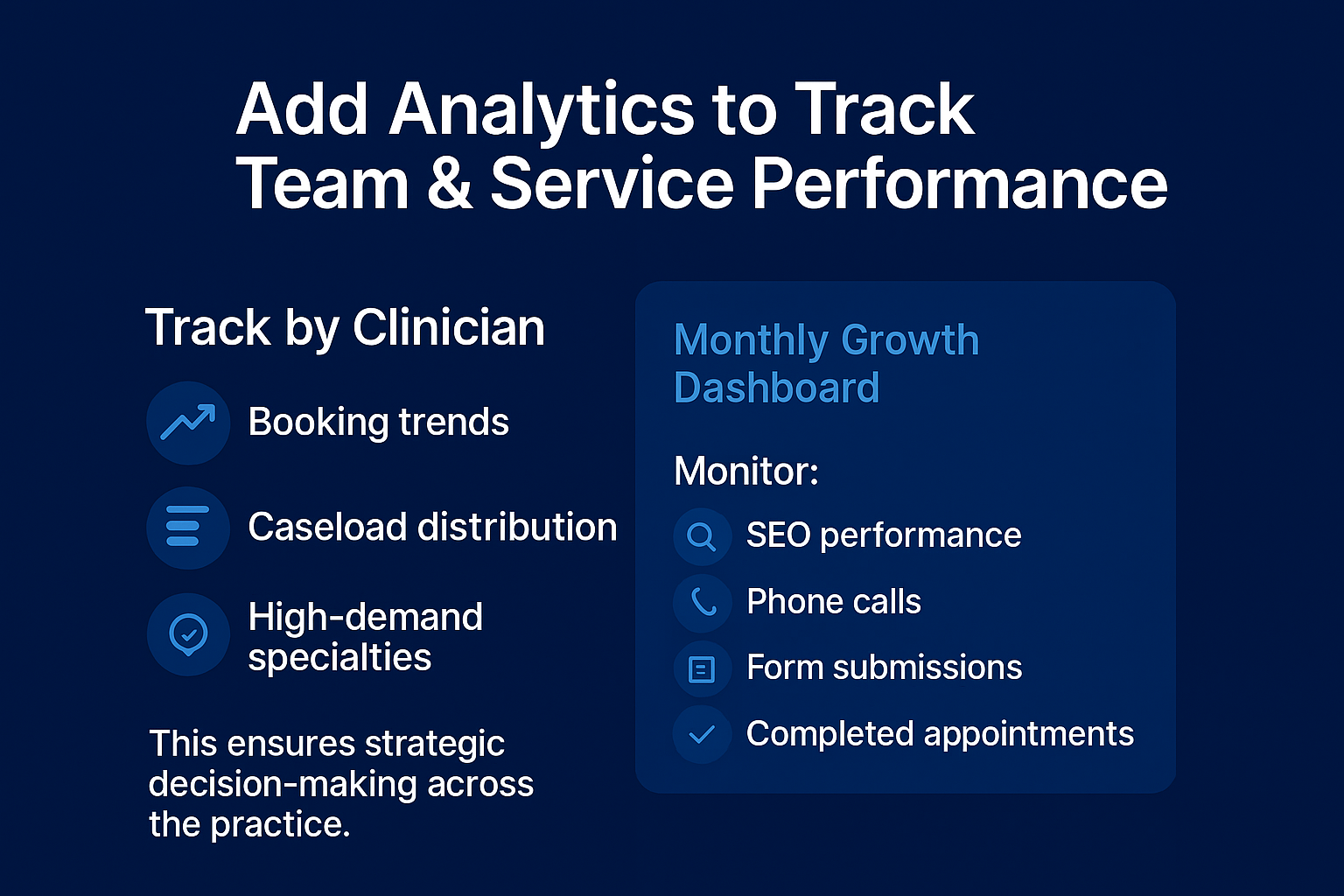
A group practice grows faster when you track the right data.
Track by Clinician
- Booking trends
- Caseload distribution
- High-demand specialties
Monthly Growth Dashboard
Monitor:
- SEO performance
- Phone calls
- Form submissions
- Completed appointments
This ensures strategic decision-making across the practice.
How MHIS Helps Group Practices Build Scalable Websites
A group practice website requires a different level of expertise.
Our Expertise
MHIS specializes in:
- Multi-clinician site architecture
- Multi-location SEO
- Clinician directories
- HIPAA-secure hosting and integrations
- Brand system development
- Speed optimization
- Conversion-focused UX design
We have built systems specifically for mental health organizations with complex workflows and long-term scalability needs.
FAQs
The most common mistake is redesigning the site using a “solo therapist” structure. Group practices need scalable architecture clinician directories, location pages, specialty pathways, and role-based booking flows.
A well-structured site gives every clinician a dedicated profile page optimized for their specialty, location, modalities, and populations served. This improves individual SEO visibility and ensures clients can easily match with the right therapist.
Each location should have its own dedicated page with its address, map, hours, nearby landmarks, accepted insurance, and the clinicians who serve that location.
Yes. A filterable clinician directory significantly improves user experience and conversions. Clients can search by specialty, insurance, location, modality, or population served. This reduces friction, lowers admin workload, and increases booking rates—especially for larger teams.
SEO becomes more complex because each clinician, speciality, and location can rank independently. A redesigned site must include clean URL structures, interlinking between services and clinicians, schema markup, and location-based content.
Conclusion
Redesigning a group practice website is not a cosmetic project it is a strategic transformation that impacts visibility, credibility, user experience, and the growth of every clinician on your team. A well-structured website becomes the backbone of your practice, guiding clients through clear pathways, strengthening your SEO across specialties and locations, and ensuring each clinician is discoverable for the work they excel in.
When your services, clinician profiles, booking workflows, and multi-location structure are built with intention, your website starts functioning like an efficient, automated intake system not just a digital brochure. It helps clients find the right therapist faster, improves caseload distribution, and reduces administrative burden. Most importantly, it positions your group practice as a credible, organized, and client-centered organization that reflects the quality of care you deliver.
At Mental Health IT Solutions, we specialize in building scalable, high-performing group practice websites that support long-term growth. Whether you’re expanding your clinical team, opening new locations, or strengthening your digital presence, a strategically redesigned website ensures your practice is ready for the next stage.
Redesign Your Group Practice Website with MHIS
Your website should reflect the quality of your clinical work and support the growth of every clinician on your team.