
Mental health clinic marketing is no longer just about being visible online it’s about building trust quickly, communicating clinical credibility, and guiding the right clients toward care with clarity and confidence. Today’s clients take time to evaluate clinics before reaching out. They compare websites, read reviews, assess therapist experience, and look for signs that a clinic understands both their emotional needs and professional standards. Without a clear, ethical marketing strategy in place, even well-established clinics can struggle to generate consistent, qualified inquiries.
The Changing Landscape of Mental Health Marketing in 2026
The mental health industry has matured rapidly. Therapy has become mainstream, competition has multiplied, and clients expect a seamless, safe, and professional digital experience.
Let’s look at what’s changed and what your clinic must do to stay ahead.
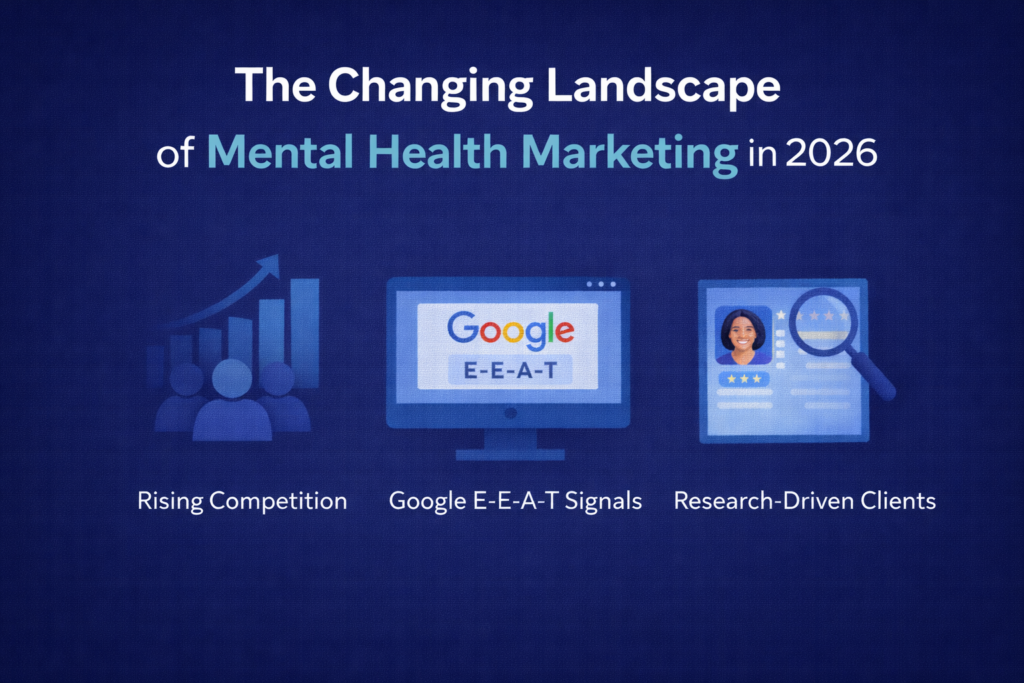
1. Rising Competition and Higher Client Expectations
With the growth of private practices, group clinics, and teletherapy platforms, clients now have more options and less patience for vague or impersonal experiences.
They expect:
Clear specializations and expertise
Transparent pricing and process
Effortless online booking
A modern, calming website
Proof of legitimacy and professionalism
Clinics that fail to communicate these quickly often lose inquiries not because of poor care, but because potential clients never feel reassured enough to reach out.
2. Google’s E-E-A-T Signals Are Now Essential
Google prioritizes Experience, Expertise, Authoritativeness, and Trustworthiness (E-E-A-T) especially for health-related topics.
To meet these standards, your clinic’s digital presence should include:
- Licensed therapist bios and credentials
- Authoritative, expert-backed content
- Secure, professionally developed website infrastructure
- Consistent, empathetic brand voice
An outdated or generic website can quietly suppress both visibility and referrals. If your site hasn’t been updated recently, explore this in-depth guide on therapist website development to understand modern design principles built for mental health professionals.
3. Clients Are Research-Driven and Emotionally Cautious
Before contacting a clinic, most clients now:
- Read reviews
- Compare multiple clinic websites
- Assess therapist tone and language
- Look for signs of empathy and safety
In other words, your marketing must calm anxiety, not create it. Every piece of content should make clients feel understood, respected, and safe.
Build a Brand Clients Instinctively Trust
In mental health, branding is not about logos it’s about emotional safety, empathy, and ethical clarity.
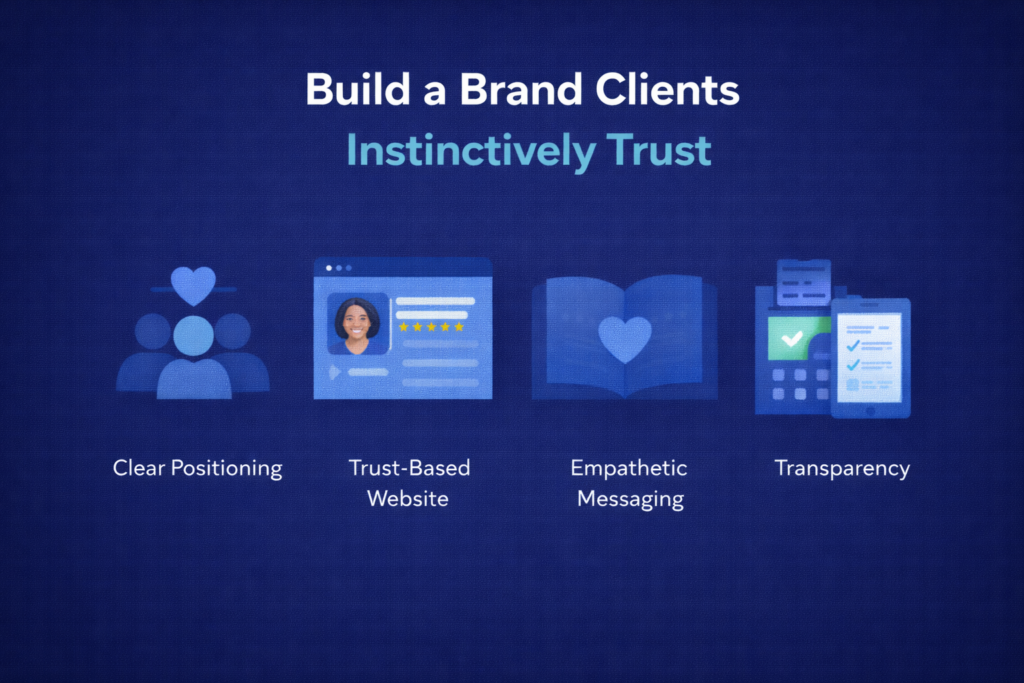
1. Clarify Your Positioning
Ask yourself:
- Who do we serve best?
- What issues do we specialize in?
- What values guide our care?
- What makes our approach different?
Your website and messaging should answer these clearly and concisely. Specificity builds trust; vagueness creates hesitation.
2. Your Website Is the First Therapeutic Touchpoint
For most clients, your website is their first therapeutic interaction. If it feels cluttered, cold, or dated, trust drops immediately.
A modern mental health website should emphasize:
- Calm, trauma-informed design
- Clear, empathetic copy explaining your services
- Simple navigation and online booking
- HIPAA-conscious design decisions
- Fast mobile performance
If your site hasn’t been redesigned in the past 2–3 years, it’s time for a refresh. Learn how to structure a scalable and accessible platform with this expert resource on therapy group practice website development.
3. Transparency Converts Hesitant Clients
Clarity reduces friction. Be upfront about:
- What happens in the first session
- Who your services are (and aren’t) for
- How to get started
- Payment and insurance options
Transparent clinics receive more inquiries because clients feel safe and informed from the start.
Local SEO: Be Found When Clients Are Ready to Book

Local SEO continues to deliver the highest ROI for private practices and group clinics. When potential clients search “therapist near me” or “mental health clinic [city name]”, your clinic should appear at the top.
1. Optimize Your Google Business Profile
Your Google Business Profile (GBP) is your digital storefront. It should be:
- Verified and complete
- Updated with accurate services and hours
- Supported by consistent Name, Address, and Phone (NAP) data
- Actively managed — respond to all reviews
Strong GBP activity increases visibility in local search results and map packs.
2. Structure Your Website for SEO Scalability
Local performance depends on smart site architecture — not just keywords.
A well-optimized mental health clinic site includes:
- Service-specific pages (e.g., anxiety therapy, couples counseling)
- Location-based landing pages
- Internal linking between key services and blog topics
- Page speed optimization
Multi-therapist and multi-location clinics benefit greatly from intentional site design. Learn how to set up your structure for success in this article on therapy group practice website development.
3. Create Content That Supports Local Search
Effective local content builds trust while improving SEO. Examples include:
- “Best Mental Health Resources in [City]”
- “How to Choose a Therapist Near You”
- “Online Therapy Options in [Region]”
These help clients find your practice organically while reinforcing your expertise and community focus.
Paid Ads: Use Them Strategically, Not Emotionally
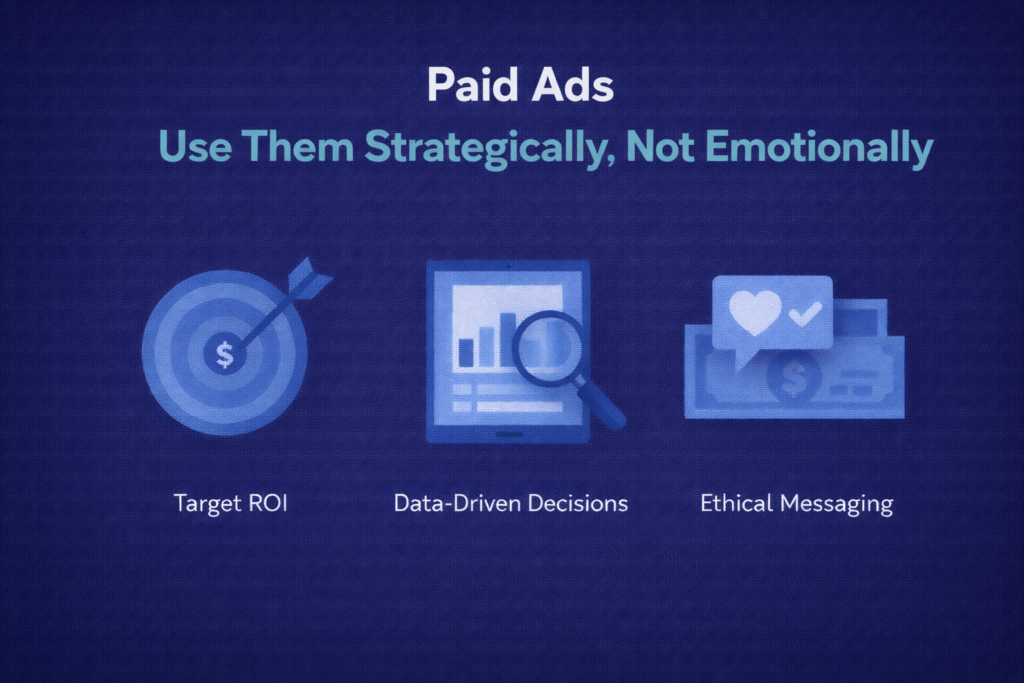
Paid ads are powerful when built on a solid foundation of SEO and brand trust.
1. Google Ads for High-Intent Searches
Focus on clients actively seeking care. Use keyword phrases such as:
- “Therapist near me”
- “Depression counseling [city]”
- “Marriage therapy [location]”
Ad copy should emphasize experience, accessibility, and ease of scheduling.
2. Social Ads for Awareness and Retargeting
Social ads work best for:
- Introducing therapists
- Promoting educational posts
- Retargeting site visitors
Keep the tone educational and value-driven not salesy.
Content Marketing That Builds Authority, Not Noise
In 2026, the best content isn’t the most frequent it’s the most helpful.
1. Educational Content Converts Thoughtfully
High-performing topics include:
- How therapy works
- What to expect in the first session
- Managing anxiety, burnout, or grief
- Understanding trauma and emotional safety
Depth and empathy beat generic advice every time. For detailed SEO strategies, see this complete guide on SEO for therapists it breaks down how to rank ethically for therapy-related searches.
2. Video Personalizes Your Practice
Short videos make therapy more relatable.
Use them to:
- Introduce your team
- Explain therapy approaches
- Offer calming exercises or mental wellness tips
Authenticity matters more than production. Clients want to see real, compassionate professionals.
AI & Automation: Tools That Support, Not Replace Care
In 2026, the best clinics use automation to create efficiency without losing empathy.
Smart automation can:
- Simplify scheduling and intake
- Handle basic inquiries via chatbots
- Send follow-up reminders
- Track SEO performance automatically
Technology should enhance human care not replace it.
Ethics, Compliance & Reputation Management
Ethical marketing is foundational in mental health. Clients must feel safe every step of the way.
Follow These Best Practices:
- Avoid absolute claims (“we cure anxiety”)
- Use informed, consented testimonials only
- Keep all content HIPAA-conscious
- Respond to reviews professionally and empathetically
Handled well, reputation management builds the credibility that drives long-term growth.
FAQs
The most effective strategy combines a high-trust website, local SEO, educational content, and ethical automation. Clinics that focus on credibility and user experience outperform those relying only on ads.
SEO is critical because most clients search online before booking therapy. A strong SEO strategy helps clinics appear for high-intent searches like “mental health clinic near me.”
Paid ads can support growth, but they work best when layered on top of strong SEO and a conversion-optimized website. Ads alone rarely produce sustainable results.
By focusing on education, transparency, and clarity instead of promises. Ethical marketing informs and reassures rather than pressures potential clients.
SEO and brand trust typically show measurable results within 3–6 months, while paid ads can drive inquiries sooner when implemented correctly.
Conclusion: A Smarter, More Human Way to Grow in 2026
Marketing your mental health clinic in 2026 isn’t about louder promotion it’s about showing up with clarity, compassion, and credibility when clients are ready for help.
Clinics that grow sustainably focus on:
A conversion-optimized, trust-centered website
Local SEO visibility
Educational, high-authority content
Smart automation and efficiency tools
Transparent, ethical communication
When your marketing reflects your clinical values, growth becomes natural, not forced.