
A therapist’s website is no longer just an online brochure it is a digital extension of your clinical presence. The way your website communicates, guides visitors, presents services, and reflects your values determines whether someone feels safe reaching out for help.
Today’s therapy clients expect websites that are modern, warm, accessible, easy to navigate, and aligned with the realities of mental health care. That’s exactly why so many private practices and group practices choose WordPress, a platform that offers unmatched flexibility, control, mobile responsiveness, and long-term sustainability.
In this guide, you’ll explore 10 real therapist websites built on WordPress, each with unique strengths you can learn from. Whether you’re a solo practitioner, group practice owner, niche specialist, or coach, these examples highlight how thoughtful design and SEO services for behavioral health therapists contribute to modern, effective, and trustworthy therapy websites.
And if you’re planning a redesign or want to build something similar.
Contact Therapist Website Development Experts Today
What Makes a High-Quality Therapist Website?
Before diving into the examples, here are the core elements shared by the best therapist websites:
Clear Positioning
Visitors should instantly understand who you help, how you work, and what you specialize in.
Warm, Human Copy
Therapy is intimate. Websites that feel supportive, empathetic, and grounded perform better.
Structured Navigation
Service pages, About pages, FAQs, scheduling, and contact routes must be easy to find.
Clean Visual Hierarchy
Spacing, typography, colors, and layouts must reduce cognitive load and promote clarity.
Strong Calls to Action
Visitors must know how to take the next step — book a consultation, schedule an appointment, or request more information.
Mobile-First Experience
Most clients browse on mobile devices. A therapist’s website must be effortless on all screens.
With this foundation, let’s explore ten excellent therapist websites built on WordPress.
And if you’re planning a redesign or want to build something similar, here’s a helpful resource: Therapist Website Development.
10 Therapist Website Examples
Every example in this list uses WordPress because it gives therapists the freedom to build websites that are professional, modern, accessible, and true to their clinical philosophy.
1. Lumen Health Services (California)
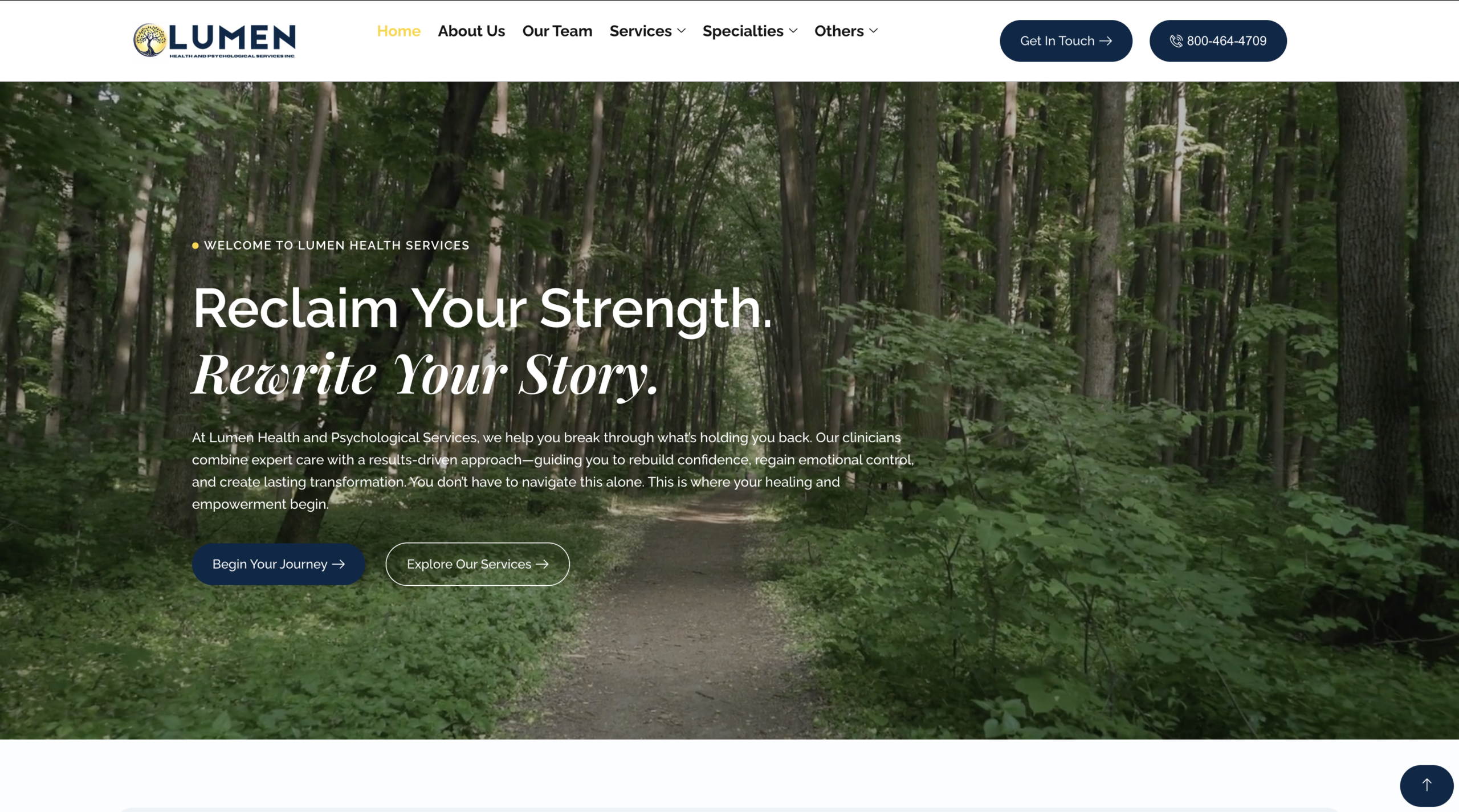
Website: www.lumenhealthservices.com
What Stands Out
Lumen Health Services presents a calm, modern, and clinically confident digital experience. The site balances professionalism with warmth, using clean layouts, intentional whitespace, and soft, reassuring color tones. Every page feels purposeful, guiding visitors smoothly from understanding services to taking action. The WordPress build supports clarity, accessibility, and ease of navigation, making the experience feel grounded and trustworthy.
Why This Website Works
- Clear service structure that reduces cognitive load for visitors
- A calm, non-intimidating design that reflects emotional safety
- Strong visual hierarchy that guides users toward booking
- Messaging that feels professional without being cold or clinical
What Therapists Can Learn
A therapist website doesn’t need to be complex to be effective. Simplicity, clarity, and emotional alignment with your practice values can dramatically improve trust and engagement. When design removes friction and messaging feels grounded, clients are more likely to take the next step.
2. Affirm Counseling (Colorado)
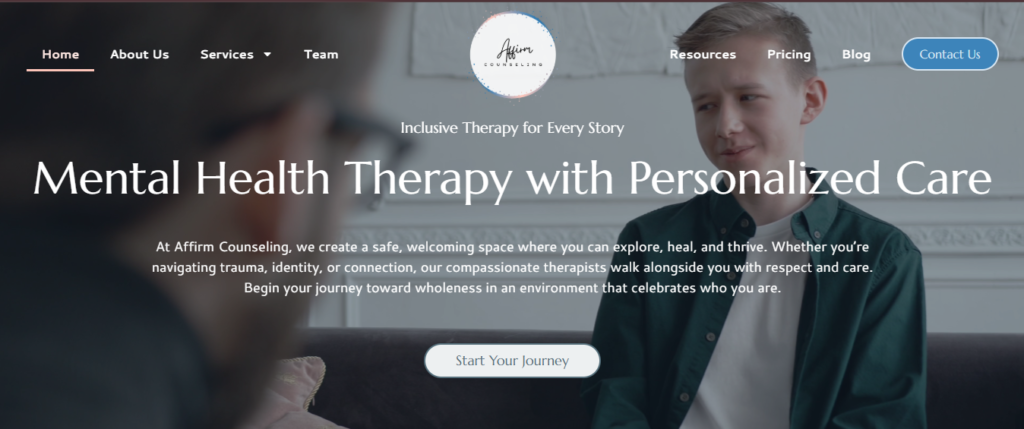
Website: www.affirmcounselingco.com
What Stands Out
Affirm Counseling has a powerful, inclusive, identity-affirming presence. Their WordPress site blends trauma-informed, culturally aware language with a clean, modern layout that creates immediate trust. The site is built with clarity — each service and specialty is clearly labeled and easy to navigate.
Why This Website Works
- Inclusive and affirming tone for all identities and orientations
- Clear articulation of specialties such as EMDR, neurofeedback, and play therapy
- Beautifully balanced layout and color palette
- Warm yet professional brand voice
What Therapists Can Learn
If your mission includes identity-affirming care or trauma-informed practice, your website should clearly express this. Visitors need to feel represented and welcomed.
3. PLACE: Parents Living After Child Estrangement (Texas)
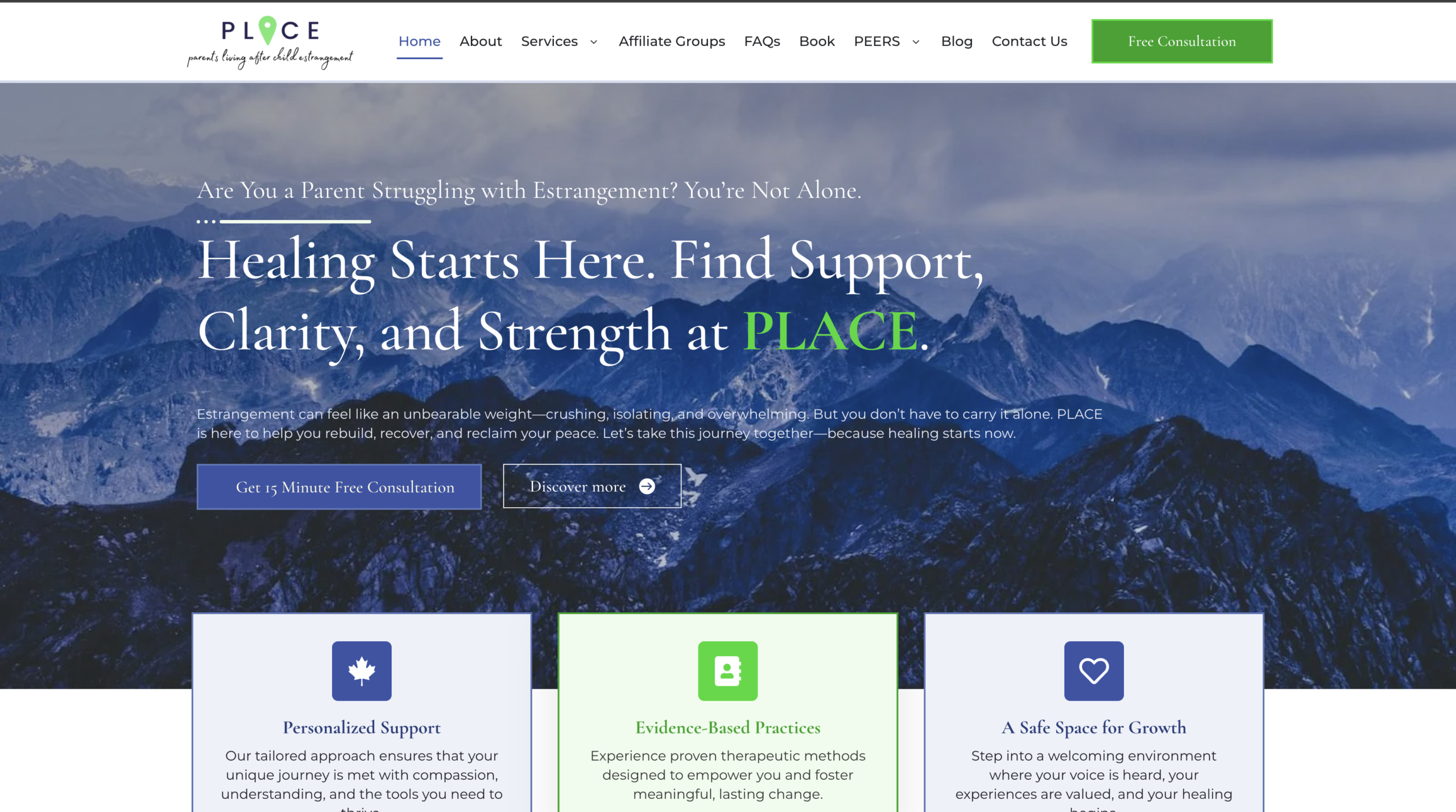
Website: www.copingplace.net
What Stands Out
PLACE is one of the strongest examples of niche positioning. Their WordPress website speaks directly to a very specific struggle — parental estrangement — with clarity, compassion, and validation. The founder’s story adds credibility and hope.
Why This Website Works
- Hyper-specific audience focus
- Deep empathy in every line of copy
- Blends therapy, coaching, and community support
- Strong founder narrative creates trust and belonging
What Therapists Can Learn
Specialized therapy websites convert at a higher rate than generalized ones. When your website is built around a specific experience or population, visitors feel instantly understood.
4. Rob Martin, LMFT (California)
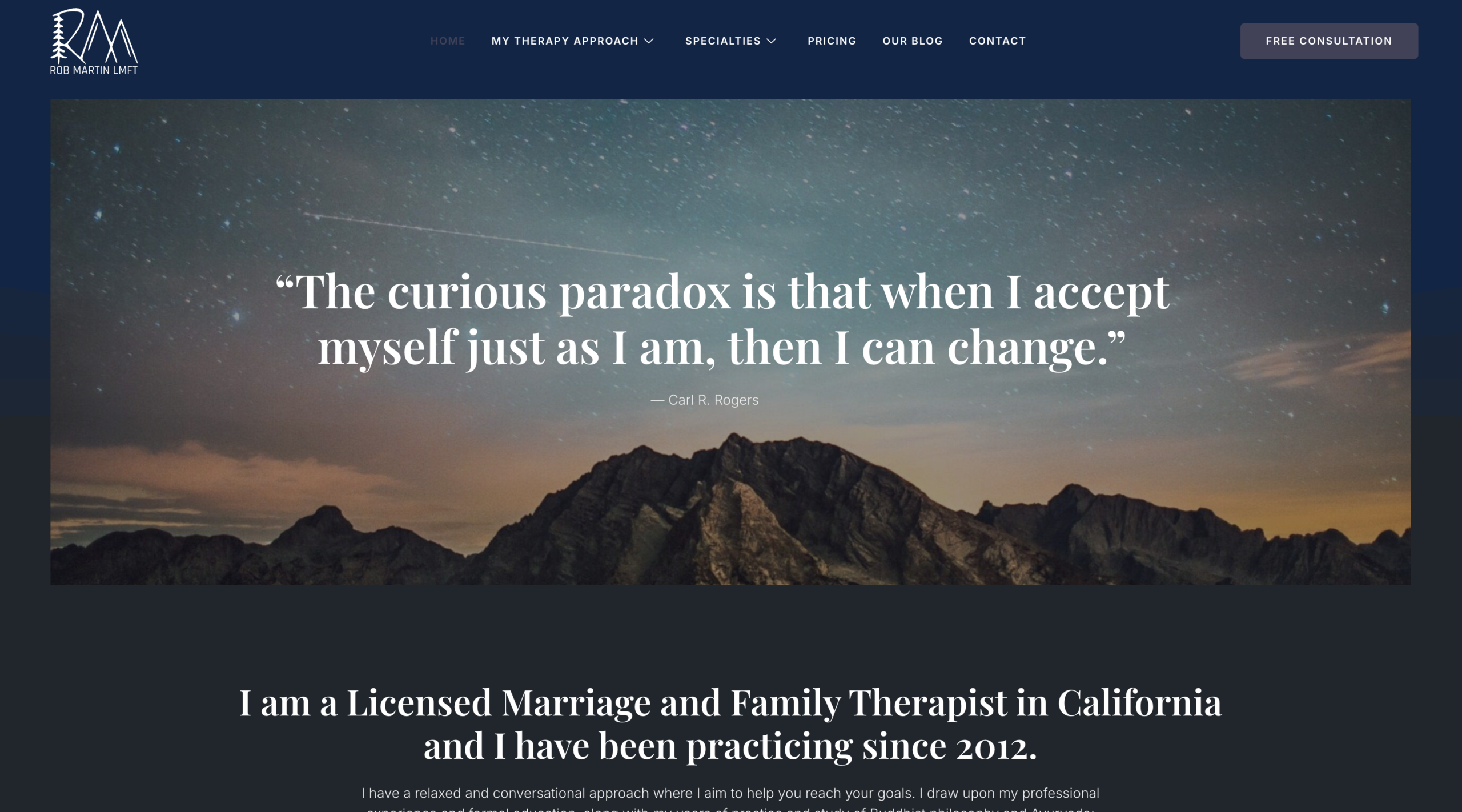
Website: www.robmartinlmft.com
What Stands Out
This WordPress website creates immediate clarity around Rob’s approach mindfulness, CBT, and grounded emotional education. The tone is simple, relatable, and approachable. His specializations (ADHD, ASD, anxiety, depression, grief, attachment challenges) are clearly listed with language that clients can understand.
Why This Website Works
- Simple explanations of therapeutic approaches
- Conversational but professional writing style
- Layout that reduces overwhelm through effective spacing
- Consistent thematic structure
What Therapists Can Learn
You don’t need complex jargon to sound professional. Clients respond to clarity and readability.
5. Psychological Associates of Melbourne (Florida)
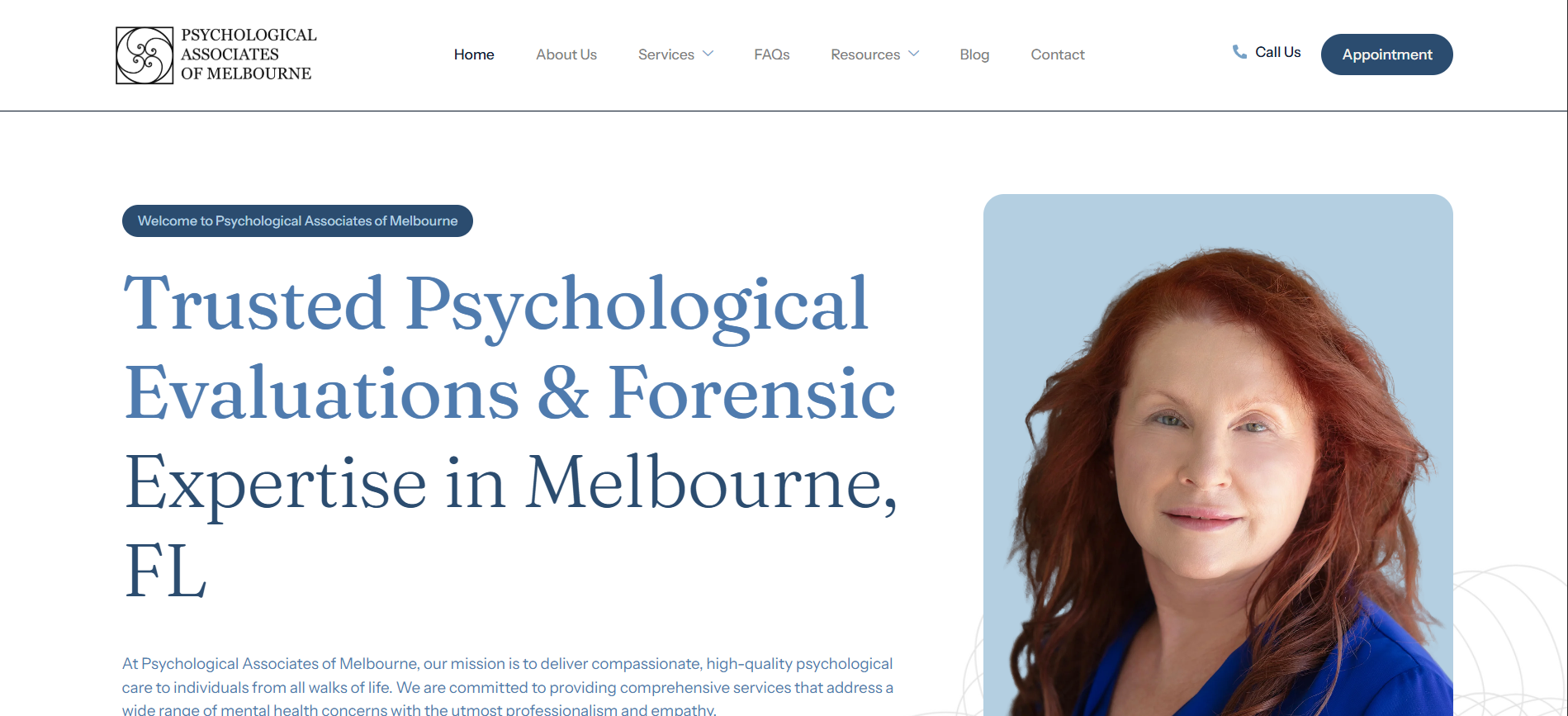
Website: www.psychmelbourne.com
What Stands Out
This practice uses WordPress to create a structured and polished experience, which is essential for clinics offering evaluations, forensics, and psychotherapy. The website appeals to a broad demographic but does so through clean organization and well-structured content.
Why This Website Works
- Clear segmentation of services
- Balanced professional tone for evaluations and therapy
- Visual branding that communicates credibility
- Strong representation of cultural diversity
What Therapists Can Learn
If your practice offers multiple service types, your website must guide users efficiently without overwhelming them.
6. Sara Sanford Therapy (California)
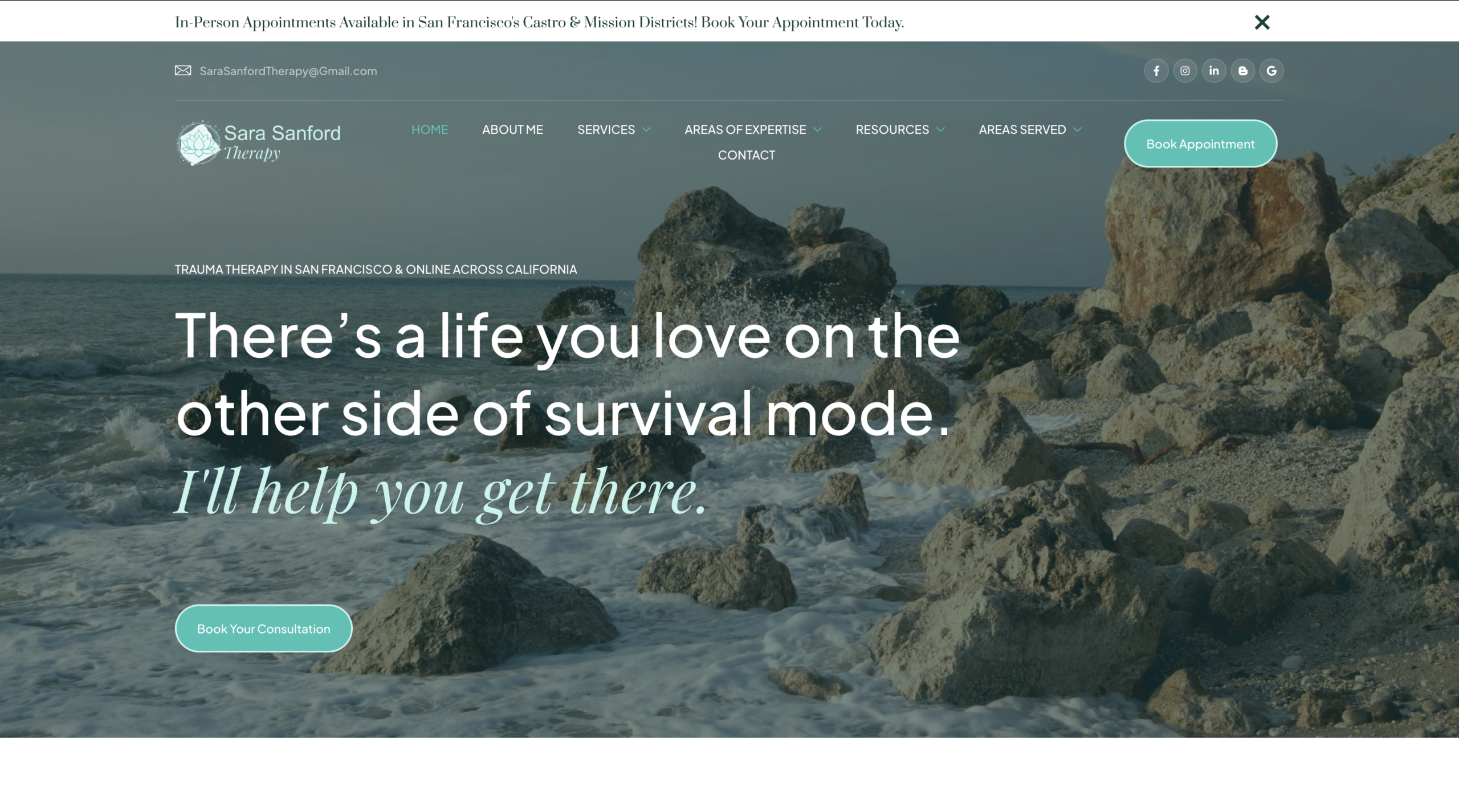
Website: www.sarasanfordtherapy.com
What Stands Out
Sara Sanford’s WordPress website is an excellent example of deep storytelling and authenticity. The writing style reflects lived experience, emotional intelligence, and a strong sense of relational presence. This makes the site resonate deeply with trauma survivors, couples, and individuals seeking a grounded healing relationship.
Why This Website Works
- Long-form, reflective writing that feels personal
- Clear articulation of lived experience and professional identity
- Elegant, soothing design choices
- Strong emotional accessibility
What Therapists Can Learn
A powerful About page is often the most visited page on therapist websites. Emotional storytelling can significantly increase conversions.
7. The Perfect Rx (Texas, Arizona)
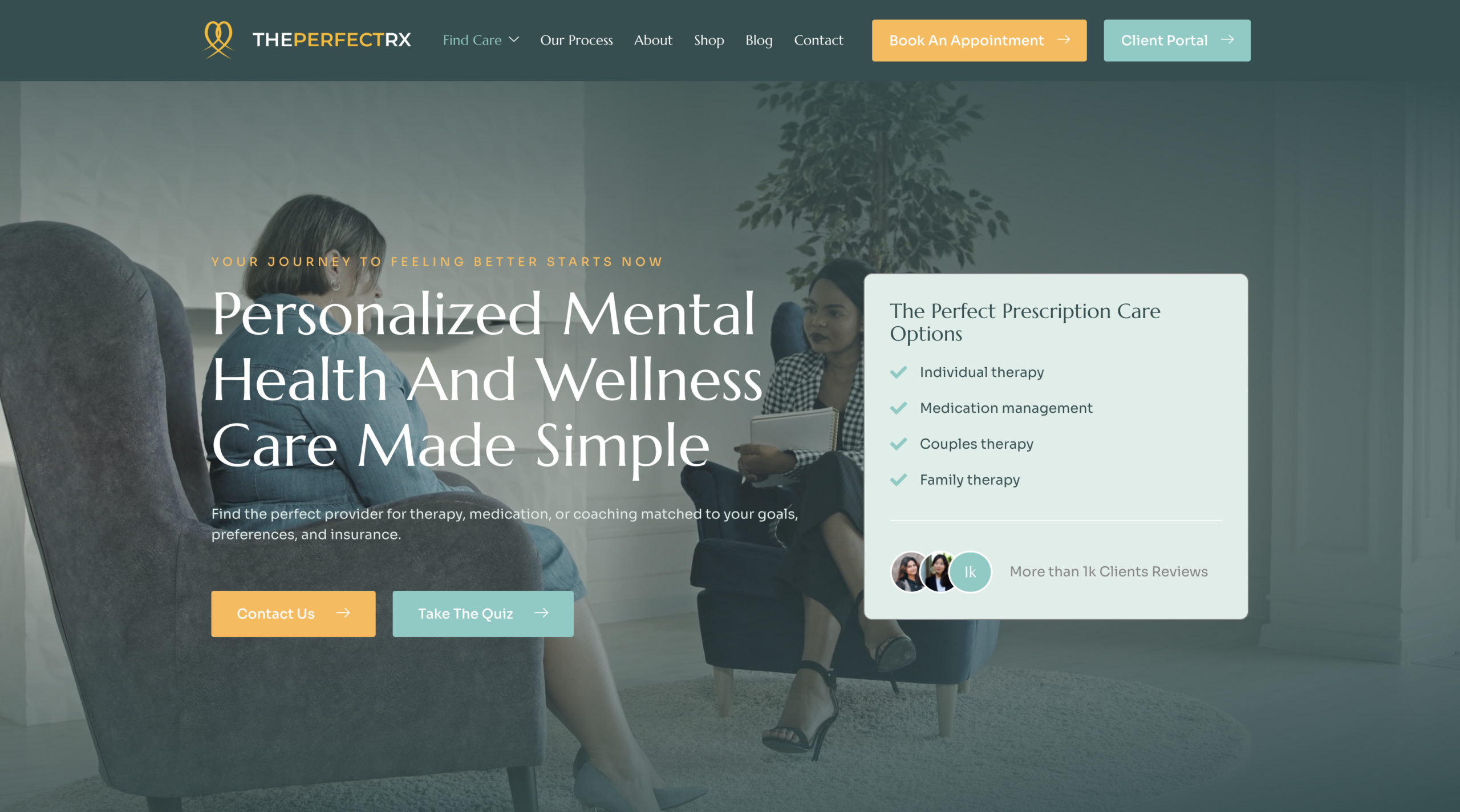
Website: www.theperfectrx.com
What Stands Out
The Perfect Rx showcases how WordPress can handle integrative mental health practices. This website blends therapy, medication management, supplements, and coaching into one coherent digital experience. It feels modern, well-structured, and easy to understand.
Why This Website Works
- One-stop mental health and wellness presentation
- Clear pathways for therapy, coaching, and medication support
- Modern design appropriate for a hybrid wellness model
- Human connection emphasized throughout the site
What Therapists Can Learn
If you offer integrated care, your website must make navigation effortless and clearly define each service pathway.
8. Karen K Lowry — ADHD Coach & IEP Advocate (New Jersey)
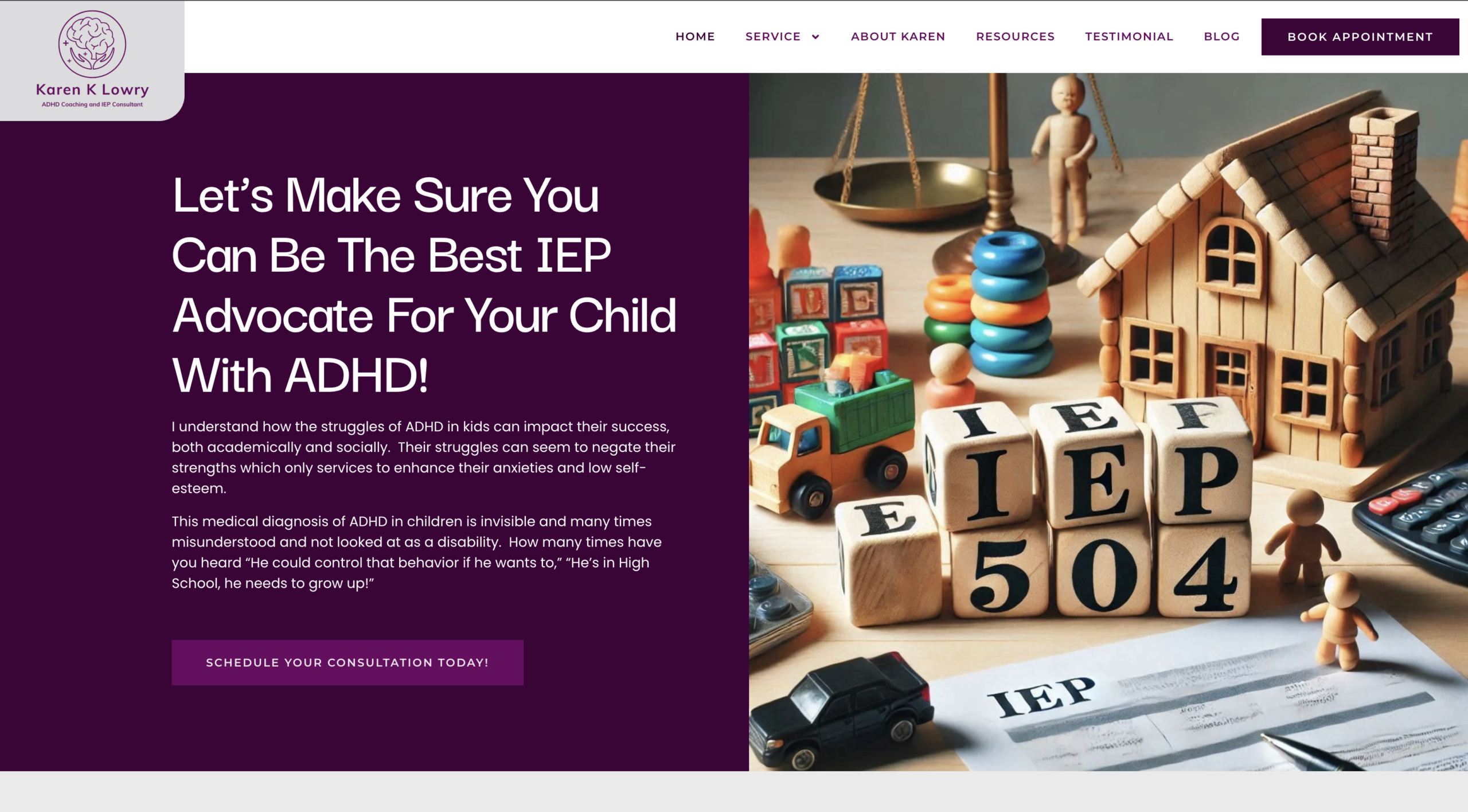
Website: www.karenklowry.com
What Stands Out
Karen’s WordPress website is focused, purposeful, and parent-centered. Her background as a pediatric ICU nurse combined with ADHD and education advocacy expertise creates immediate credibility.
Why This Website Works
- Strong credentials placed prominently
- Clear explanations of IEP support and coaching
- Parent-facing language that builds trust
- Simple but powerful layout
What Therapists Can Learn
If your work involves advocacy, coaching, or specialized support, your website must highlight your qualifications and real-world experience clearly.
9. P.S. It’s Counseling (Illinois, Indiana)
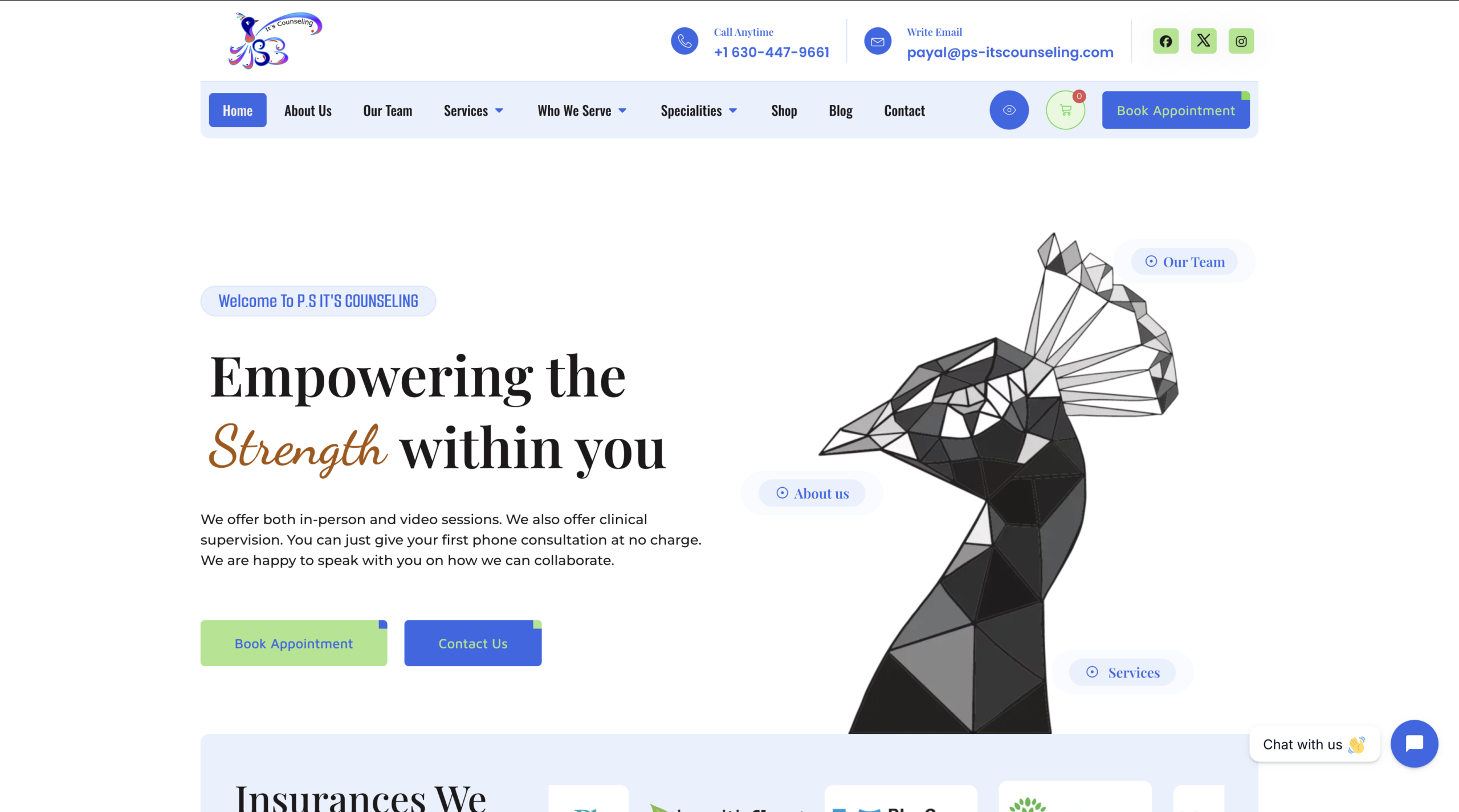
Website: www.ps-itscounseling.com
What Stands Out
This is one of the most diverse therapeutic offerings showcased on WordPress. The site highlights Walk-and-Talk therapy, Sound Massage, Tea Therapy, Pet Therapy, and Home Visits creating a truly unique practice identity.
Why This Website Works
- Bold differentiation through experiential modalities
- Vibrant, creative brand personality
- Welcoming tone centered on thriving and well-being
- Unique approach stands out from traditional therapy sites
What Therapists Can Learn
Highlighting unconventional modalities is a powerful way to stand apart in a competitive landscape.
10. Suzette Bray, LMFT (California)
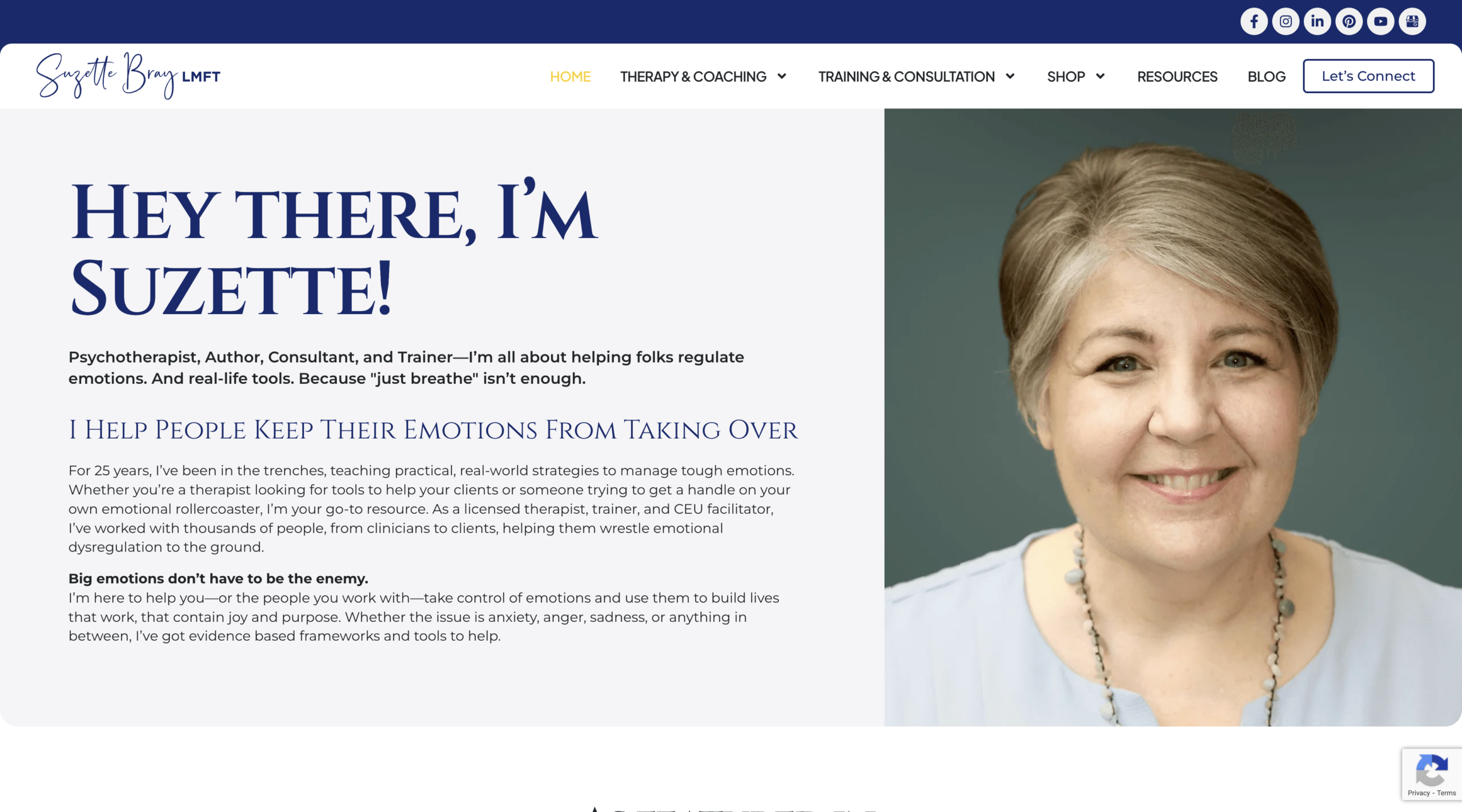
Website: www.suzettebray.com
What Stands Out
Suzette’s WordPress website positions her as an expert in emotional regulation, offering both therapy and clinical training. The writing is direct, practical, and grounded in decades of experience.
Why This Website Works
- Clear specialization communicated immediately
- Professional, educational tone
- Practical, actionable style of writing
- Strong focus on real-world emotional regulation skills
What Therapists Can Learn
Offering resources, workshops, and teaching materials positions you as a leader in your niche and builds long-term trust.
How to Apply These Examples to Improve Your Own Website
Whether you’re planning a redesign or building from scratch, here are practical steps inspired by these top WordPress websites:
1. Lead With Clarity About Who You Help
Specificity helps visitors feel instantly connected.
2. Use Warm, Human-Centered Language
The tone should reflect how you speak in the therapy room.
3. Organize Your Website Thoughtfully
Service pages, specialties, and next steps should be effortless to find.
4. Build a Strong About Page
Your background, personality, and values matter to potential clients.
5. Offer a Clear Path to Book a Session
Make it easy for people to contact you, schedule, or ask questions.
6. Choose WordPress for Flexibility & Control
As seen in all ten examples, it allows complete customization and long-term stability.
Why Mental Health IT Solutions Is the Best Choice for Therapist Website Development
Mental Health IT Solutions is one of the few agencies built specifically around the needs of therapists, counselors, psychologists, and group practices. Every practice has its own clinical identity, and our work centers on translating that identity into a website that feels grounded, professional, and inviting for the clients you want to serve.
What sets MHIS apart is our deep understanding of how therapy clients engage with websites. People visiting a therapist’s site are often overwhelmed, anxious, or unsure about what they need. A good website must be calming, simple, and clear, not filled with jargon or complex navigation. We build with this psychology in mind, ensuring your visitors feel supported from the moment they land on your site.
All MHIS websites are custom-built on WordPress, giving your practice the flexibility and long-term control it needs. Whether you’re a solo practitioner or a multi-location group, your website is designed with thoughtful structure, clean layouts, and service pathways that help visitors understand who you are, what you offer, and how to take the next step.
Our team handles everything end-to-end, including content writing, design, page structure, mobile optimization, accessibility considerations, and user flow. You don’t have to think about tech, wording, layout, or the hundreds of small decisions required to build a high-quality professional website. We manage the entire process with a therapist-first approach.
Therapists choose MHIS because we combine clinical insight with modern design, delivering websites that look beautiful, feel supportive, and communicate your expertise clearly. The result is an online presence that reflects your professionalism, strengthens your credibility, and helps clients feel confident reaching out for help.
See Real MHIS Websites Built for Therapist → View Portfolio
FAQs
1. What makes a therapist website truly effective?
An effective therapist website communicates who you help, how you work, and what clients can expect. It should offer clear pathways to learn about your services, understand your approach, and contact you effortlessly. Warm language, thoughtful structure, and a professional presentation are key.
2. How many pages should a therapist website include?
Most therapy websites benefit from 6–10 core pages, including a Home page, About page, individual Service pages, a Contact page, and supporting sections such as FAQs or a Blog. The structure should help visitors quickly find what they need without feeling overwhelmed.
3. Is it important for therapists to niche their website content?
Yes. Niche clarity helps visitors instantly understand whether you’re the right fit. Whether you specialize in trauma, couples, ADHD, evaluations, teens, or integrative care, clearly presenting your focus builds trust and increases inquiries.
4. Why do many therapists prefer WordPress for their website?
WordPress offers full design control, long-term flexibility, and the ability to build a modern, professional website tailored to your practice. It allows therapists to showcase their unique style, services, and personality without platform limitations.
5. How often should a therapist update or redesign their website?
Most therapy websites benefit from a refresh every 2–3 years as design trends evolve, user behavior changes, and your practice grows. Regular updates to content, images, and structure keep the website modern and aligned with your current clinical direction.
Conclusion
A therapist’s website is more than a place to list services. It is a reflection of your clinical identity, your values, and the experience you offer clients. The ten therapist websites showcased here all built on WordPress, demonstrate the diversity, creativity, and professionalism possible when design, messaging, structure, and human connection come together.
Whether you draw inspiration from emotional storytelling, inclusive messaging, niche specialization, or integrative care models, the key is to build a website that feels true to you and supportive to the people you serve.
If you’re ready to build or redesign your therapy website, ensuring high-quality design, strong messaging, clear structure, and a modern WordPress foundation start with a trusted partner who understands therapy and mental health practices deeply.