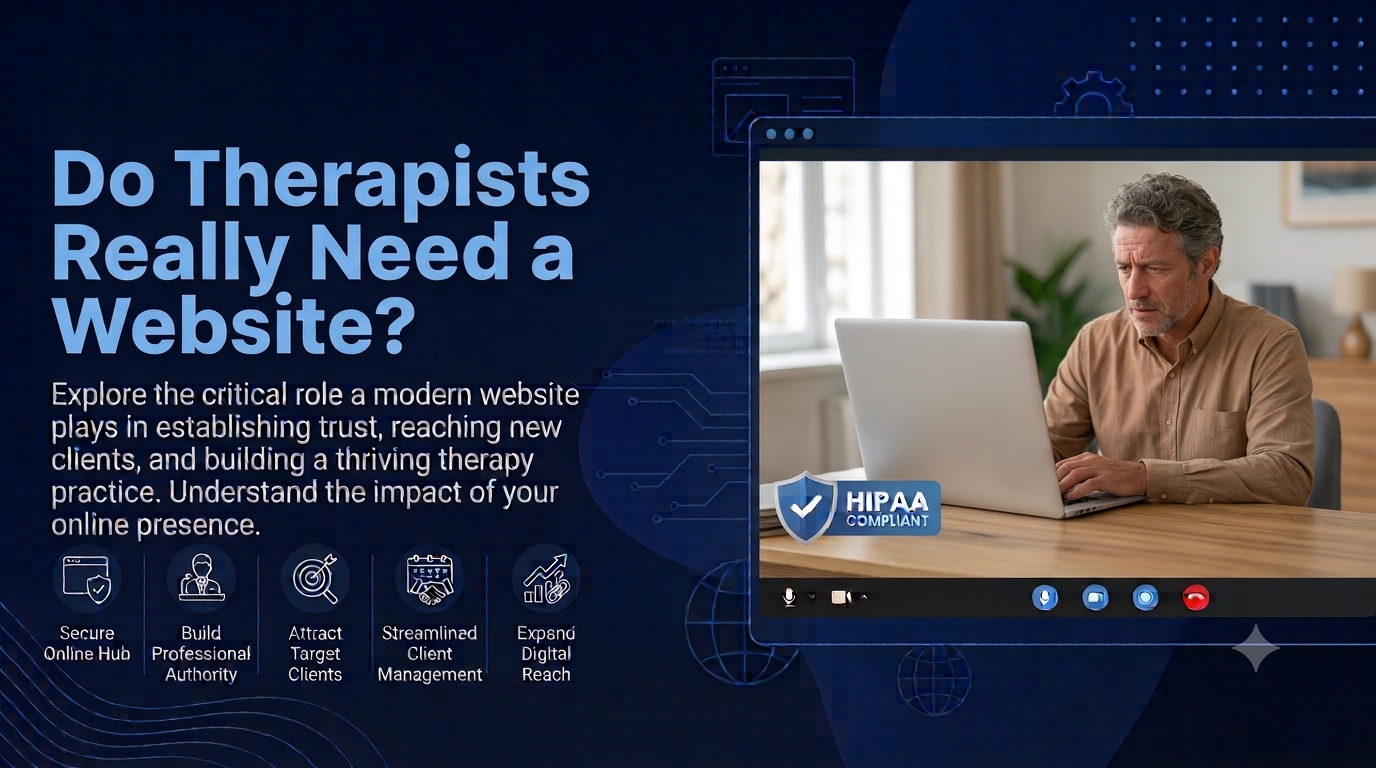
The honest case for a therapist website, what it does that a directory cannot, and whether Psychology Today alone is enough.
Yes. A therapist can technically get clients from directories and referrals alone, but a website is the one place you own and control, and it is where most potential clients decide whether to book. In a market where people research online before they reach out, a professional website is no longer optional.
That said, it is a fair question. Websites take time and money, and directories like Psychology Today do bring clients. So this guide gives the honest case: what a website does that a directory cannot, whether Psychology Today alone is enough, the few times you might not need one, and what makes a therapist website actually work.
Your website is the hub of the client-getting picture we cover in our guide to how to start a private therapy practice. At Mental Health IT Solutions, building websites that bring therapists clients is what we do.
The short answer: yes, and here is why
A therapist website is worth it because it does three things a directory profile cannot: it builds trust on your terms, it converts visitors into consultations, and it is an asset you own.
Directories and referrals can start your caseload, but they send people somewhere to decide, and that somewhere is usually your website. When you do not have one, you lose control of the most important moment in the client’s journey: the moment they choose whether to book with you.
What a website does that a directory profile cannot
You own it and control the message
A directory profile lives on someone else’s platform, right next to your competitors. Your website is entirely yours.
On a directory, you fit a template, you sit in a list of similar therapists, and the platform can change its rules or pricing at any time. Your website lets you tell your story your way, present your specialties and approach, and stand alone without competitors one click away. It is an asset you build and keep, not space you rent.
It builds trust and reflects who you are
Your website is where a hesitant client decides whether you are the right therapist for them.
Choosing a therapist is personal, and people want a sense of who you are before they reach out. A warm, professional website conveys your personality, your approach, and the clients you help, in a way a short directory listing cannot. Your tone, your photo, and a clear explanation of how you work all build the trust that turns a visitor into an inquiry.
It converts visitors into booked consultations
A good website turns interest into action with a clear, easy path to book.
Your site can guide someone from curiosity to a booked consultation with obvious calls to action, simple contact or scheduling, and service pages that answer their questions. A directory sends people into a shared inbox, while your website is built to convert them into your clients specifically, especially when it loads fast and works well on a phone.
It is the foundation for getting found on Google and AI
Your website is what ranks on Google and appears in AI search, bringing clients who find you on their own.
Search engine optimization needs a site you control. With local SEO, clear service pages, and helpful content, your website can rank for the searches your clients make and show up in AI-generated answers, sending you clients without a referral or a monthly directory fee. Directories rank for themselves, not for you. Our guide to SEO for therapists explains how this works, and it is the same site your paid ads would send people to if you ever run a Google Ads campaign.
But isn’t Psychology Today enough?
Directories like Psychology Today are valuable, but relying on one alone puts your entire caseload on a platform you do not control.
A directory is a good channel, and it belongs in your mix. The problem is depending on it as your only channel. You compete with every other therapist on the platform, you pay every month with nothing to keep, and a single change to its algorithm or pricing can affect your whole practice. The strongest approach uses a directory alongside your own website, with your profile linking to your site. In fact, many clients find you on a directory and then visit your website before booking, which is exactly why you need both. For the full channel mix, see our guide to how to get your first clients as a new therapist.
When might a therapist not need a website?
There are a few situations where a website is less urgent, though it is rarely truly unnecessary.
If you are fully booked through referrals and not accepting new clients, if you are winding down your practice, or if you work as an associate under a group practice that provides and controls the web presence, a website of your own may not be a priority. Even then, a simple site helps clients find and trust you. For any therapist who wants to grow or control their own client flow, the answer is still yes.
What makes a therapist website actually work
If you are going to have a website, a few things separate one that brings clients from one that just sits there.
- It is mobile-first and loads quickly, since most clients will visit on a phone.
- It speaks to a clear niche, so the right clients feel you understand them.
- It makes booking obvious, with a clear call to action on every page.
- It builds trust with your credentials, your approach, and a professional photo.
- It has strong local SEO foundations, so it can rank for the searches your clients make.
- It is built HIPAA-consciously, keeping any client information secure.
For a deeper look, see our guide to therapist website design, and to plan the investment, what a therapist website costs.
Get a website built to bring you clients
We design fast, conversion-focused, HIPAA-conscious websites specifically for therapists and private practices. Explore website design and development
A website plus visibility is what fills a caseload
A website is the foundation, and visibility is what brings people to it.
On its own, a website is a storefront no one has found yet. Paired with SEO and a strong presence in local and AI search, it becomes a steady source of clients who discover you on their own. That combination, rather than any single directory, is what builds a caseload you control.
Turn your website into a client magnet
Our mental health SEO services help your site rank on Google and appear in AI search, so the right clients keep finding you. See our mental health SEO services
Frequently asked questions
Do therapists really need a website?
Yes, for any practice that wants to grow or control its own client flow. You can get some clients from directories and referrals, but a website is the one place you own, and it is where most people decide whether to book with you.
Is Psychology Today enough without a website?
Not on its own. A directory is a useful channel, but relying only on it means competing on someone else’s platform and paying every month with nothing to keep. Use it alongside your own website, not instead of one.
Can I get clients without a website?
It is possible through referrals and directories, but it is limited and fragile. Without a site, you have no way to convert the many people who research you online before reaching out, and no foundation for ranking on Google.
What should a therapist website include?
At a minimum, a clear statement of who you help, an about page, service pages, an obvious way to book, and trust signals like your credentials and approach, all on a fast, mobile-first design.
How much does a therapist website cost?
Typically $500 to $5,000 or more, depending on whether it is a simple template or a custom, conversion-focused build. See our full breakdown of therapist website cost.
Do I need a website for a teletherapy practice?
Even more so. When your practice is virtual, your website is effectively your entire office and storefront, so it carries the trust and booking that an in-person office might otherwise provide.
The honest answer is yes
Do therapists really need a website? For anyone building or growing a practice, yes. A directory can bring clients, but only a website lets you own the relationship, build trust on your terms, convert visitors into consultations, and get found on Google and in AI search. Treat it as the foundation of your practice, pair it with visibility, and it will pay for itself many times over.
Ready for a website that brings you clients?
Mental Health IT Solutions builds websites and SEO for therapists that turn visitors into booked consultations. Let us help you get found and grow. Contact our team for a free consultation